Are you looking at a South Jordan home this summer and wondering what boring city-service details could come back to bite you after closing? The honest answer is that South Jordan city services matter before you waive due diligence because water, waste, emergency access, service requests, and HOA overlap are not just paperwork. They shape daily ownership from the first week you move in.
Here’s what I’d do: start with the exact address, then verify the services tied to that address through official South Jordan City resources, seller disclosures, the HOA when there is one, and your inspection team. A listing can show a beautiful kitchen. It cannot confirm your trash setup, water restrictions, drainage questions, emergency access, or who handles what on a private lane.
What to Check First When South Jordan City Services Matter
Before you start calling every department, sort the question into one of four buckets. That keeps the work practical and helps you avoid chasing the wrong answer.
Why City Services Matter Before You Waive Due Diligence
When you are buying a home in South Jordan, the exciting part is easy to see. You can walk the floor plan, look at the yard, open cabinets, and picture your furniture in the room. The quiet part is harder. City services sit in the background until something goes wrong, costs more than expected, or turns out to be handled by someone other than the city.
That is why I treat South Jordan public services as a due-diligence topic, not a city brochure topic. Water, trash, recycling, storm water, road access, fire-prevention questions, police request pathways, and city calendars can all affect how the home feels to own. Not in some dramatic way every day. In the normal way homeownership actually works.
The risk is usually not one big surprise. It is a pile of small ones. Maybe the seller assumed trash was simple but never explained the bin routine. Maybe the HOA handles part of the service picture, and the listing did not make that obvious. Maybe the home sits on a street where parking patterns, a cul-de-sac, a gate, or a shared lane makes access questions worth asking. Maybe summer water restrictions affect how you think about the yard right away.
Here’s what this means for you: do not ask, “Does South Jordan have city services?” Ask, “What applies to this address, and who can prove it?” That question gives you clarity before inspection week ends.
The city-service checks in this article are based on official South Jordan City resources, including the city homepage, Quick Links directory, and Events calendar, plus JenaHunt’s approved contact information. I would still verify anything address-specific directly with the city, the seller, the HOA, inspectors, or the right service provider before you rely on it.
| Question to Sort | Official Resource Category | What to Verify Before Closing |
|---|---|---|
| Utility setup | Pay Water Bill, Connect Utilities, Report a Problem, Apply for a Permit on the South Jordan City website. | How the account transfers, what is active, and whether any service issues need to be addressed before closing. |
| Waste routine | Garbage, Recycling, Budget Billing, and City Fee Schedule listed through South Jordan Quick Links. | Pickup details, billing questions, bin expectations, and whether an HOA or private arrangement changes the normal process. |
| Water and drainage | Storm Water, Water Conservation, Pay My Water Bill, and Water Conservation Plan resources listed by the city. | Water restrictions, irrigation questions, drainage concerns, landscaping expectations, and what your inspector should review. |
| Public-service questions | Police, Fire, Building Department, and city service request resources listed in official directories. | Who to contact for resource navigation, not response times, crime claims, safety rankings, or guarantees. |
Start With the Exact Address, Not the Neighborhood Name
South Jordan is not one ownership pattern. A home near one pocket can have a different HOA setup, access pattern, irrigation question, or waste routine than a home a few streets away. That is why I do not like vague answers during due diligence. “It should be city trash” is not enough. “The neighbor said the pickup day is usually this” is not enough. “I think the HOA handles it” is not enough either.
Exact-address verification is the rule. It keeps you from making a decision based on a subdivision name or a listing description that may be incomplete. It also gives you better questions for the seller. Instead of asking, “Are utilities normal?” you can ask, “Which services are city-billed, which are HOA-managed, which are private, and what documentation shows that?”
Here’s what I’d do with a South Jordan listing during inspection week. I would put the address at the top of a page and create four columns: water, waste, access, and requests. Under each one, I would list what the city can verify, what the seller must explain, what the HOA must confirm, and what the inspector should look at physically.
That may sound simple, but it changes the conversation. You stop asking broad questions and start closing gaps. If the seller says the HOA handles irrigation, ask for the HOA documents. If the seller says the street is public, verify who maintains it. If the listing mentions a finished basement, drainage and storm-water questions may deserve extra attention from the inspection team. If the home is on a tight street or near shared parking, access questions belong in the same file.
Real talk: most city-service surprises are preventable if you ask early enough. They become stressful when you wait until moving week, when the seller is gone, the HOA manager is slow to answer, and your boxes are already in the garage.
City
Use official South Jordan City resources to verify service setup paths, water/waste links, public-service requests, and municipal contact information.
Seller
Ask the seller to explain current utility accounts, trash/recycling routine, irrigation setup, drainage concerns, and any service history that affects the property.
HOA
When an HOA is involved, confirm whether it handles trash, irrigation, landscaping, private roads, gates, parking, snow, or exterior maintenance.
Inspector
Use the inspection to look at drainage, grading, outdoor water use, access points, exterior storage, and anything the paperwork cannot prove by itself.
What to Verify About South Jordan Water, Utilities, and Summer Restrictions
South Jordan water questions get more important in summer because landscaping, heat, outdoor use, and drought-related notices all become more visible. I do not want you to assume a green lawn tells the whole story. I also do not want you to assume a dry patch means something is wrong. Summer conditions need context.
The official South Jordan homepage includes quick actions such as Pay Water Bill and Connect Utilities. The city’s Quick Links directory also includes water-related resources such as Pay My Water Bill, Storm Water, Water Conservation, and a Water Conservation Plan update. Those are useful starting points, but they are not a substitute for address-specific confirmation.
At the time of the city-source check for this article, South Jordan’s homepage included summer notices about higher fire danger, a city effort to reduce water use by 10% this season, and Level 2 water restrictions connected to drought conditions through Jordan Valley Water Conservancy District and member agencies, including South Jordan. Treat that as a reason to verify current conditions, not as a forever statement about every summer or every property.
If you are buying in South Jordan during July, I would ask about the yard early. Not because the yard has to be perfect. Because water questions touch cost, habit, maintenance, and expectations. Ask whether the property uses culinary water, secondary irrigation, an HOA-managed system, or another setup. Ask what the seller knows and what documents support it. Ask your inspector about grading, drainage, and signs of water intrusion. Ask whether any outdoor changes would need HOA or city review.
Do not turn those questions into legal or code assumptions. I am not giving you permit advice, water-law advice, or HOA legal advice here. I am telling you to make the right people answer before you remove your easiest exit options.
- Verify how utilities transfer for the exact address.
- Check current South Jordan water conservation notices before you rely on summer landscaping plans.
- Ask whether the yard has city water, irrigation, HOA-managed service, or another arrangement.
- Have your inspector look at drainage, grading, hose bibs, visible sprinkler components, and any signs of water intrusion.
- Do not assume a nearby home has the same water or irrigation setup.
What this means for you is straightforward: water is not only a utility question. In a South Jordan summer, it is also a maintenance question, a yard-use question, and sometimes an HOA question.
How to Check Garbage, Recycling, and Service Setup by Exact Address
Trash and recycling sound small until moving week. Then they become very real. You want to know who provides service, how billing is handled, where bins go, what the seller is leaving, and whether the HOA changes the routine.
South Jordan’s Quick Links directory lists Utility Billing resources, including City Fee Schedule, Garbage, Recycling, and Budget Billing. That tells you the city publishes resource paths for these topics. It does not tell you your specific pickup day, your fee, or whether an HOA has a special arrangement for your property. Those details still need direct verification.
Here’s what I’d ask the seller in writing: Are the garbage and recycling bins assigned to the property? Are there extra containers? Where are containers stored on non-pickup days? Has there been any issue with missed pickup, service requests, or bin replacement? Does the HOA regulate storage, screening, curb placement, or timing? If the home is a townhome, condo, patio home, or private-road property, I would be even more careful.
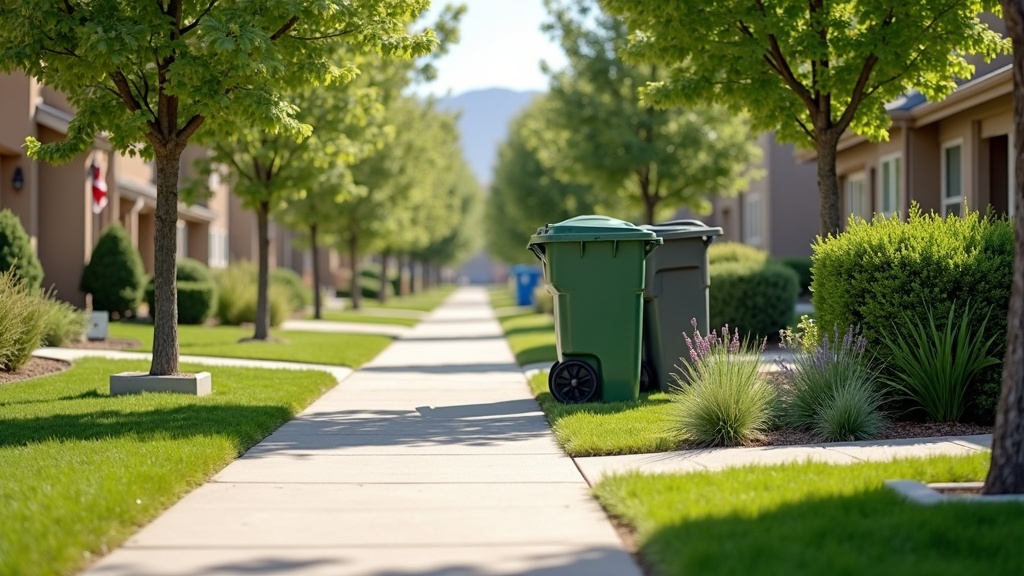
I would also look at the street during the showing. Not to judge the neighborhood. To understand function. Is there enough curb space? Is the street narrow? Are cars parked in a way that could complicate pickup or emergency access? Are bins set neatly back, or do they sit in a place that suggests storage is tight? Those are not deal-breakers by themselves. They are prompts for better questions.
If you are selling, this is where preparation helps. A buyer who asks about trash, recycling, and utility transfer is not being difficult. They are trying to avoid an avoidable surprise. Have the basic service information ready, and make sure your disclosures match what you actually know.
Ask who handles service
City, HOA, private provider, or another arrangement should be verified for the address. Do not assume from the broader South Jordan location.
Confirm the bin routine
Ask about containers, storage, replacement, curb placement, and whether the HOA has rules that matter after closing.
Check billing questions
Use official city resources for billing paths, then verify actual account transfer and any property-specific details before closing.
Look at street function
Notice curb space, parked cars, shared drives, private lanes, and anything that could affect pickup or access. Then verify instead of guessing.
What Emergency Access and Neighborhood Layout Should Make You Ask
South Jordan safety is not something I will reduce to rankings, crime claims, or response-time guesses. That would not be useful, and it would not be responsible. What I can do is help you look at emergency access as a practical homeownership check.
Emergency access starts with the street. A wide public street, a private lane, a gated entry, a long driveway, a cul-de-sac, heavy curbside parking, or a shared-access setup can each raise different questions. The point is not to panic. The point is to notice the layout and ask the right people before you close.
South Jordan’s Quick Links directory lists public-service resources under Police and Fire, including items such as Report Crime Online, Extra Police Patrol Request, Traffic Enforcement Request, Emergency Response, and Fire Prevention. Those links can help you find official pathways. They do not prove anything about a specific home’s safety, response time, or risk profile.
Here’s what I’d do at a showing. I would stand at the driveway and look both directions. Where would a fire truck, ambulance, moving truck, or snow equipment approach? Are there cars parked on both sides? Is there a gate? Is the address easy to see? Is the driveway steep or tight? Is there a second way in or out of the pocket? Are sidewalks, hydrants, or corners blocked by landscaping or storage?
Then I would ask the seller and HOA what applies. If it is a private road, who maintains it? If there is a gate, how does access work? If parking is tight, what rules govern it? If exterior storage is common, are there HOA rules or fire-prevention considerations? Your inspector may also flag physical access or exterior concerns that should be addressed before you close.
Notice the difference between a claim and a question. I am not saying a layout is unsafe. I am saying layout belongs in your due-diligence file because you will live with it every week.
How Roadwork, Service Requests, and Summer Calendars Can Affect Daily Routines
Summer in South Jordan is active. The city calendar can include public meetings, park events, museum activities, and community programming. That does not mean a specific home will have traffic, noise, parking, or access problems. It means you should check the calendar and test the routine near the address you are considering.
The South Jordan Events calendar lets users view calendar categories and subscribe to notifications through Notify Me. In the July 2026 calendar check for this article, named local entries included Movies in the Moonlight events at Highland Park, activities at The Gale Museum, and a City Council Meeting at South Jordan City Hall, 1600 W. Towne Center Dr. Those details are useful because they remind you that summer routines are real and local.
Here’s the practical version. If you are buying near a park, public facility, school, trail, city building, or event area, drive the pocket at the time you would actually use it. A quiet weekday showing is one data point. A summer evening is another. A weekend errand loop is another. None of those tests lets you predict every future condition, but they help you understand how the address fits your life.
Roadwork and service requests deserve the same treatment. The South Jordan homepage includes quick actions such as Report a Problem and Apply for a Permit. Those are not magic answers. They are official starting points. If the road looks torn up, if drainage looks odd, if streetlights are out, if sidewalks are damaged, or if something around the property raises a public-service question, ask early and verify through official sources.
I would not make construction-timeline claims unless a current official source says so. I would not assume a lane closure, road project, or service request will resolve by a certain date. For a buyer, the safer move is to document the question, ask who owns the issue, and decide whether the answer affects your comfort before you waive due diligence.
How I would test a summer routine
- Drive from the exact home to your normal grocery, pharmacy, childcare, work, or family route during the time you would actually go.
- Check the South Jordan calendar for nearby city events or public meetings that could affect a specific date or routine.
- Look for public-service clues around the home: roadwork, drainage, curb damage, parked cars, lighting, sidewalks, and access points.
- Ask the seller what they know, then verify through the city, HOA, or inspector instead of treating memory as proof.
- Put unresolved questions in writing before your due-diligence deadline.
That is not overthinking it. That is how you protect your move.
What South Jordan Sellers Should Prepare Before Inspection Week
If you are selling in South Jordan, this article is not only for buyers. Good buyers ask practical questions. The more prepared you are, the less defensive the process feels.
Start with utilities. Gather what you can share about water, garbage, recycling, irrigation, storm-water concerns, service requests, HOA service responsibilities, and any recent repairs or maintenance that touch those areas. If you do not know an answer, say that clearly and direct the buyer to the official source rather than guessing.
Then think about the exterior. Summer buyers are going to look at lawns, sprinklers, grading, shaded sidewalks, hot west-facing rooms, storage areas, driveway function, and trash-bin placement. They may ask about watering routines, restrictions, or how the property handled recent dry conditions. You do not need to promise outcomes. You need to provide clear, honest information.
For homes with HOA overlap, I would prepare the documents early. If the HOA handles landscaping, irrigation, trash, snow, gates, private roads, parking, exterior maintenance, or shared amenities, buyers need to know. If those details are buried in a packet, pull them forward. It saves time.
Also think about service-request history. If there was a drainage issue, curb repair, sidewalk question, streetlight request, or garbage-bin replacement, organize the dates and what happened. A clean explanation is better than a vague answer. Vague answers make buyers wonder what else is missing.
The seller implication is simple: city-service clarity can keep inspection week calmer. It does not replace disclosure obligations, legal advice, or inspection reports. It gives the buyer fewer reasons to feel uncertain.
Address-Specific Questions to Ask Before You Choose the Home
Before you choose a South Jordan home, I would rather see you ask a few direct questions than carry a dozen assumptions into closing. Use this list as a starting point. Then narrow it to the exact home, not the general area.
- How do utilities transfer for this address, and what official city resource confirms the setup path?
- Is water service, irrigation, or outdoor watering handled by the city, HOA, private provider, or another arrangement?
- Are any current summer water restrictions or conservation notices relevant to the way I plan to use the yard?
- Who provides garbage and recycling service for this property, and are there HOA rules about bins, storage, or pickup?
- Does the property have storm-water, grading, drainage, or basement moisture questions that my inspector should focus on?
- Is the street public, private, gated, shared, narrow, or affected by parking patterns that raise access questions?
- Is there any roadwork, service request, sidewalk issue, streetlight issue, or municipal concern I should verify before closing?
- Are nearby parks, city facilities, or calendar events relevant to my normal weekend routine?
- What does the seller know, what does the HOA document, and what should I verify directly through official sources?
- What would make me comfortable before I waive due-diligence comfort on this exact home?
My honest answer: if you can answer those questions clearly, you will understand the home better than most buyers who only tour the inside.
Frequently Asked Questions About South Jordan City Services
How do I verify South Jordan utilities before buying a home?
Start with the exact address. South Jordan’s official website includes utility-related actions such as Pay Water Bill and Connect Utilities, and the Quick Links directory points to water and utility billing resources. Then confirm anything specific with the city, seller, HOA, and inspection team before your due-diligence deadline.
Are garbage and recycling details the same for every South Jordan address?
Do not assume that. The city publishes Garbage and Recycling resource paths, but pickup details, billing, bin placement, HOA rules, or private arrangements should be verified for the exact property. This matters more for homes with HOA involvement, private lanes, townhome settings, or shared service areas.
Should I check summer water restrictions before closing in South Jordan?
Yes. Summer is the right time to verify current water-conservation notices, outdoor watering expectations, irrigation setup, and yard maintenance questions. Treat any current city notice as time-sensitive and confirm the latest guidance before relying on it.
What should I ask about emergency access during inspection week?
Ask about the street layout, driveway access, gates, private roads, curbside parking, address visibility, and who maintains any shared access. Use official police and fire resources for navigation, but avoid making safety or response-time assumptions from a listing or a map.
Can South Jordan city events affect whether I like a neighborhood pocket?
They can affect how you test a routine, but do not assume an event creates traffic, sound, or parking problems for a specific home. The safer move is to check the official city calendar, visit the pocket at the times you would actually use it, and decide whether the routine fits you.
What should a seller prepare when buyers ask about utilities and public services?
Prepare utility setup information, garbage and recycling details, HOA service responsibilities, irrigation notes, drainage history, and any known service-request records. Clear answers make inspection week feel less uncertain for the buyer and less reactive for the seller.