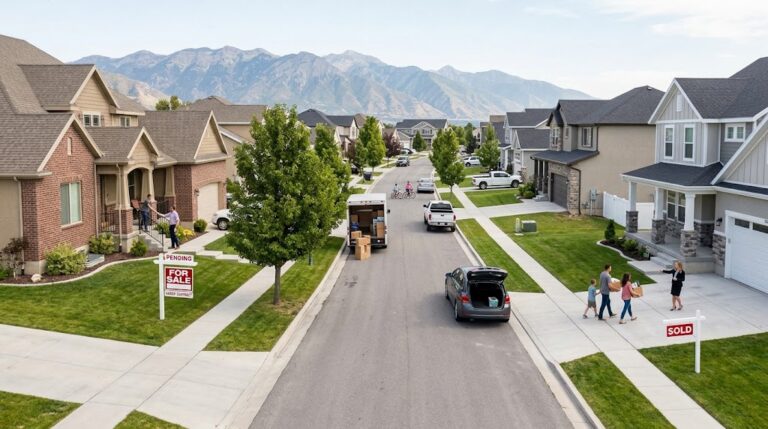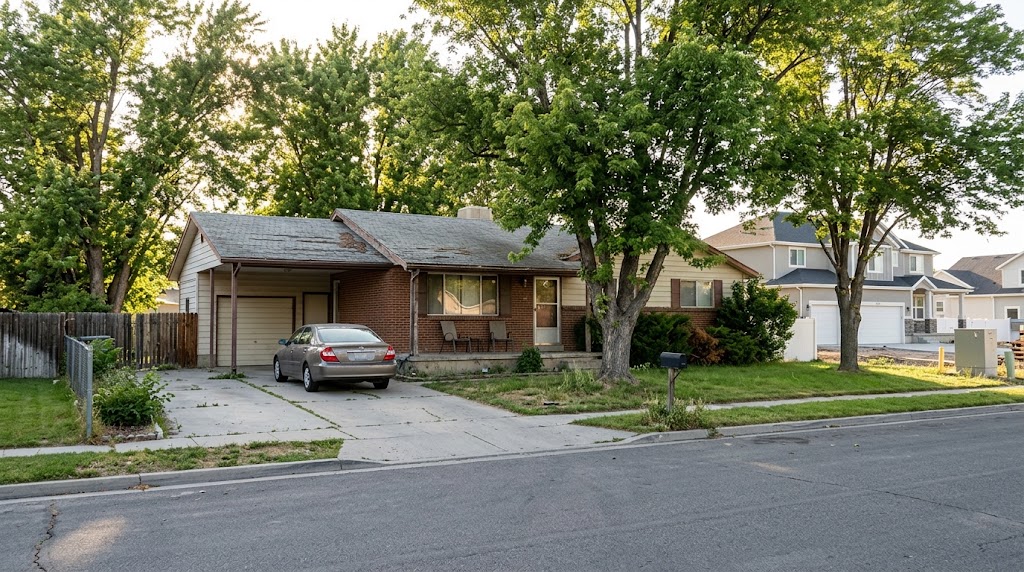
Torn between an established South Jordan home and a newer build? You’re not choosing between “old” and “new.” You’re choosing between two specific houses, each with its own lot, layout, upkeep, and place on the map.
There’s no universal winner between South Jordan resale homes and new construction. An older home can have a smaller lot than you’d expect. A newer one can come with more yard work than you planned. What settles it is comparing two real addresses on five things: how you’d use the lot, how the layout and storage fit your days, what maintenance comes with each, how landscaping and irrigation are handled, and how each address connects to your daily routes. Below is how I compare them, the records I pull first, and how I’d split one tour day between one of each.
The five things you’re actually trading: lot use, layout and storage, maintenance exposure, landscaping and water, and location. Every one of them depends on the address, not on the age of the house. I’ll go through each one, and every section ends with what it means for your decision.
What Does “Older” or “Newer” Actually Tell You About This South Jordan Home?
Less than you’d think. The age of a home is one fact about it. It doesn’t tell you the lot size, the layout, the condition, or whether the yard has a secondary water connection. Those all vary from address to address across South Jordan.
So before I form an opinion on either home, I pull the records. Salt Lake County’s property lookup lets you search a parcel by owner, address, or parcel number. That’s where I start for both addresses, then I compare what the records show with the listing and what I see in person.
| What You Want to Know | Where to Check It | What It Means for You |
|---|---|---|
| Year built, lot area, home size | County parcel record and the current listing | Compare the two homes on their actual numbers, not on how old or new they look. |
| What the neighbors’ land could become | South Jordan Planning’s zoning and future-land-use maps | Know what’s planned around each home before you assume a street stays as it is. |
| Secondary irrigation water | South Jordan’s secondary water information, the seller, and the water provider | Find out how each yard gets watered, and what that costs you in effort. |
| HOA rules or recorded covenants | Governing documents and property-specific disclosures | See what you can and can’t change, and what’s maintained for you. |
| Recent replacements and condition | Seller disclosures, permits, and your inspection | Learn which big-ticket items are new, aging, or unknown in each home. |
What this means for you: once you have the records side by side, half the “older vs. newer” debate settles itself. You’re comparing two homes, with facts, instead of two categories with assumptions.
What Do Move-Up Buyers Commonly Get Wrong About Older vs. Newer South Jordan Homes?
These assumptions sound reasonable, and they can quietly steer a search the wrong way. Each one has a quick check that replaces it with a fact.
“Older South Jordan homes always have bigger lots.”
Not always. Lot size varies address by address, and an older home doesn’t guarantee a larger yard. Check the county parcel record for each home, then walk the lot to see how much of it you’d actually use.
“A new build means low maintenance.”
New doesn’t mean maintenance-free. A newer home can come with its own to-do list, including landscaping you may need to finish or establish yourself. Read the builder documents and the HOA rules, and ask what’s left for you to do.
“Every South Jordan yard gets secondary water.”
No. The city says its secondary irrigation water serves only part of South Jordan. Ask whether that specific yard has a connection, and how its sprinklers are set up.
“An established street won’t change.”
Maybe, maybe not. South Jordan Planning maintains zoning and future-land-use maps and reviews development applications. If there’s an open parcel near the home, look it up before assuming it stays empty.
“A newer layout will suit me better.”
Only if it fits how you live. An open plan isn’t automatically better than separated rooms, and more square footage isn’t automatically more useful storage. Walk both homes with your actual routine in mind.
“This is really a Daybreak-or-not decision.”
It doesn’t have to be. Daybreak is one master-planned community within South Jordan, and the newer home you’re considering may or may not be in it. Use Daybreak as a reference point if you know it, but compare the two specific homes in front of you.
Which Lot Works for the Way You Use Your Yard, Not Just for Square Footage?
Lot area on a record is a starting point. What matters more is how much of that lot you’ll use, and for what. Two lots with similar numbers can feel completely different once you’re standing in them.
What I’d look at on each lot
- The usable part. How much is flat, open, and reachable from the back door? Slopes, side strips, and front lawns count on paper but often don’t get used.
- Which way it faces. Notice where the afternoon sun lands and where shade falls, especially on a patio or play area.
- Side yards and access. Can you get a trailer, a mower, or a wheelbarrow to the back? Is there room for bins and storage along the side?
- Trees and plantings. Mature trees bring shade and character. They also bring roots, leaves, and pruning. Note what’s there and how close it is to the house.
- What’s next door. A neighboring open parcel, a busy road, or a shared path changes how private the yard feels. Check the city’s planning map for anything near the lot line.
For your decision: write down the three things you’ll actually do in the yard, like a garden, a dog run, kids playing, or a quiet patio. Then judge each lot only on those three. A smaller lot that does all three well beats a larger one that does one.
Where Will You Notice the Layout and Storage Difference Every Day?
Layout is where move-up buyers feel the difference fastest, usually within the first week. It’s also the hardest thing to judge from photos, so I’d walk each home as if you already live there.
The way in
Where do you come in from the car? Is there a place for shoes, bags, and coats, or does everything land on the kitchen counter?
Laundry
Where is it, relative to bedrooms? Will you be carrying baskets up and down stairs every week?
The garage
How many cars actually fit with the doors open? Is there room left for bikes, tools, and storage shelves?
Storage
Count the closets, any basement or attic space, and pantry room. Imagine where your current boxes would go.
Flexible rooms
Is there a room that can be an office now and something else later? Is it quiet enough to work in?
Noise and privacy
Where do bedrooms sit relative to the main living space and the street?
I won’t tell you an older home always has more storage or a newer one always has a better kitchen. That isn’t true across South Jordan. What I’ll do is walk both with you and point out where each layout would make your days easier or harder.
Try this: make a list of the five things you do every day at home, then walk each layout doing them in your head. The home that makes those five easier is usually the one you’ll be happier in, whatever its age.
Which Maintenance Items Come With Each Address?
Every house comes with a maintenance future. The question is which items, when, and how much you’ll know about them before you buy. The answer depends on records, disclosures, and an inspection, not on the year built alone.
Here’s the part people underestimate on a newer home: the first years can carry their own projects. Landscaping may need to be finished or established. Window coverings, fencing, and storage may not be in place. None of that is a defect. It’s simply work and cost that the listing photos don’t show.
And on an established home, the unknowns are different. You’re asking how old the major systems are and how they’ve been cared for. A home with recent replacements and good records can carry less uncertainty than a newer home with unfinished items. It can also go the other way. That’s why I look at the specific house.
Your takeaway: list the major items for each home with what you know and what you don’t. The home with fewer unknowns isn’t always the newer one.
Questions I’d ask about each home
Ask the same questions about both homes so the answers are comparable. Write them down as you go.
- What’s been replaced or repaired, and when? Are there receipts or permits?
- Has anything been added or changed, like a finished basement, a deck, or a new fence? Was it permitted?
- Is the yard on secondary water, and who turns the sprinklers on and off each season?
- Is there an HOA or recorded covenants? Can I see the documents now, not at the last minute?
- What’s unfinished? For a newer home: landscaping, fencing, window coverings, storage.
- Is anything planned on nearby land that you know of?
- What would you do differently if you were staying?
That last question is one I always like to ask. Whatever the answer, it points you toward the projects that are waiting for the next owner, and it gives you something concrete to check during your inspection. Compare the two lists side by side when you get home.
How Do HOA Rules, Landscaping, and Irrigation Change the Real Workload?
This is the section that surprises the most buyers in South Jordan, because water and yard care work differently from one address to the next.
Secondary water
According to the city’s secondary water page, South Jordan provides secondary irrigation water to only a portion of the city. The canal system also runs on a seasonal schedule, with startup and shutdown dates the city publishes and may change.
So for each home, ask three questions. Does this yard have a secondary-water connection? How is the sprinkler system set up? And who handles the seasonal startup and shutdown? Confirm with the seller or the water provider, and have the sprinkler system looked at during your inspection.
The city also runs a water-conservation program called Water Smart SoJo, which is useful background if you’re thinking about changing your landscaping after you move in.
Landscaping
Mature landscaping and first-year landscaping are two different jobs. An established yard may need pruning, cleanup, and irrigation repairs. A newer yard may need to be installed or established. Either can be a lot of work. Find out what condition each yard is really in, and what you’d need to do in your first season.
HOA rules and covenants
Don’t assume older homes have no HOA and newer ones always do. Either one may come with recorded covenants or an association. If it does, read the governing documents and the property-specific disclosures. Look at what you can change, what’s maintained for you, and what the dues and rules actually say for that home.
What this guidance is based on: secondary water service and its seasonal schedule come from South Jordan City’s secondary water page, and conservation context comes from Water Smart SoJo. Zoning and future-land-use mapping come from South Jordan Planning and Zoning. Parcel lookups come from the Salt Lake County Assessor. Park details come from the city’s Heritage Park and East Riverfront Park facility pages. None of these sources describe a specific home. They tell you where to verify each address.
So put “water and yard” on your comparison as its own line. It’s easy to fall for a house and only discover in spring how much yard work it takes.
Which Location Fits Your Daily South Jordan Route Better?
The last trade is location, and it’s often the tiebreaker. A home that’s a little less perfect inside can still win if it makes your daily routes easier.
I like to anchor the route test on real South Jordan places. Redwood Road and 11400 South are real South Jordan corridors and good anchors for a route test. Two city parks make good test destinations, depending on where the homes are:
I won’t give you drive times. They depend on the address, the hour, and where you’re going. Drive each route yourself and note what slowed you down, if anything, and whether you’d be happy repeating it.
The tiebreaker: if one home makes your most frequent trip noticeably easier, give that real weight. You’ll make that trip far more often than you’ll admire the kitchen.
How I Would Split a Tour Day Between an Established Resale and a Newer Build
Here’s the part I enjoy most. Seeing one of each on the same day, with the same checklist, makes the tradeoffs obvious in a way that touring them weeks apart never does.
Before the tour: pull both records
Look up both parcels with the county, check the city’s planning map around each, and ask about secondary water and any HOA documents.
Morning: the established resale
Walk the lot first, then the layout. Note the age and condition of major systems and anything the disclosures mention.
Drive your route between them
Use the drive to test a real trip, like heading toward work or a park you’d use, from the first home.
Midday: the newer build
Same order: lot, then layout. Ask what’s unfinished, what the builder documents cover, and what the HOA requires.
Drive the same route from the second home
Same destination, same kind of trip. Notice the difference in how it feels.
Afternoon: score them side by side
Sit down while it’s fresh and fill in one scorecard for both homes.
The scorecard I’d use
- Lot use: does it do the three things you want a yard for?
- Layout and storage: does it make your five daily routines easier?
- Maintenance: what’s known, what’s unknown, and what you could budget for.
- Water and yard: secondary water, sprinklers, and first-season work.
- Rules: any HOA or covenants, and whether they fit your plans.
- Location: how your most frequent trip felt from each address.
Most of the time, one home wins three or four of these clearly, and the decision gets much easier. When it’s close, I’d let location and layout break the tie, because those are the two you can’t change after you move in.
The pattern I trust: after 36 years helping Utah buyers, I’ve stopped asking clients “older or newer?” I ask “which of these two would you rather live in on a busy Wednesday?” It gets to the real answer much faster.
For a wider look at the city’s housing, read my South Jordan real estate and housing guide. When you’re ready to pick your two homes, the South Jordan community page is where to start browsing.
Older vs. Newer South Jordan Homes: FAQ
Do older South Jordan homes always have larger lots?
No. Lot size varies by address. Check the Salt Lake County parcel record for each home, then walk the lot to see how much you’d actually use.
Which public record should I check for a home’s lot size and year built?
Start with the Salt Lake County Assessor’s property lookup, which lets you search by owner, address, or parcel number. Compare it with the current listing.
How do I compare maintenance on a resale versus a new build?
For a resale, ask when major systems were replaced and review disclosures and permits. For a newer home, ask what builder documents cover and what’s unfinished. Get an inspection on both.
Does every South Jordan house receive secondary water?
No. South Jordan provides secondary irrigation water to only part of the city. Confirm whether the specific yard has a connection and how its sprinklers work.
How should I compare HOA restrictions between two properties?
Don’t assume either home is free of covenants. Read the governing documents and property-specific disclosures for each, then compare what you can change and what’s maintained for you.
Can I see both kinds of homes on the same day?
Yes, and I’d recommend it. Seeing one of each with the same checklist and the same route test makes the tradeoffs much clearer.
Torn Between an Established South Jordan Home and a Newer Build?
Send me one of each address and I’ll give you a practical side-by-side read. Want a second opinion before you write an offer? Call me before you commit.