
Evergreen Buying Resource · Herriman, South Jordan & Daybreak
Jena Hunt’s Utah Home Buying Guide
How to buy the right home in Herriman, South Jordan, Daybreak, and nearby Utah communities.
A home can look right in listing photos and still make everyday life harder than it needs to be. This guide helps you set a comfortable buying range, compare communities, tour with a practical eye, prepare an offer, and organize due diligence.
Buying your first home, relocating to Utah, moving into a larger home, or comparing new construction with resale? Start with the path that best matches your decision.
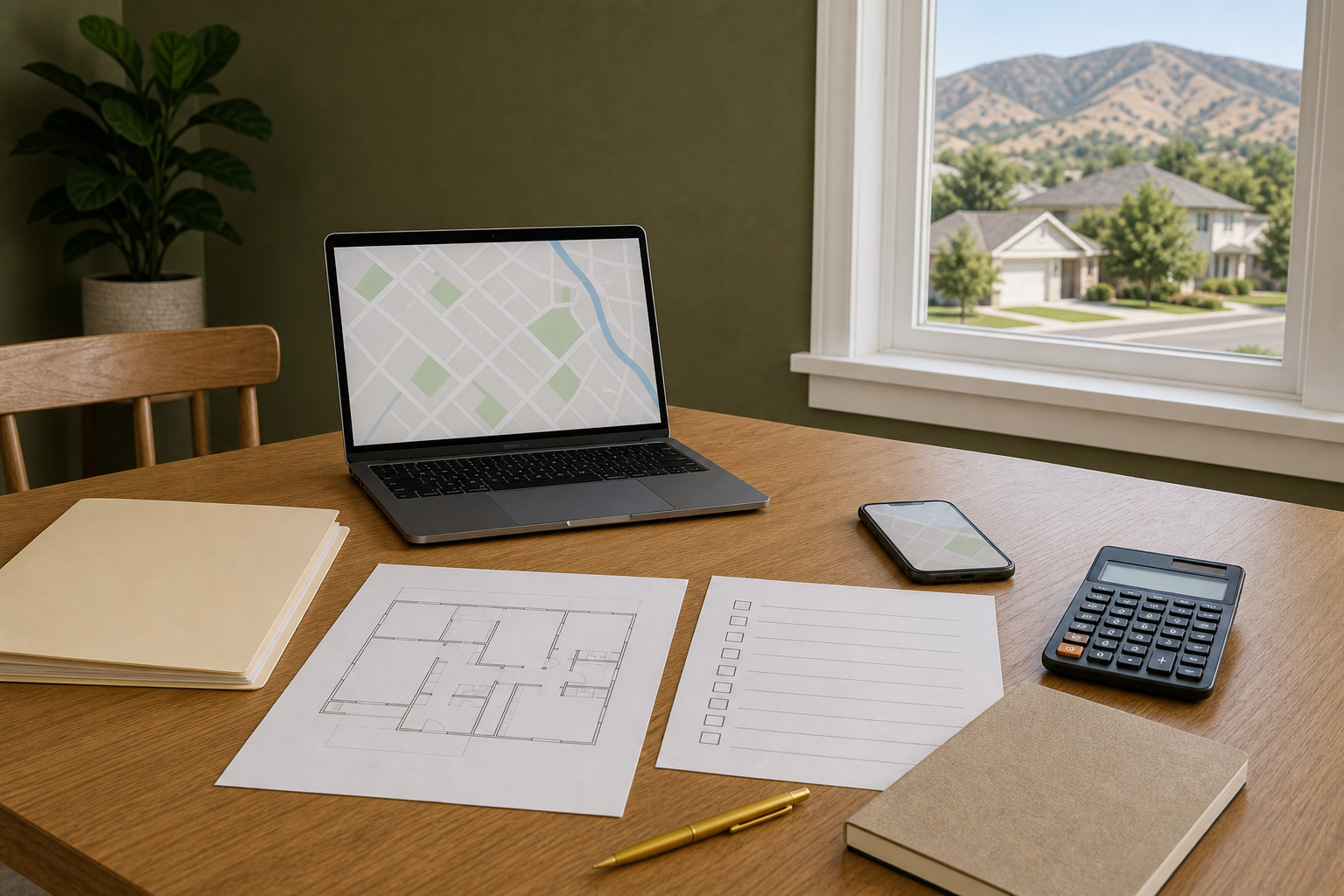
Choose Your Buying Path
Buying Your First Home?
Start with the three numbers that matter: what a lender may approve, what feels comfortable each month, and how much cash you need before and after closing.
Start With My Buying RangeBuying Your Next Home?
Begin with the reason for the move. Identify what the current home no longer provides, and how the purchase will coordinate with the sale or retention of your existing property.
Define My Next-Home PrioritiesRelocating to Utah?
Do not choose solely from listing photos or city-level descriptions. Compare exact commute routes, school boundaries, HOA layers, parking, and what an ordinary weekday would feel like from the address.
Compare Utah CommunitiesComparing New Construction and Resale?
Compare the completed ownership experience, not only the advertised price: upgrades, lot premiums, landscaping, HOA obligations, timeline risk, and nearby construction.
Compare New and Resale HomesStep 1
Define What the Move Must Accomplish
A successful home search begins before the first showing. Ask what needs to change about everyday life. More square footage may not solve a difficult commute. A beautiful yard may not help if you do not want the maintenance.
Start With the Problem You Are Trying to Solve
Separate Your Priorities
Must Have
A requirement without which the purchase does not work: commute, bedroom count, parking, a defined purchase ceiling, or accessible main-level living.
Strong Preference
Important enough to influence the decision, but flexible enough to trade for the right location, condition, or price.
Nice to Have
A feature you would enjoy but should not eliminate an otherwise suitable home.
Dealbreaker
A condition, cost, rule, layout, or location issue you have already decided not to accept.

Jena’s “Normal Tuesday” Test
Picture a regular Tuesday, not the model-home kitchen or a quiet Saturday morning.
Step 2
Establish a Comfortable Buying Range
A buyer can receive a lender approval and still need to decide what purchase actually fits the rest of life. Know three numbers before you search.
Financing Range
What a lender may be willing to finance based on the loan program, income, credit, assets, debts, and other qualification factors.
Comfortable Monthly Cost
What you can pay each month while preserving the savings, flexibility, and lifestyle that matter to you.
Cash Plan
Down payment, earnest money, inspections, appraisal, closing costs, moving, immediate repairs, initial purchases, and an after-closing reserve.
The CFPB recommends reviewing complete loan terms and comparing multiple Loan Estimates rather than evaluating only the interest rate or advertised payment.
Build the Full Monthly Picture
Do Not Spend the Same Dollar Twice
Before setting the search range, identify which funds may be needed for earnest money, down payment, lender and closing costs, inspections, appraisal, moving, utility setup, immediate repairs, appliances or window coverings, landscaping or fencing, furniture, and an emergency reserve.
Two homes with the same purchase price can create very different monthly costs. HOA structure, insurance, commute, lot maintenance, utilities, property condition, and unfinished new-construction items can materially change what ownership feels like.
Questions for the Lender
- What loan programs are appropriate for my situation?
- What amount is required at application, appraisal, and closing?
- Is the rate locked, and until when?
- What could change the payment or cash-to-close amount?
- How do HOA dues or other property obligations affect qualification?
- Are any incentives tied to using a particular lender or loan structure?
- What financial changes should I avoid while the loan is being processed?
- Can I compare this Loan Estimate with another offer?
Step 3
Compare Communities and Home Types
Choose the address before falling for the finishes. A city name is only the beginning. The exact property can change commute routes, school assignment, HOA structure, parking, transit, nearby development, internet, noise, maintenance, and monthly cost.
School assignment should always be verified using the current address-based district tool. Use the Jordan School District address lookup and the district’s school-year boundary information. Transportation information can also change.
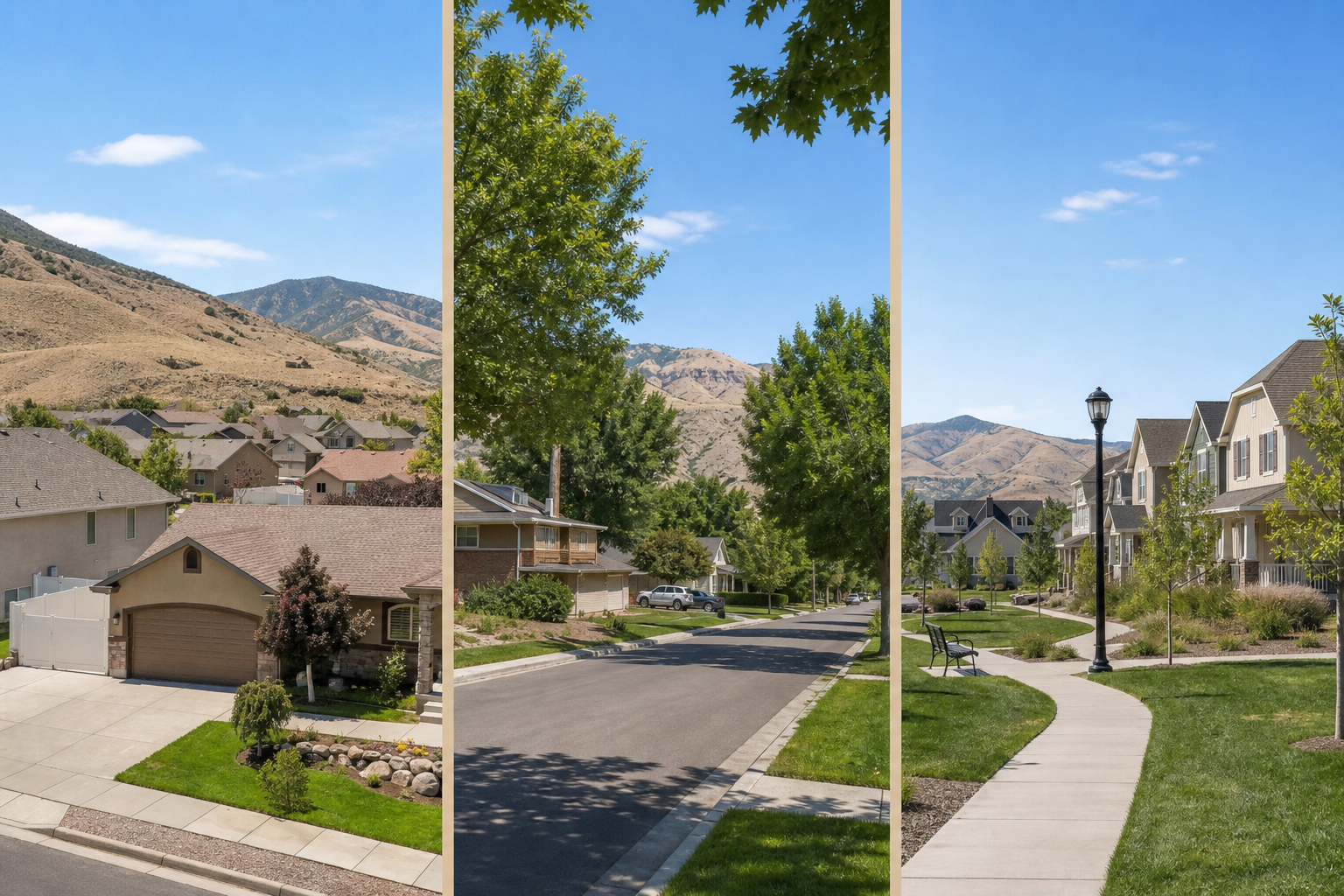
Buying in Herriman
Herriman can offer resale homes, newer subdivisions, townhomes, condominiums, and active growth areas. Compare exact commute routes, nearby construction, HOA requirements, parking, yard usability, future roads, and surrounding development that remains incomplete.
Herriman’s GIS includes zoning, subdivisions, FEMA floodplain access, projected future development, parks, open space, and trails. For some addresses in South Herriman growth areas, the city identifies proximity to Camp Williams and requires notification for homes within designated high-noise areas. That is an address-specific item to verify, not a reason to characterize the entire city the same way.
Check Before Offering in Herriman
Buying in South Jordan
South Jordan includes established neighborhoods, newer developments, attached housing, and the separate master-planned structure of Daybreak. Location within the city can affect access routes, transit practicality, surrounding land use, property type, and neighborhood rhythm.
South Jordan maintains official zoning and future-land-use maps and a city GIS portal. Use them to check the current designation around a specific property instead of relying on a listing description or assumptions about vacant land.
Check Before Offering in South Jordan
Buying in Daybreak
Daybreak is part of South Jordan, but it adds a master-planned community structure, association obligations, design standards, shared amenities, and, for some properties, a separate sub-association.
Location within Daybreak can change the practical value of trails, parks, lake access, transit, events, shopping, parking, construction, and HOA-maintained services. Daybreak Parkway and South Jordan Parkway are both Red Line TRAX stations, but access should be tested from the exact address. Daybreak’s official association materials explain that the master association manages amenities, common areas, and architectural standards, while some townhomes, condominiums, and low-maintenance properties receive additional services through sub-associations.
Check Before Offering in Daybreak
Jena’s “Drive It Twice” Rule
Drive One: The Required Route
Test the trip you cannot avoid: work, school, childcare, medical care, family responsibility, or a regular appointment, at the time you would normally make it.
Drive Two: The Backup and Weekly-Life Route
Test a second way out of the neighborhood, grocery and pharmacy access, evening activities, weekend errands, transit or station access, and the route during a busier community period.
Step 4
Build a Search That Can Actually Work
A search becomes frustrating when every preference is treated as a requirement. Turn your priorities into four lists. When too few useful homes appear, adjust one lever at a time so you can tell which tradeoff is helping.
Turn Your Priorities Into Search Criteria
Non-Negotiable
Without it, the home does not work.
Important
Strong enough to influence the decision, but potentially tradeable.
Optional
Helpful or enjoyable, but not worth losing the right home over.
Dealbreaker
Something you have already decided not to accept.
Use the Six Search Levers
Changing every criterion at once makes it difficult to understand which tradeoff is helping.
Search by Ownership Experience, Not Just Bedroom Count
Consider HOA comfort, exterior-maintenance preference, parking, yard expectations, basement status, main-level living, home-office use, new versus established neighborhood, attached versus detached, nearby construction, proximity to the routes you use, and renovation tolerance.
Build My Search
Start a Conversation, Not a Filter Wall
Select what you already know. Jena can use this to build a focused search. Nothing here requires an account.
Target communities
Step 5
Tour Homes in Three Passes
Start with function before finishes. A showing is not a substitute for due diligence or a professional inspection. Not every evaluation applies to every home. Jena can help organize the questions; licensed inspectors, lenders, title professionals, insurers, engineers, attorneys, government agencies, and other specialists provide the relevant professional answers.
Pass One
Does the Home Fit Your Life?
Pass Two
What Needs Professional Evaluation?
Notice questions involving roof, foundation, drainage, plumbing, electrical, heating and cooling, water heater, windows, appliances, basement moisture, signs of repairs, retaining walls, exterior condition, solar equipment, finished additions, and safety systems.
The current Utah REPC describes due diligence as substantially broader than a general inspection: structure and systems, hazardous substances, geologic conditions, square footage, insurance, water, property lines, restrictions, HOA charges, municipal services, utilities, and any other matter material to the buyer’s decision.
Pass Three
What Comes With the Address?
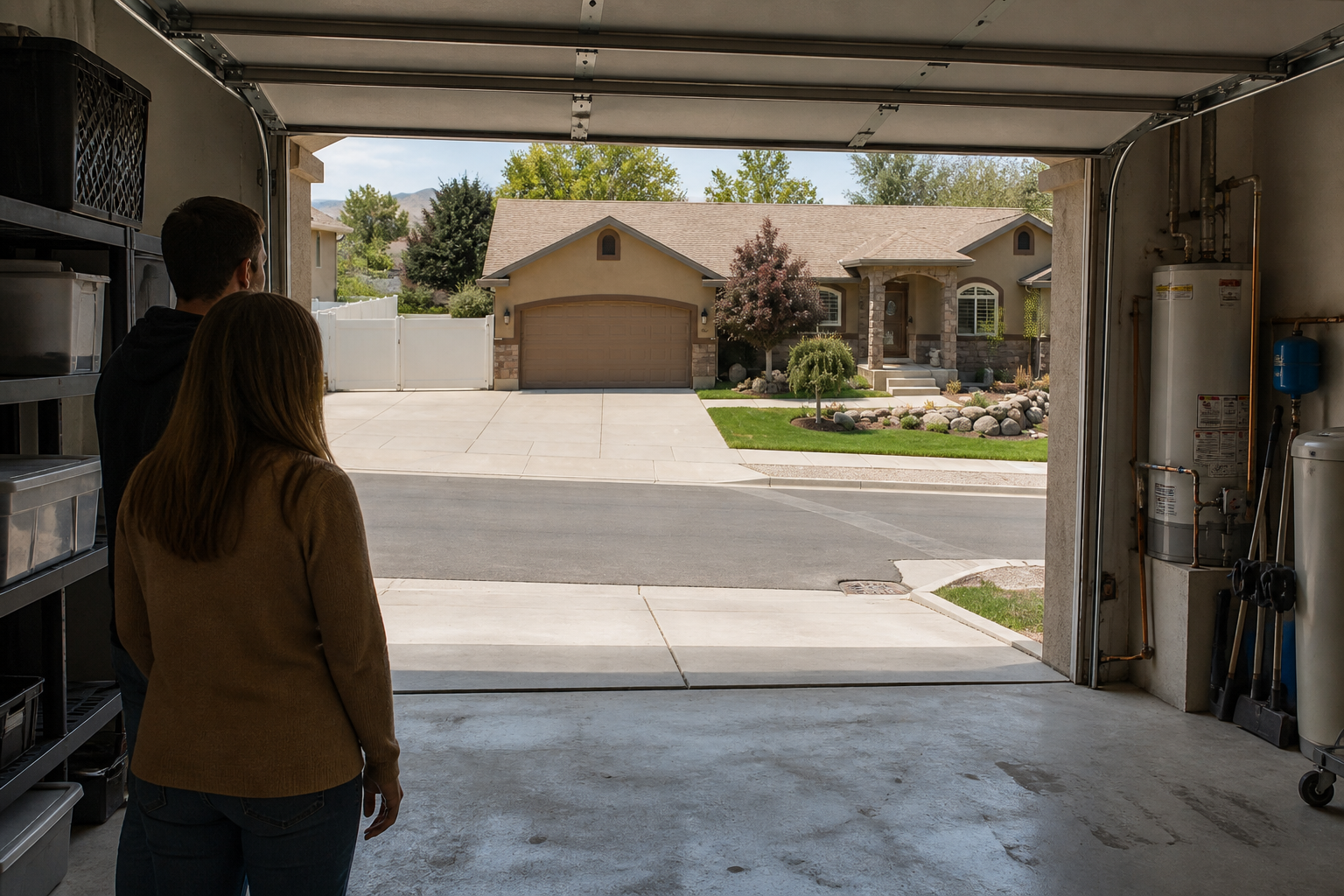
The Ten-Minute Driveway Check
- Stand outside with the car turned off.
- Listen for road, construction, event, aircraft, or neighborhood noise.
- Look at the slope of the lot and where water appears likely to move.
- Test the walk from the garage or parking space to the entry.
- Check how guest parking would work.
- Look at neighboring lots and undeveloped land.
- Test phone service where it matters.
- Open your most-used map route from the actual driveway.
- Note which direction the home and outdoor spaces face.
- Ask whether anything you observed needs verification before the due-diligence deadline.
Address-Specific Research Tools
Parcel and tax information
Salt Lake County provides property and parcel searches by address and parcel number. Use county records as a verification source rather than relying solely on marketing information.
Flood and geologic information
FEMA’s Map Service Center provides current flood-map searches by address. The Utah Geological Survey hazards portal is a starting point for hillside and mountain-front properties.
Radon
Utah’s Department of Environmental Quality provides radon resources for real-estate transactions. Testing decisions should be based on the property and advice from the appropriate professional.
Insurance
Obtain an address-specific quote early enough to evaluate availability, cost, and exclusions before the applicable contract deadline. Utah’s Insurance Department notes that flood, earthquake, earth movement, and mudslide are typically outside a standard homeowners policy.
Chemical contamination
Where there is a property-history concern, Salt Lake County provides testing guidance and a chemically contaminated property list. The public list does not include every privately detected property.
Water rights or shares
For acreage, water rights, or water shares, do not assume water rights automatically transfer with the land. Utah’s Division of Water Rights explains that water rights can be attached to land or owned and conveyed separately.
Step 6
Compare Resale and New Construction
A resale home and a new-construction home may appear close in price while including very different things. Compare the completed ownership experience.
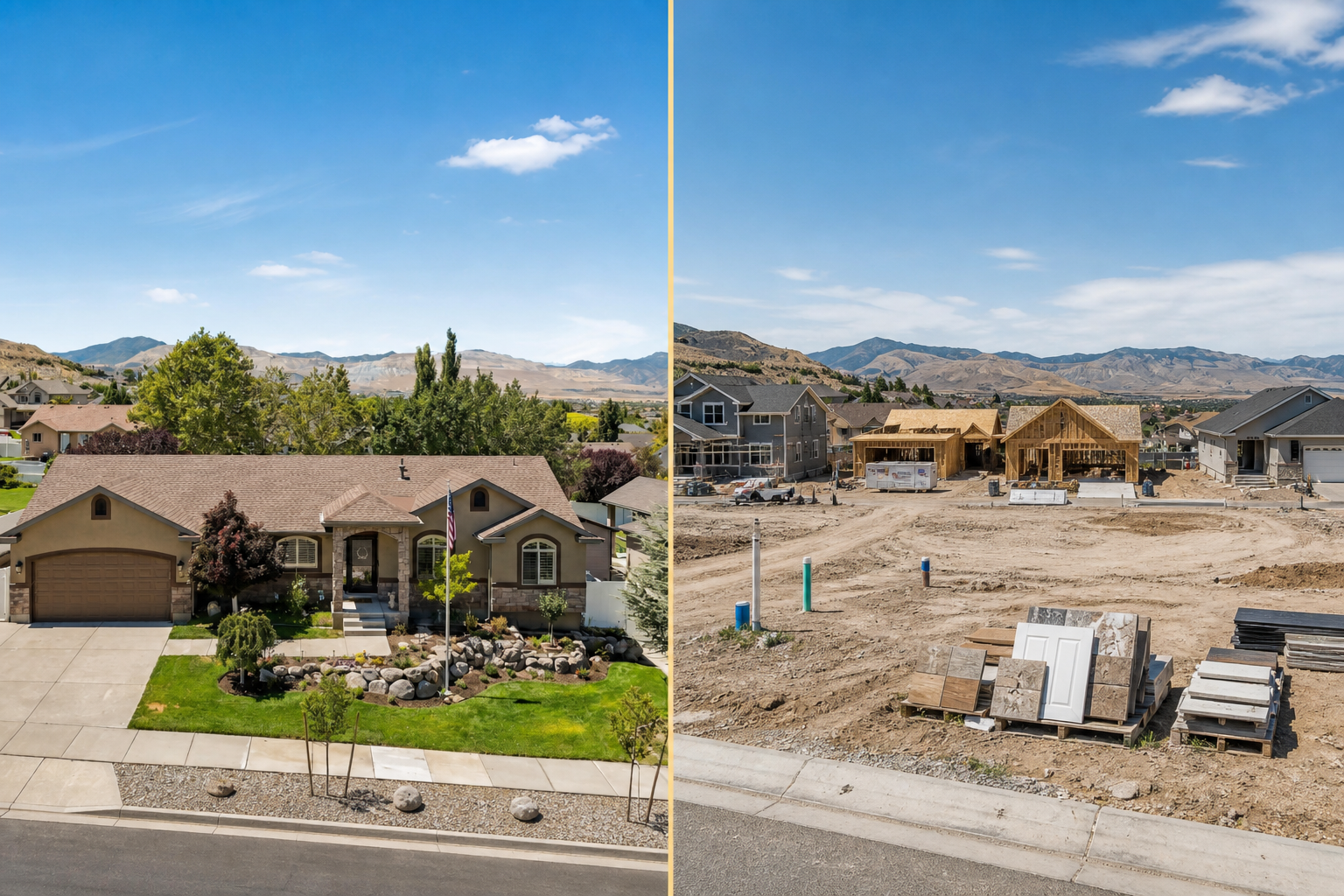
Resale: What You Can Evaluate Now
A resale may allow you to see the completed street, existing landscaping, actual parking, mature neighboring homes, current commute routes, present condition, existing HOA operation, and tax or utility history where available.
New Construction: What May Still Be Unfinished
The promoted price may not represent the home you expect to live in. Add the items that apply:
Questions to Ask Before Signing With a Builder
- Which features are included in writing? Which items in the model are upgrades?
- What is the total price after selected options?
- What dates are firm, estimated, or subject to change? What happens if completion is delayed?
- Which inspections are permitted? What is covered by each warranty?
- What remains unfinished at closing? What will be built around the lot?
- Does the property belong to one or more associations?
- Are incentives tied to a preferred lender, inventory home, closing date, or upgrade package?
- Who represents the buyer’s interests in the transaction?
The Utah HOA home-buyer checklist warns that builders and developers may use their own contracts rather than the standard REPC, so buyers must follow the actual contract they sign.
Price the Finished Home
Compare each option using: contract or purchase price + items needed to make the home functional + items needed to make the property complete + monthly association and property obligations + expected near-term repairs + timeline and temporary-housing consequences = a more realistic ownership comparison.
Step 7
Understand the HOA Before You Buy the Amenities
An HOA is not only a monthly charge. It can define what you own, what you maintain, which rules affect everyday life, and which future costs may become your responsibility. Utah’s 2026 official HOA home-buyer checklist recommends reviewing ownership structure, multiple associations, management, developer control, public infrastructure obligations, dues, special assessments, reserves, insurance, rental restrictions, parking, pets, design standards, common-area condition, legal disputes, and community experience.

1. What do you own?
Condominium interior, townhome structure, single-family home and lot, limited common areas, shared exterior components, association-maintained landscaping, or a privately maintained yard. Association-maintained property is still supported through dues, reserves, or assessments.
2. How many organizations?
3. What does it cost?
Current dues, master and sub-association dues, recent or planned increases, special assessments, reserve study and funding, transfer or reinvestment fees, administrative charges, public infrastructure obligations, and which services are, and are not, included.
4. Which rules apply?
Parking, guest parking, RVs, pets, rentals and minimum lease periods, short-term rentals, exterior colors and materials, landscaping, fences, sheds, solar, home businesses, holiday displays, waste containers, amenity use, noise, and architectural approval.
5. How is it operating?
Documents to Request and Review
Declaration or CC&Rs, bylaws, current rules, fee schedule, design guidelines, current budget, financial statement, recent meeting minutes, reserve study, insurance information, association disclosures, special-assessment information, litigation information, management contact, master and sub-association documents, public infrastructure information, and property-specific resale or closing documents.
The standard Utah REPC includes certain association materials in the seller disclosures. Other records, such as a reserve analysis, may need to be requested separately. The actual contract determines timing and documents.
Buying in Daybreak: Add These Questions
Daybreak currently directs real-estate professionals to obtain closing documents through HomeWiseDocs.
Step 8
Prepare an Offer
A strong offer is more than the price. It combines price, financing, contract conditions, deadlines, seller priorities, and risk allocation. The Utah REPC allocates more than price: title, possession, special assessments, association change-of-ownership fees, disclosures, due diligence, appraisal, financing, settlement, included items, and other negotiated terms.
Information to Review Before Deciding
Offer Terms to Discuss
Purchase price, earnest money, additional earnest money, financing terms, appraisal condition, due-diligence condition, seller-disclosure deadline, due-diligence deadline, financing and appraisal deadline, settlement deadline, closing-cost contribution, included and excluded property, solar-panel status, appliances, settlement timing, closing and possession, sale of the buyer’s property, HOA special assessments, change-of-ownership fees, and other property-specific addenda.
Jena’s Offer Scorecard
Score each proposed offer strategy from 1 to 5. The goal is not to make every offer aggressive. It is to understand which terms matter, where the risk sits, and what you are comfortable doing before the pressure of a deadline.
Financial comfort
Can you complete the purchase without using money reserved for another critical purpose?
Property confidence
How much do you already know, and how much remains to be investigated?
Appraisal and financing risk
What happens if the valuation, loan, or related terms change?
Deadline feasibility
Can the lender, inspector, title team, insurer, HOA, and other professionals complete the work within the proposed dates?
Seller fit
Do any non-price terms solve an important timing or possession issue for the seller?
Walk-away confidence
Will you still feel comfortable with the terms if another offer wins?
Step 9
Organize the Under-Contract Period
The current Utah REPC includes four separately entered contract deadlines. These are negotiated dates, not universal numbers of days. The signed contract controls. Do not copy a timeline from a blog, friend, previous transaction, or another property.
Your Four-Deadline Dashboard
Record the dates from the signed agreement and any later written amendments. This page never publishes “typical” deadline lengths as though they were contract rules.
Seller Disclosure
Due Diligence
Financing & Appraisal
Settlement
After the Offer Is Accepted
Seller Disclosures and Title
Review the materials provided under the contract. The standard REPC identifies these categories, but builder contracts and other purchase agreements may use a different disclosure process.
Due Diligence Is More Than the Home Inspection
Organize your work into four folders: the home, the address, the documents, and the ownership cost.
Folder 1: The Home
General inspection, roof, foundation, HVAC, plumbing, electrical, appliances, sewer or drainage, radon or specialty testing, basement moisture, additions, solar, warranties, and immediate repair priorities.
Folder 2: The Address
School boundary, commute, backup route, parking, zoning, future land use, nearby development, flood and geologic information, noise, internet, utilities, lot boundaries, and water rights where applicable.
Folder 3: The Documents
Seller disclosures, title commitment, easements, HOA documents, reserve information, insurance certificate, permit records, solar contracts, leases, warranties, builder documents, and addenda.
Folder 4: Ownership Cost
Insurance quote, property taxes, HOA and sub-association dues, public infrastructure obligations, utilities, maintenance, immediate repairs, planned improvements, commute changes, and new-construction completion items.
Before the Due-Diligence Deadline
The official REPC states that the buyer’s right to cancel or resolve objections depends on the contract’s due-diligence condition and deadline. Failure to cancel or resolve objections as required can waive that condition and affect earnest money.
Financing and Appraisal
Step 10
From Final Approval to the Keys
For most covered mortgage transactions, the CFPB says buyers receive the Closing Disclosure at least three business days before closing. Compare it with the Loan Estimate and ask about unexpected differences.
Complete the Final Walkthrough
The REPC provides for a final pre-settlement walkthrough. It is not a new inspection; it is an opportunity to review the property’s condition before settlement based on the agreement and prior resolutions.
Settlement, Closing, and Possession Are Not the Same
Settlement
The required documents and funds are delivered as required for the transaction.
Closing
The REPC defines closing through completion of settlement, delivery of loan proceeds where applicable, and recording of the required closing documents.
Possession
The buyer receives physical possession according to the time written into the contract. It may be tied to recording or occur later under a separate written agreement.
Do not schedule movers, deliveries, contractors, or nonrefundable travel based only on the day you expect to sign documents. Confirm when possession is expected under the actual agreement.
Special Buying Situations
First-Time Buyer
Focus on terminology, comfortable monthly cost, cash needed at different stages, professionals involved, loan comparisons, property-maintenance responsibilities, deadline organization, and a post-closing reserve. Ask the lender about current assistance programs, but verify current availability rather than relying on an old program amount.
Go to Buying RangeMove-Up Buyer
Focus on whether the current home must sell first, financing overlap, offer conditions, settlement timing, possession, temporary housing, moving logistics, and whether the next home solves enough to justify the move.
Go to PrioritiesRelocating Buyer
Focus on real commute tests, address-specific school verification, remote-tour limitations, HOA and property documents, local development, property-type differences, weather and access, and a local visit at the times you would normally be home.
Go to CommunitiesNew-Construction Buyer
Focus on the builder contract, representation, included features, upgrades, lot premium, timeline, inspection rights, warranty, landscaping and exterior completion, HOA or public infrastructure obligations, nearby phases, and written, not verbal, commitments.
Go to New vs ResaleJena’s Six Local Buying Rules
- Buy for a Normal Tuesday
The right home should support your required routes, routines, parking, storage, maintenance tolerance, and everyday responsibilities.
- Price the Whole Month
Compare the full monthly ownership cost, not only the purchase price or lender’s maximum approval.
- Verify the Exact Address
School assignment, HOA structure, insurance, parking, internet, transit access, development, noise, and property obligations can change from one address to another.
- Read the Rules Before Valuing the Amenities
An amenity has value only when its cost, access, restrictions, and location fit the way you plan to live.
- Compare the Completed Home
For new construction, include the lot, upgrades, yard, fence, window coverings, timeline, community obligations, and nearby buildout. For resale, include repairs, condition, and near-term maintenance.
- Put Every Deadline on One Page
A contract deadline is a decision point. Organize the people, documents, inspections, insurance, financing, and open questions early enough to act deliberately.
Official Buyer Resource Center
Use these when you need to verify a specific loan term, contract form, association, school, parcel, hazard, or planning question. Official resources last reviewed August 2026. Verify current information before relying on it for a specific transaction.
Mortgage and Closing
Understand Your Loan Estimate
Review the loan amount, interest rate, projected payment, closing costs, cash to close, and whether the terms match what the lender discussed.
Use after you receive a Loan Estimate.
Understand Your Closing Disclosure
Compare the final terms and costs with the Loan Estimate before closing.
Use at least three business days before closing on most covered mortgages.
Utah Contract and HOA Resources
Read the Current Utah REPC
Use the state-approved form as an educational reference, but rely on the actual signed contract and professional guidance for the transaction.
Use before writing or reviewing an offer.
Utah HOA Home-Buyer Checklist
Review ownership, associations, costs, reserves, insurance, restrictions, common areas, and management.
Use before valuing amenities or writing an offer in an association community.
Utah HOA Registry
Search for the association’s legal name, aliases, and current registration.
Use when you have the association name from disclosures or listing remarks.
Property and Address Research
Find the Boundary School
Use the current Jordan School District address lookup.
Use before assuming a school from a neighborhood name.
Parcel and Tax Information
Search Salt Lake County property information.
Use to verify parcel details rather than relying only on marketing copy.
Flood Information
Use FEMA’s current address-based map search.
Use before the due-diligence deadline, especially near drainages or mapped flood areas.
Utah Geologic Information
Use the Utah Geologic Hazards Portal as a starting point for address-specific research.
Especially relevant for hillside and mountain-front properties.
Utah Radon Resources
Review the state’s real-estate and testing information.
Use when deciding whether to test during due diligence.
Local Planning and Transportation
Herriman Maps and Future Development
Review zoning, subdivisions, future development, floodplain access, parks, and trails.
Use before offering in Herriman, especially near growth edges.
South Jordan Planning Maps
Review the official zoning, future-land-use, and GIS tools.
Use when nearby vacant land or changing parcels could affect the address.
Test South Jordan and Daybreak Transit
Review current UTA stations, routes, schedules, and service notices.
Use after testing the walk or drive from the exact address, not from a community name.
Frequently Asked Questions
What is the first step to buying a home in Utah?
Start by defining what the move needs to accomplish and setting a comfortable monthly ownership range. A lender’s approval is important, but it is not a substitute for your own spending ceiling, cash plan, and property priorities.
Should I get preapproved before touring homes?
A lender conversation can help establish which financing options and price range are realistic. Before relying on the figure, understand the estimated payment, cash to close, loan terms, and what could cause those numbers to change.
How should I choose between Herriman, South Jordan, and Daybreak?
Compare your routine rather than relying only on city-level descriptions. Test commute routes, parking, property types, HOA structure, access to weekly destinations, future development, and the exact address. Daybreak also requires closer review of its master-planned association structure.
How much cash should I plan for beyond the down payment?
The answer depends on the transaction and loan. Potential categories include earnest money, inspections, appraisal, closing costs, moving, initial repairs, appliances, furnishings, landscaping, and an after-closing reserve. Ask the lender and closing professionals for the specific figures connected to your purchase.
What is Utah due diligence?
Under the standard Utah REPC, due diligence can include seller disclosures, inspections, property condition, hazardous substances, geologic conditions, square footage, insurance, water, boundaries, restrictions, HOA obligations, utilities, and other matters material to the buyer. The signed contract determines whether the condition applies and the deadline for action.
Is the inspection the same as the appraisal?
No. The inspector evaluates the home’s condition for the buyer. The appraiser provides a valuation used in connection with the lender and loan. One does not replace the other. The CFPB Home Loan Toolkit is a useful overview of that distinction.
Is buying in Daybreak different from buying elsewhere in South Jordan?
It can be. Daybreak includes a master association, and some properties also belong to a sub-association. Buyers should verify dues, maintenance responsibilities, insurance, restrictions, amenities, closing documents, and the exact property’s association structure.
Is new construction automatically easier than resale?
No. New construction can involve a builder-specific contract, estimated completion dates, upgrades, lot premiums, unfinished exterior items, warranties, association obligations, and nearby development. Resale brings a different set of condition, repair, and document questions.
When do Utah buyers receive the keys?
Possession is governed by the signed contract. Settlement, recording, closing, and physical possession may not all occur at the same moment. Confirm the agreed possession provision before scheduling the move.
Can Jena tell me whether a home is legally, structurally, or financially safe?
Jena can help identify questions, organize the process, provide market and local context, and coordinate communication within her licensed role. Legal, tax, lending, title, insurance, inspection, engineering, environmental, and other specialized conclusions should come from the appropriate qualified professional.
Build a Buying Plan Around Your Life
You do not need to know exactly which home you want before beginning the conversation.
Start with your timing, comfortable range, current situation, required commute, communities you are considering, and what the next home needs to change. From there, I can help you build a focused search, compare properties, identify address-specific questions, and understand the decisions ahead.
Official resources last reviewed August 2026. This is an evergreen buyer decision tool, not a blog post. Always confirm requirements with the signed contract and the appropriate licensed professional for your transaction.