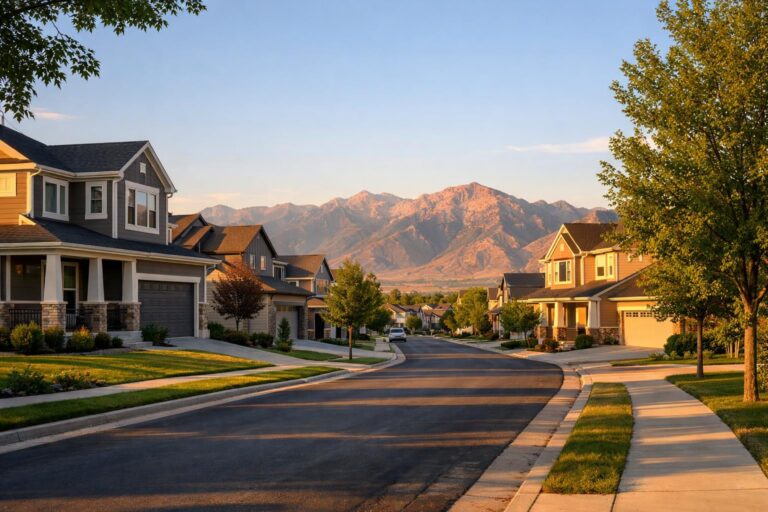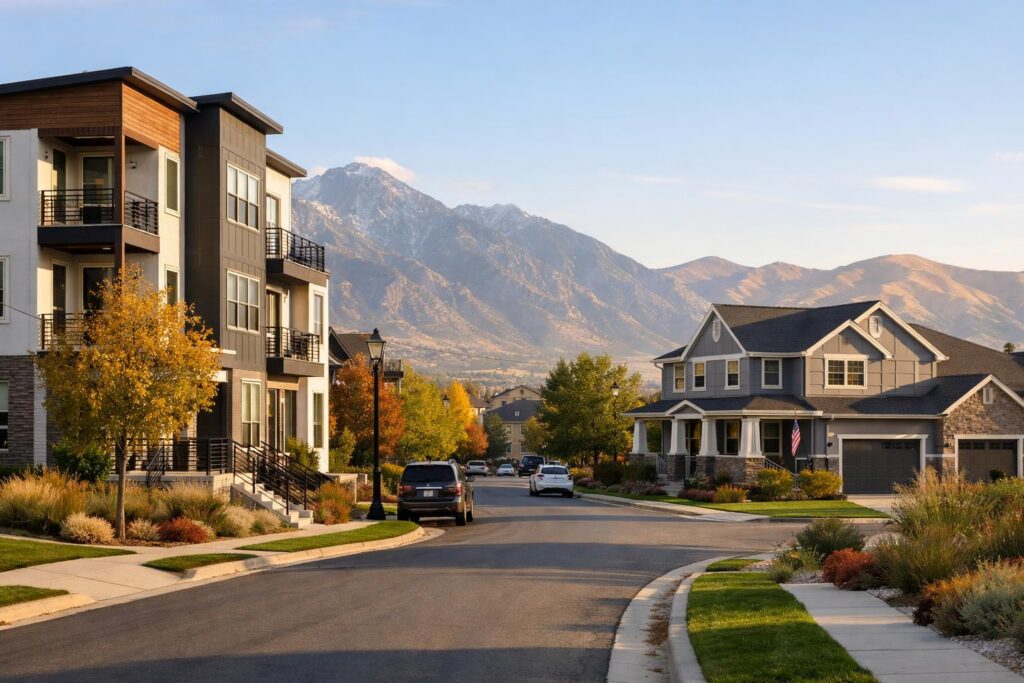
A client last fall had it narrowed to two South Jordan listings: a Daybreak townhome two blocks from SoDa Row, and a single-family resale on the east side near Redwood Road with a yard three times the size. She asked me which one was the “better buy.” That’s the wrong question — a $520,000 townhome with a $310-a-month HOA and a $520,000 detached home with a sprinkler system from 2004 are not competing on price. They’re competing on which set of chores and rules you’d rather sign up for.
So we stopped comparing price tags and started comparing obligations — parking, insurance, who mows what, and what the HOA packet actually said versus what the listing agent said it said. That’s the version of this decision worth walking through here, using two real kinds of South Jordan homes rather than a generic “townhome vs. single-family” checklist.
You’re Buying a Maintenance Schedule, Not Just Square Footage
Property type is really a bundle of space, control, and who’s responsible for what.
Define the Actual Product Before You Compare It
“Townhome” isn’t one legal structure. Some South Jordan townhomes are fee-simple with a party wall and almost no shared land; others sit inside a master association with a sub-HOA underneath it, especially in Daybreak. Find out which one you’re looking at before you compare it to anything.
“Single-family” needs the same scrutiny. Plenty of detached South Jordan homes — including most of Daybreak’s detached product — still carry an HOA with architectural rules, landscaping standards, and sometimes a shared amenity fee. A detached home on the east side, outside Daybreak, is more likely to be HOA-free, but not always.
Start with the paperwork the transaction actually gives you. Utah’s standard Real Estate Purchase Contract is the baseline resale form, but the signed contract and the property’s own HOA documents are what actually control the deal — not the listing description.
For new construction, get the builder’s inclusion list in writing. I’ve seen buyers assume “landscaping included” meant a finished backyard when it meant sod in the front strip only. Lot, elevation, structural selections, fencing, and which construction phase still surrounds the lot should all be nailed down before you’re under contract.
For a resale, pull permits where you can, get the seller disclosures, and have your inspector flag anything that looks like unpermitted work — a finished basement or an added patio cover without a permit shows up more often than you’d think in South Jordan’s older east-side stock.
Write one sentence for each home: “Buying this means I’m responsible for ___ and the HOA is responsible for ___.” If you can’t finish that sentence without “probably,” you’re not ready to compare the two.
My starting point: I ignore the labels “townhome” and “single-family” until I’ve read the documents. The land, the shared walls, and the maintenance boundary are the real product.
How the Property-Type Choice Changes Daily Life
A townhome near SoDa Row can work well if you want to walk to dinner without getting in the car and don’t want a yard to manage. It creates friction fast if you’ve got two vehicles, a dog, and a townhome HOA that only allows one assigned parking spot plus limited guest parking.
A detached home on a bigger east-side lot can work well if you actually use a yard — kids, a garden, a dog that needs space. It creates friction if you’re buying the yard as an idea rather than a habit, because irrigation, mowing, and snow on a longer driveway are real Saturday-morning time.
Count the stairs, not just the square footage. Some of Daybreak’s newer townhome product runs three stories with the primary bedroom on the top floor — fine at 35, a real question at 65 or with a stroller and a diaper bag.
Picture a weekday morning. Can two adults leave without moving cars around each other? If the home office is on a shared wall, will the neighbor’s dog or a delivery at 7 a.m. wreck a client call?
Picture guests. Walk the actual guest parking at 7 p.m. on a Friday, not at 2 p.m. on a Tuesday tour — that’s when townhome HOA parking rules actually get tested.
Picture two years from now, not just today. A townhome that’s perfect for a couple can get tight fast with a second kid and a double stroller in a one-car garage. A big detached yard that’s fun now can turn into an unwanted chore once the novelty wears off — be honest about which one you are.
| Daily Question | Townhome Check | Single-Family Check |
|---|---|---|
| Arrival | Assigned spot, garage depth, guest parking at night, snow-removal boundary | Driveway length, street parking rules, your own snow-removal workload |
| Storage | Interior closets, garage wall space, HOA rules on exterior storage or sheds | Garage, basement, shed, attic — and the upkeep that comes with each |
| Outdoor use | Patio boundary, pet access, shared open space, HOA landscaping rules | Actual yard size, fence, irrigation system age, and who maintains it |
| Sound | Shared walls or floors, garage doors, HOA common-area activity | Street noise, neighbor’s yard equipment, lot spacing and setbacks |
Parking, Storage, Yard, and Noise Are Purchase Questions
Measure the garage yourself. Bring a tape measure to the tour. A “two-car garage” with a water heater, furnace, and storage shelving eating into the width can function as a one-car garage in practice — I’ve seen this in more than one Daybreak floor plan.
For a townhome, find out in writing whether parking is deeded, assigned, or first-come. Ask specifically about guest parking, RV/trailer restrictions, and whether EV charging is allowed on your assigned spot — HOA rules on this vary a lot between Daybreak sub-associations.
For a detached home, don’t assume you can park a trailer or a work truck in the driveway just because there’s no visible HOA sign. Check the city’s own rules and any recorded easements before you rely on it.
Inventory what you actually own — bikes, skis, holiday decorations, tools — and assign each category a real spot in the home you’re touring, not a hypothetical shelving system you haven’t bought yet.
Stand in the yard or patio and decide if it’s a place you’ll use or a place you’ll maintain. A small fenced townhome patio might be plenty if you want a table and a place for the dog. A quarter-acre lot is only a win if someone in the household actually wants to garden or mow it.
Listen at two different times. Stand near the shared wall, the garage, and the patio during the day, then again in the early evening when neighbors are home, kids are outside, and delivery trucks are running their routes.
Measure
Bring a tape measure — garage width, patio size, and storage space, not just the listing’s square footage.
Verify
Parking rights, guest rules, pets, rental restrictions, and exterior modification approval — in writing, not from the agent’s memory.
Observe
Sound, traffic, and how common areas or the street actually get used at two different times of day.
Assign
Give every category of your stuff — sports gear, tools, holiday boxes — an actual home before you make an offer.
Read the HOA Documents and Ask the Insurance Questions
“Has an HOA” versus “doesn’t” is the wrong comparison. A Daybreak townhome association might cover the roof and exterior paint. A detached-home association in the same neighborhood might cover only common landscaping and a clubhouse, leaving the roof entirely on you. Read what the specific association actually does — every one is different.
Request the current declaration, bylaws, rules, the budget, reserve study if one exists, and any recent special-assessment history. In Daybreak specifically, ask whether a master association sits above your sub-HOA, because you may be paying into both.
Build a maintenance-boundary table yourself: roof, exterior paint, windows, landscaping, irrigation, snow removal, and shared systems. For each line, write down who’s responsible and which document says so.
Look hard at the reserve study, not just this month’s dues. A townhome HOA charging $180 a month with no meaningful reserve fund is a bigger long-term risk than one charging $280 with a fully funded roof-replacement reserve.
Read the rules against your actual life, not the ones you’re used to. Pets, rentals, exterior paint colors, satellite dishes, and holiday lights are all commonly restricted in South Jordan HOAs — don’t assume yours won’t be.
Have an insurance agent review both the HOA master policy and what you’d need personally. This is where I see the most expensive surprises — buyers assuming the HOA policy covers something it explicitly excludes, like interior water damage from a shared-wall leak.
A detached home without an HOA still isn’t obligation-free. Check title for easements, private road agreements, or irrigation-share agreements that predate any HOA and don’t show up in a casual search.
Planning context: South Jordan’s Planning and Zoning page covers public zoning and station-area plans. That’s separate from private HOA rules — check both for the specific address, since one doesn’t tell you anything about the other.
Compare the Full Monthly and First-Year Cost
Get a current, property-specific lender estimate for each home, using the same down payment and timing assumptions so you’re comparing apples to apples.
Add every HOA layer the documents actually show — not a guessed average. If dues include a service like landscaping or trash, note what’s covered and what’s still on you.
Get real utility numbers instead of assuming attached always costs less. A shaded, smaller Daybreak townhome can beat a larger, west-facing detached home on summer cooling costs, or vice versa — ask for the seller’s actual usage history.
Build a first-year list specific to the home. A townhome may need paint, flooring, or window coverings the builder didn’t include. A detached home may need a fence, irrigation repair, or tree work the inspection flags.
Keep required repairs separate from your wish list — a failed water heater is not the same budget line as new countertops.
Factor in your time, too. Townhome living cuts a lot of exterior chores but adds HOA meetings and rule compliance. A detached home trades that for actual weekend labor — be honest about which one you’ll actually keep up with.
Condition and Maintenance: Different Does Not Mean Less Important
Use your full inspection window under the contract regardless of property type. Townhomes and detached homes both have structural, electrical, plumbing, and HVAC questions — the accessible scope just differs.
In a townhome, ask specifically how a shared-surface issue gets reported and fixed. Don’t assume the HOA will handle a leak until you’ve read the maintenance provisions — I’ve seen owners wait months over a roof-versus-unit dispute that the declaration would have answered on day one.
Watch water paths carefully in attached product. Grading, downspouts, and shared landscaping can move water across a unit boundary even when the paperwork says maintenance is separated.
In a detached home, the exterior is your list: roof, gutters, stucco or siding, concrete, and irrigation. On South Jordan’s older east-side stock, ask specifically about original galvanized plumbing and electrical panel age — these come up more often in pre-2000 homes than newer buyers expect.
Ask for service records, permits, warranties, and disclosures for either property type. A renovated kitchen tells you nothing about the roof or the panel.
Newer doesn’t mean inspection-optional. I’ve seen brand-new Daybreak townhomes with grading issues that sent water toward the foundation in the first wet spring.
Build a first-year maintenance calendar: filter changes, irrigation start-up and shutdown, HOA deadlines, and warranty expiration dates. Know what happens after you get the keys, not just before.
How the Decision Changes by South Jordan Pocket
On the east side — the older streets off Redwood Road and 10400 South — you’ll mostly compare established detached homes with mature landscaping against a smaller number of attached infill options. Home age and system condition carry more weight here than HOA rules.
On the west side, including the non-Daybreak new construction near Mountain View Corridor, you’ll see more active building, newer detached product, and evolving HOA structures still being finalized as phases sell out. Get everything about inclusions and completion timing in writing.
Inside Daybreak, the village matters more than the “Daybreak” name. A townhome near Oquirrh Lake and SoDa Row is walkable to daily errands; a detached home in a village still under construction three phases out is a different daily experience, even if both are technically “Daybreak.”
If TRAX matters, South Jordan Parkway, South Jordan Downtown, and Daybreak Parkway are three different stations with different walk times from different villages — check UTA’s current Red Line schedule against the specific address, not the neighborhood name.
Being near a station doesn’t automatically make a home more convenient — it depends on where you’re actually going. A detached home farther from TRAX but closer to Bangerter Highway might serve your commute better.
Check zoning and any nearby development proposal at the parcel level through the city, not from a developer’s marketing site. Current zoning, a filed application, and an approved project are three different stages — don’t treat them as the same thing.
I wouldn’t rank every South Jordan townhome against every detached home citywide. I’d compare two specific products in their actual pockets and name the real trade-off — less exterior work versus more space, station access versus a yard, an established street versus a newer build.
Ask the Next-Buyer Questions Before You Buy
Resale isn’t a prediction — it’s a test of how clearly a future buyer will understand what they’re getting. Start with the same categories you’re investigating now: parking, storage, HOA health, and condition.
A townhome’s future buyer will ask about HOA reserve strength, any pending assessments, rental restrictions, and shared-wall maintenance history. Keep your HOA documents, insurance records, and any approved modifications organized from day one.
A detached home’s future buyer will ask about roof and system age, permits, and yard condition. Save invoices, warranties, and permit records as you go — most sellers I work with wish they’d started this the day they closed.
Be careful with highly personal renovations. A functional upgrade — finished storage, a permitted addition, a new roof — documents well for a future buyer. A very specific style choice may not.
Don’t price in a hoped-for project — a planned road, a rumored commercial center — as guaranteed future value. Document where you heard it and treat it as unconfirmed.
The best resale preparation is boring: maintain the property, follow HOA procedures, keep records, and fix water issues immediately instead of living with them.
| Future Question | Townhome Evidence | Single-Family Evidence |
|---|---|---|
| Condition | HOA maintenance records, reserve study, inspection, approved changes | Roof and system age, permits, yard condition, inspection history |
| Monthly duty | Current dues, what they cover, rules, any pending assessments | Utilities, private maintenance, insurance, HOA if applicable |
| Daily function | Parking, storage, shared-wall sound, guest access, pets | Garage, yard, privacy, driveway, storage, maintenance workload |
| Documentation | Governing documents, modification approvals, service records | Permits, invoices, warranties, disclosures, improvement history |
The South Jordan Comparison Tour I’d Run
Pick one townhome and one detached home that both meet your budget and your non-negotiables. Tour them back-to-back if you can, so weather and market conditions are similar.
At the townhome, park where an owner actually would. Open both car doors in the garage, carry an imaginary bag of groceries to the kitchen, count the stairs, and find where guests will park after dark.
At the detached home, walk the full lot. Check the slope, the fence line, the irrigation heads, and picture the actual maintenance — not the idea of a yard.
Drive your real commute from each home at the real time. If TRAX is part of the plan, ride the trip once instead of estimating it.
Build one ownership sheet using current lender estimates, HOA documents, utilities, and any immediate repair costs. Mark “unknown” honestly instead of filling in a hopeful guess.
Read the HOA or title documents before your contract deadline expires. Flag anything about parking, pets, rentals, or exterior changes that affects your actual plans.
Go back a second time, ideally in the evening. Parking, noise, and how the street actually feels can shift completely from a quiet weekday tour.
Score the responsibilities, not the curb appeal. The townhome might win because the location and lower maintenance fit your life. The detached home might win because the yard and control are worth the extra work. Either can be the right call once it’s based on the real property.
Select comparable homes
One townhome, one detached home, same realistic budget and non-negotiables.
Test arrival and storage
Park, measure the garage, and assign your actual belongings a real spot.
Map the maintenance
Build the responsibility table for both the HOA and the property itself.
Compare complete cost
Financing, HOA, utilities, and the first-year repair list for each.
Resolve open questions
Send every unresolved item to the document or professional who can actually answer it.
Use my South Jordan real estate guide and South Jordan community guide to narrow the search, then send me the exact townhome and detached home you’re weighing.
Frequently Asked Questions
Are townhomes always cheaper than single-family homes in South Jordan?
No. Compare the actual price, HOA dues, utilities, and maintenance for both — a lower purchase price can come with higher recurring costs.
Does an HOA always cover a townhome’s roof and exterior?
Don’t assume it. Read the maintenance provisions in the declaration — coverage varies significantly between South Jordan associations, even within Daybreak.
Is a detached home always HOA-free?
No. Most detached homes in Daybreak and several outside it still carry an HOA. Homes without one can still have easements or private-road agreements.
What should I check about townhome parking specifically?
Garage dimensions, whether spots are deeded or assigned, guest parking rules, and any restrictions on trailers, work trucks, or EV charging.
How do I compare insurance between the two property types?
Have an insurance agent review both the HOA master policy and what you’d carry personally — this is where gaps most often show up.
Does being close to TRAX make a townhome the better choice?
Only if the full trip actually works for your schedule. Test the walk to the platform, the current schedule, and the return trip after dark.
What should I send you before touring?
The two property links, any HOA documents you already have, your lender’s estimate, and the specific responsibilities you’re trying to reduce or keep.
Send Me the Two South Jordan Homes
Send me the townhome and the single-family home you’re weighing, and I’ll help you read the HOA packet, run the real numbers, and walk through the trade-off before you decide.