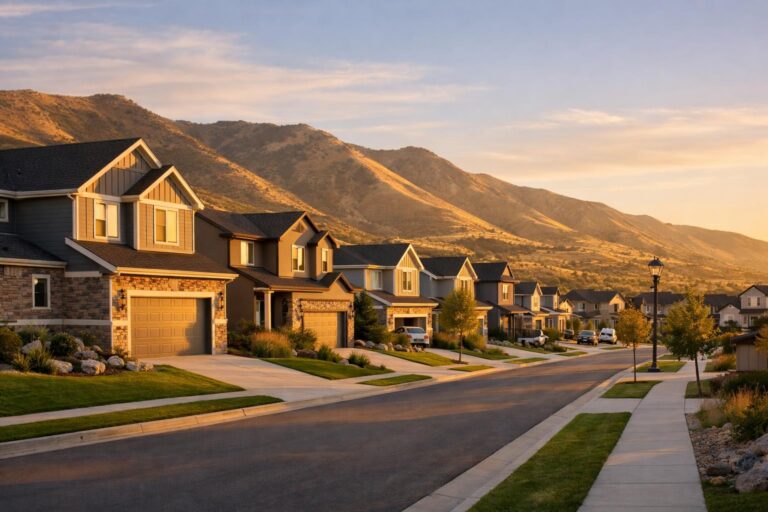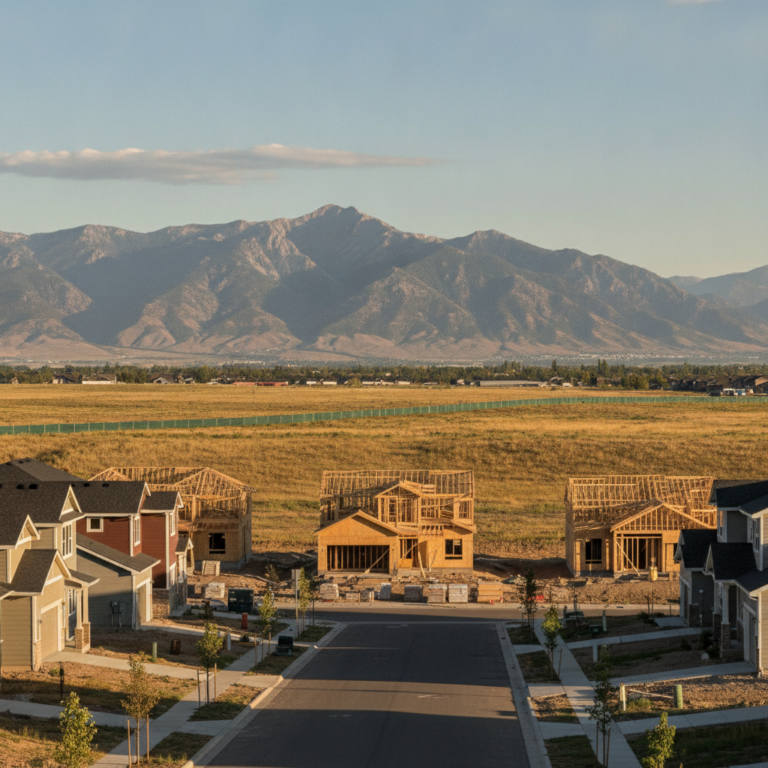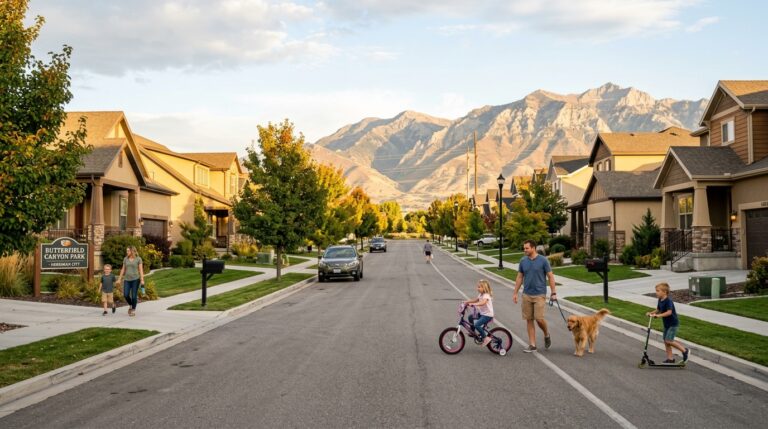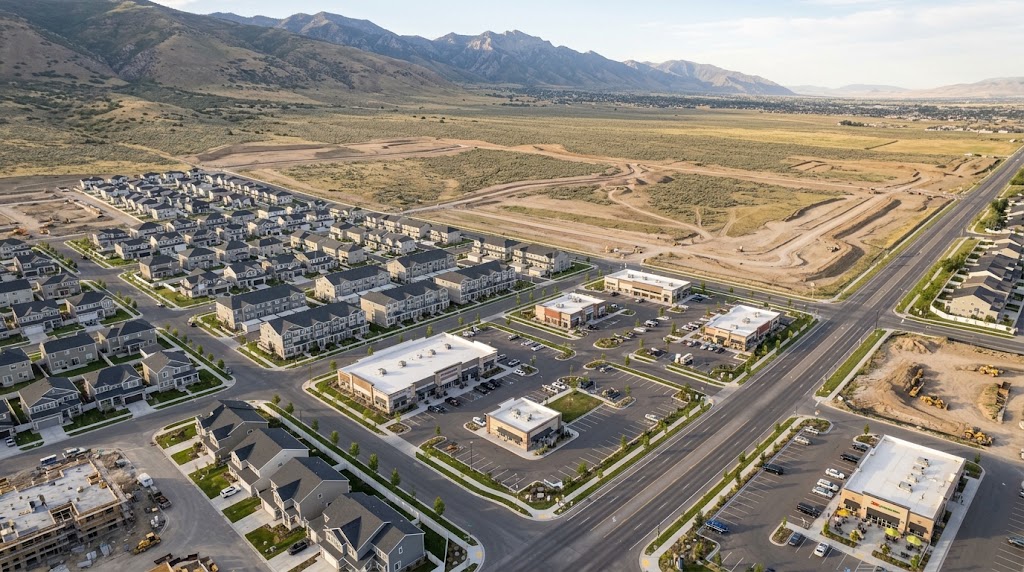
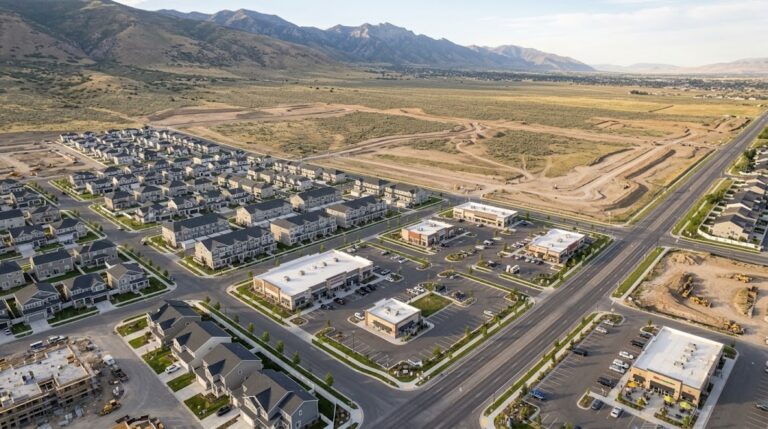
Looking at a Herriman home near new development and wondering what that empty field, that drawing in the sales office, or that “future park” label will actually turn into? Good. That’s exactly the question to ask before you offer.
On Herriman’s west side, every nearby change falls into one of four buckets. Built means you can see it and use it today. Under construction means work is active, with trucks and noise that may come with it. Approved means the city has formally authorized it, but approval isn’t the same as a finished street or an open park. Proposed means someone has an idea or a plan, and that’s not a promise. Before you offer, I want every project near the home you love sorted into one of those four buckets, with a dated city or UDOT source behind it.
Built, Under Construction, Approved, or Proposed
Each label tells you how much weight a project deserves in your decision today.
What Do “Built,” “Under Construction,” “Approved,” and “Proposed” Mean in Herriman?
They mean very different things for your daily life, and the difference matters most on the west side, where a lot of what you’ll see on maps hasn’t happened yet.
The cleanest way to think about it is by what proof each status needs. A finished road is proof of itself. A plan is only proof that someone intends something.
Where the General Plan fits
Herriman’s General Plan, adopted in 2022, is a long-range policy framework. It describes how the city wants to grow. It isn’t proof that any particular park, road, or store will be built.
So when you see a colored area on a future-land-use map, read it as a planning signal. It tells you what the city has in mind for that area. It doesn’t tell you a building permit exists, or that anything will open on any particular date.
Where Planning fits
Herriman’s Planning Department reviews development proposals, and the city directs people to its public notices to see applications and hearings. That’s where a project moves from “someone’s idea” toward “approved.” If a project near your home doesn’t appear there, it’s either already past that stage or not as far along as a sales sheet might suggest.
What Buyers Commonly Get Wrong About Herriman’s West-Side Growth
These are the mix-ups I see most often near new development. For each one, here’s what the record shows and what I’d do instead.
| What People Assume | What the Record Shows | What to Do Instead |
|---|---|---|
| “The map shows a park, so a park is coming.” | The General Plan is a policy framework, not proof that a project is built or permitted. | Look for a recorded approval or active construction before you count on it. |
| “Approved means it’s being built.” | Olympia’s master plans were approved in 2021 and updated in January 2024. Approved plans can be revised, and the project builds in phases. | Check the current version of the plan and which phase is actually active near the home. |
| “A new council vote means more homes.” | The October 14, 2026 Olympia amendment concerned 2,500 homes the city says were already within approved units. | Read the recap before assuming any approval adds density. |
| “The freeway is coming, so traffic will ease.” | In August 2026, UDOT said it was designing a Mountain View Corridor freeway section from Porter Rockwell Boulevard to Old Bingham Highway. | Plan around the roads you can drive today. Design work isn’t a finished road. |
| “Citywide growth tells me what’s next door.” | Herriman’s growth page discusses citywide entitled housing and infrastructure strain, not what happens on any one parcel. | Look up the specific project beside the specific home. |
| “The sales map is the city’s map.” | Marketing illustrations aren’t city records. | Match anything you’re shown to a Planning record, a public notice, or the construction map. |
What Can Olympia Teach You About Approved Plans and Phased Construction?
Olympia is the clearest real example on Herriman’s west side of how approval and construction are different things. It’s worth understanding even if the home you’re considering isn’t inside it.
According to the city, Olympia is a 933-acre development in northwestern Herriman. It was annexed into the city with a master development agreement in 2021. Its master plans were approved on September 29, 2021, and later updated in January 2024. It’s being built in phases.
That gives you three lessons I’d carry into any west-side search.
Lesson one: approved is not the same as built
Olympia has formal city approval. That doesn’t mean every street, park, or building in its plans exists today. Some phases are further along than others. For any feature near your home, you still have to check whether it’s built, underway, or simply part of the approved plan.
Lesson two: approved plans can change
The 2021 plans were updated in 2024. And on October 14, 2026, the City Council amended Olympia’s master development agreement in connection with 2,500 homes. The city’s recap says those homes are within units already approved, not additional homes on top of them.
What this means for you: a project’s approval isn’t frozen. If you’re relying on a feature in an approved plan, check the current version, not the one you saw in a presentation or a news clip.
Lesson three: “required” isn’t “open”
Olympia’s parks and open-space obligations are written into its development agreements. That’s meaningful. It also means those spaces may be required on paper before they’re built on the ground. If a listing mentions a future park nearby, ask whether it’s open today or still an obligation in the agreement.
What this section is based on: Olympia’s size, location, annexation, and plan dates come from Herriman City’s Olympia project page. The October 2026 amendment comes from the city’s council recap posted October 15, 2026. General Plan and Planning details come from Herriman’s General Plan and Planning and Zoning pages. Mountain View Corridor details come from UDOT’s August 2026 notice. Project status changes, so treat every date here as “as of” that source and recheck it before an offer.
How Do You Verify the Project Next to a Specific West-Side Home?
Citywide information gets you oriented. It won’t tell you what’s happening beside one address. For that, I’d work through these steps in order.
Place the home on the map
Find where the property sits relative to Olympia and the city boundary. That tells you which city records and which project names to look for.
Name the nearby projects
List every open field, fenced site, or “coming soon” area within sight or earshot. Find the project name for each if you can.
Check Planning and public notices
Search the city’s Planning resources and public notices for each project name. Look for hearings, applications, and approvals.
Read the latest council actions
Check recent City Council recaps, minutes, or ordinances for the project or parcel. A recent action may have changed what you read earlier.
Check the construction map and UDOT
Use the interactive construction-project map linked from Herriman’s Engineering page, and check UDOT notices for any road on your routes.
Label and date it
Write each project as built, under construction, approved, or proposed, with the source and its date. Anything without a source stays “proposed.”
This takes an evening, not a week. And it changes how you read the listing. A “view of open space” means something different when you know the land behind it has an approved plan than when it’s a park that already exists.
Questions I’d ask the seller or listing agent
Sellers and their agents often know a lot about what’s happened nearby. Ask, and then match each answer to a city or UDOT record.
- What has been built near the home since you bought it?
- Have you received any city notices about hearings or applications for nearby land?
- Do construction vehicles use this street or the streets right around it?
- What were you told about the open land behind or beside the home, and who told you?
- Are any parks, paths, or roads described in the listing open today, or are they planned?
- Are there any special assessments, district charges, or other property-specific obligations tied to the home?
A good answer comes with a source. “The city approved it last year” is something you can look up. “I heard it’s going to be a park” is a starting point for your research, not a fact.
If you can’t find a record
That’s an answer, too. It may mean the project is very early, or that it’s on a private parcel without public filings yet. Either way, don’t fill the gap with what a neighbor or a sales rep told you. Call the city’s Planning Department, or visit City Hall at 5355 West Herriman Main Street, and ask.
Which Roads and Utility Plans Affect Your Routine Today?
This is where I get practical. Whatever the plans say, your family will live on today’s roads and today’s services until something new actually opens. So test the home as if nothing new opens for years. If it works that way, any improvement is a bonus.
Mountain View Corridor
Mountain View Corridor is the main north–south route on Herriman’s west side. UDOT’s August 2026 notice says the agency is designing a freeway section of the corridor that runs from Porter Rockwell Boulevard north to Old Bingham Highway.
That’s a real, dated agency statement. It’s also a design phase. It doesn’t tell you when you’d drive a finished freeway, and UDOT notes its schedules can change. Drive the corridor as it is now, at the times you’d actually use it.
Water, parks, and services
Herriman’s growth page talks about the strain that growth puts on infrastructure across the city. That’s useful context. It doesn’t tell you anything specific about service at one address.
For a particular home, ask for the facts that apply to it: which parks are open now, which are required but not yet built, and any property-specific records or disclosures that apply. If there are special district or financing obligations tied to a property, review those records directly before you rely on anyone’s summary.
What Should You Look for on a Visit Near Active Growth?
Records tell you status. A visit tells you what living there feels like right now. I’d do at least one visit at a time you’d normally be home, and another at a different time of day.
Trucks and routes
Do construction vehicles use the road in front of the home, or the street you’d take to school or work? Is any route closed or detoured?
Noise and dust
Stand in the backyard and on the front porch. Listen. Look at window sills and patio furniture on nearby homes.
Sidewalks and crossings
Are the sidewalks you’d use finished and connected? Can a child walk safely to the nearest open park or bus stop today?
What’s actually open
Which parks, shops, and streets near the home are open now? Mark anything you see under construction separately.
None of this is a reason to walk away by itself. Plenty of families live happily beside a few years of growth. The point is to know what you’re choosing. If you’d be fine with what you see today, you’re in good shape. If you’re counting on it getting quieter or easier soon, that’s a bet, not a fact.
And I won’t tell you what conditions are like at an address I haven’t checked. Every block is different. Go see it.
What to write down after each visit
Keep it short and specific, so you can compare visits and compare homes:
- The day and time you visited.
- Any active work you saw or heard, and where it was relative to the home.
- Any road closures or detours on your routes.
- Which nearby parks, paths, and shops were open.
- Whether you’d be comfortable living with exactly what you saw for the next several years.
That last line is the one that decides it. If the answer is yes, the plans nearby are context. If the answer is no, no plan should change your mind.
Which Value and Timeline Assumptions Should You Leave Out?
This is the hardest part for a lot of buyers, because the assumptions are hopeful ones. Leave these out of your decision:
- “The value will go up once everything’s built.” No one can promise that, and it isn’t a reason to buy a home that doesn’t fit you today.
- “Traffic will be better after the new road opens.” A design phase isn’t a finished road, and no one can promise how traffic will change.
- “The new school will open soon.” School openings and boundaries come from the school district, not a development map. Use the district’s lookup for the address.
- “The park will be done by next summer.” Unless a dated official record says so, treat it as unknown.
- “The construction will be over soon.” Phased projects can carry on for a long time. Plan as if it won’t be over soon.
How I’d frame it: after 36 years in the Utah market, the question I keep coming back to near new development is simple. Is this a good home for your family exactly as things stand today? If yes, any approved improvement nearby is a bonus. If you need the improvements for the home to work, wait or keep looking.
Which Official Herriman and UDOT Pages Would I Check Before You Offer?
These are the sources I’d work through for a west-side Herriman home. Each one answers a different question, so check them together rather than relying on any single page.
When you’re done, you should have a short list for the home: each nearby project, its status, the source, and the date. Bring that list to a showing, and you’ll ask much better questions.
My Herriman future development outlook looks at the city-level picture. When you’ve decided how close to active growth you want to live, use the Herriman community page to look at homes.
Herriman West-Side Growth FAQ
Does a future-land-use map mean a building or road has been approved?
No. Herriman’s General Plan is a long-range policy framework. A colored area on its map is a planning signal, not a permit, an approval, or a construction schedule.
Is the entire Olympia development already complete?
No. The city describes Olympia as a 933-acre development approved in 2021, with plans updated in 2024, being built in phases. Check which phase is active near any home you’re considering.
Did the October 2026 council vote add 2,500 more homes to Olympia?
According to the city’s recap, no. The amendment involved 2,500 homes that the city says were already within Olympia’s approved units.
How can I check whether a specific nearby project is under construction?
Look for the project in Herriman’s Planning resources and public notices, check the construction map linked from the Engineering page, and visit the site in person.
Can I rely on an announced road improvement when choosing a house?
Not as a certainty. UDOT’s August 2026 notice describes a design phase for part of Mountain View Corridor. Choose a home that works on today’s roads.
Will Herriman’s growth make my home worth more?
No one can promise that. Choose the home because it fits your family as things stand today, not because of what nearby growth might do to its value.
Looking at a Herriman Home Near New Development?
Send me the address and I’ll tell you which official project records I’d check nearby. Want to talk it over first? Call me for a local second opinion.