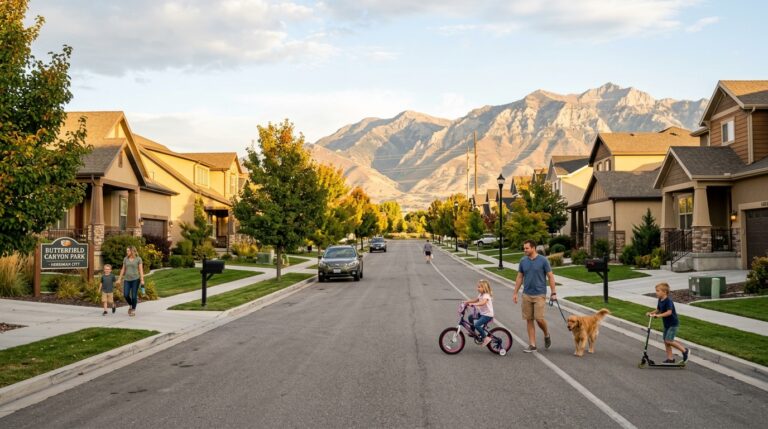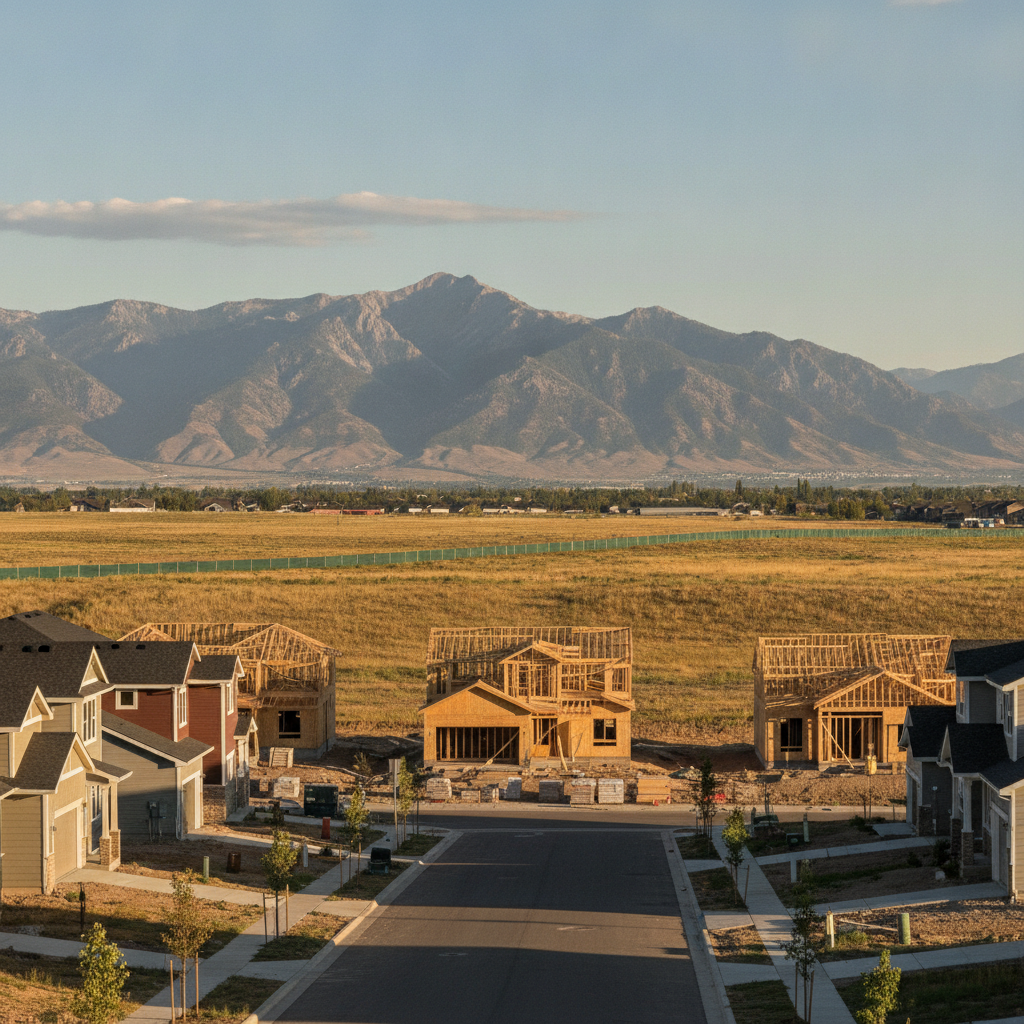
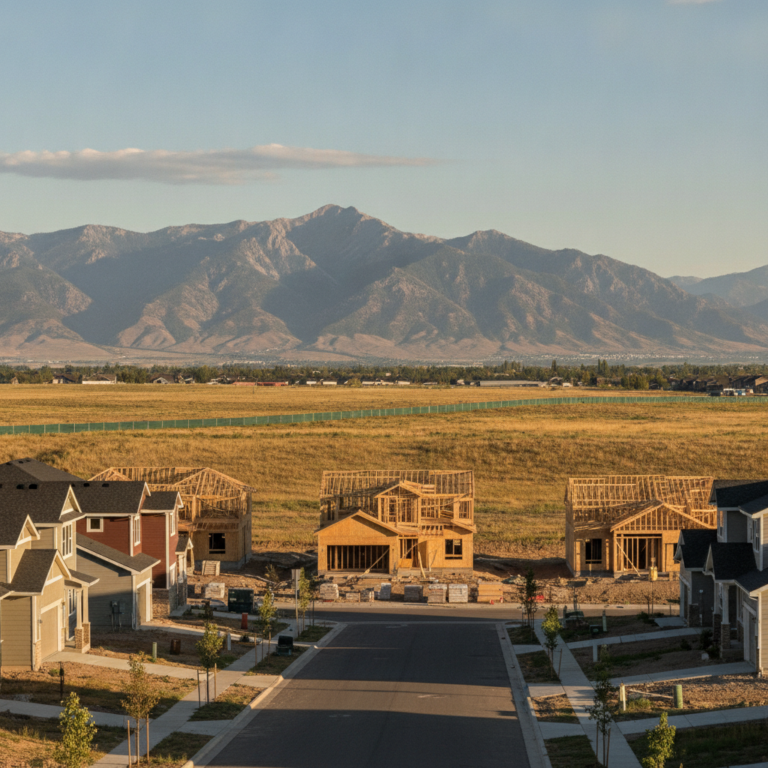
Are you touring newer west-side Herriman homes and trying to decide whether nearby growth is an opportunity, a disruption, or both? The answer depends on the exact address and the status of every feature you are counting on. I would separate what is open now, what is under construction, what is approved or entitled, and what is still only possible before I gave any future road, park, school, or commercial area weight in an offer.
Herriman growth is real, but “growth” is not one condition. A completed street, an active phase, an approved development agreement, and a preliminary layout create different buyer decisions. Your current routine has to work before the future plan gets credit.
How Should You Evaluate a Newer West-Side Herriman Pocket?
Use a status ladder for every nearby feature, then test the current address on a weekday. The home should work with today’s roads, schools, services, construction exposure, and HOA documents even if later phases arrive differently than expected.
What Do Buyers Mean by “West-Side Growth” in Herriman?
“West side” is useful conversation language, not one official development status. When buyers search for Herriman west side growth, they may mean a newer subdivision near open land, a home beside a later phase, a lot influenced by Mountain View Corridor, or a property near Olympia in northwestern Herriman. Another buyer may be looking farther south near projects the city groups under South Herriman development.
Those areas should not be blended into one story. Olympia, Rosecrest, Panorama, and South Hills have different locations, documents, phases, and on-the-ground conditions. Even two streets inside one larger project can feel different when one borders finished homes and another borders active construction or a preliminary future phase.
Herriman City provides useful scale. On its growth page, the city says the population increased from about 20,000 to about 64,000 over roughly 15 years. The city also reports that 41% of existing homes are townhomes or apartments and that approximately 14,000 additional homes are already entitled, with most new homes expected to be multifamily.
What this means for you is that Herriman growth is not only detached new construction at the edge. Housing type, road capacity, services, parks, trails, and commercial activity can develop on different schedules. A broad growth number cannot tell you whether one listing has a finished sidewalk, a reliable exit, a nearby grocery route, or construction behind the back fence.
The city also reports maintaining about 368 lane miles of road, 55 miles of trail including 30.8 paved miles, and 263 acres of park space. Those are citywide figures. They establish scale, not access from a specific home. A trail total does not prove a trail connection from the subdivision. A park total does not make a planned park usable today.
I would define the listing’s growth context with five questions:
- What is physically open and usable from this address today?
- What active construction can I see, hear, or drive through?
- What has the city formally approved or entitled?
- Which maps or alignments are preliminary and subject to change?
- Does the current home routine work without a future road, store, school, or park?
That framework keeps growth from becoming hype or fear. You are not trying to predict every phase. You are deciding how much transition you want around your home.
| Status | What it establishes | What a buyer still needs to verify |
|---|---|---|
| Open now | The road, service, park, trail, or business exists and can be visited. | Exact route, entrance, hours, access, and usefulness from the listing. |
| Under construction | Physical work is active or visibly underway. | Current access, phase boundary, temporary impacts, and official status close to the offer date. |
| Approved or entitled | A formal city approval or planned capacity exists. | Whether construction has started, which phase includes the feature, and whether timing remains current. |
| Preliminary or conceptual | A possible layout, alignment, or long-range idea appears in planning or sales material. | Whether it has formal approval and how much the design may change before construction. |
Is the Feature Open, Under Construction, Approved, or Only Possible?
This is the most important distinction in a growth-area purchase. The words can sound similar during a tour, but they mean different things.
Open now is the easiest to test. Drive the road. Enter the park. Walk the trail connection. Visit the current service. Confirm that the feature works from the exact home rather than relying on a subdivision map.
Under construction establishes active work, not a guaranteed finish date. The buyer still needs current information about access, phasing, temporary routes, and the portion closest to the lot. A project can be active while one component remains much later than another.
Approved or entitled shows that the feature or development has formal planning status. Herriman City’s growth page says approximately 14,000 additional homes are entitled. Entitlement is not the same as a home being built, a store opening, or a road carrying traffic. It is legally planned capacity.
Conceptual or possible needs the most caution. Renderings help people understand a vision. Preliminary maps can show relationships. Neither one should become a promise about the view from a lot, the final road alignment, a future tenant, or the date an amenity will arrive.
I like to put the evidence beside the claim:
- Write down the feature the listing or sales conversation mentions.
- Find the controlling city page or current official document.
- Label the status in plain language.
- Note the date you checked it.
- Photograph the current condition from the lot or neighborhood.
- Decide whether the home works if that feature changes or arrives later than hoped.
This is especially useful with vacant land. Vacant does not mean permanent open space. It also does not tell you what will be built. Use the city record, property documents, and current development status instead of guessing from an empty field.
The same rule applies to a view. A model-home view may cross a later phase or a parcel with a preliminary layout. Do not treat the current horizon as protected unless a controlling document establishes it and the appropriate professional confirms what it means.
Source basis: The status and scale facts in this article come from Herriman City’s official City Growth, Olympia, and South Herriman Development pages. Those sources establish city-published approvals, planning context, and cautions. They do not guarantee a construction date, tenant, school assignment, commute result, or final lot alignment.
How Could Roads, Schools, Services, and Active Construction Affect Your Week?
Growth matters because it changes ordinary routines. A buyer may focus on the future commercial area while overlooking the current school route. Another may love a newer floor plan but underestimate how often construction vehicles, temporary signs, or an unfinished street will be part of the day.
I would test four layers from the listing.
1. Neighborhood access
Drive every usable entrance. Find out whether the neighborhood depends on one road today. Test the weekday morning and late-afternoon version, not only the model-home route on a quiet weekend.
Mountain View Corridor, Juniper Crest Road, and Academy Parkway can be useful map anchors in western and southern growth discussions. They are not commute guarantees. The question is how the exact driveway reaches the current road network and what part of that network exists now.
2. School and childcare routine
Verify the current school assignment through the school district’s exact-address tool. Do not infer a school from a future plan, a nearby building, or the sales office. Then test the route with childcare, work, and activity stops.
Growth can create future boundary discussions, but the article should not predict them. Your offer needs the current result and a willingness to recheck when the district updates information.
3. Errands and services
List the services you use every week: groceries, medical care, fuel, fitness, childcare, dining, or another recurring stop. Drive those routes from the listing. A future commercial area may be relevant planning context, but it should not replace the current errand loop.
If a sales conversation names future retail, ask for the current official status. Do not assume a tenant, opening date, or convenience gain. Commercial acreage and a completed storefront are different stages.
4. Construction exposure
Stand outside the home. Look at fencing, unfinished sidewalks, vacant parcels, temporary access, grading, sales traffic, and the phase boundary. Visit at more than one time. Public plans can show the larger project, but they cannot tell you how the noise, dust, or traffic feels at one address on one day.
Take photos and compare them with the current city information later. That helps you ask better questions without turning a brief observation into a permanent claim.
Road question
Which entrance works today, and am I relying on a future connection to make the route acceptable?
School question
What does the district show for the exact address now, and does the current school-day loop work?
Service question
Can I complete weekly errands with existing businesses, or am I counting on future commercial space?
Construction question
How close is the lot to active or later phases, and how much transition am I willing to live beside?
What Does Olympia Confirm—and What Still Requires Address-Level Verification?
Herriman City describes Olympia as a 933-acre development in northwestern Herriman. The city annexed the area and approved its master development agreement in 2021. The plan includes residential, commercial, and open-space uses and is expected to build in phases over several years.
Those facts confirm that Olympia is more than an informal idea. They do not mean every component is complete, every phase shares one timeline, or a home near the broader development has immediate access to all planned uses.
Phasing is the buyer lens. A residential phase can move ahead while commercial space follows a different schedule. Roads, parks, open space, and services can reach different parts of the plan at different times. The lot beside today’s edge may face a different construction condition than a lot inside a finished block.
Here is what I would ask about an Olympia-area listing:
- Which recorded or current phase contains the home?
- What is finished on the adjoining streets?
- What lies behind, beside, and across from the lot?
- Which nearby feature is open, under construction, approved, or preliminary?
- What current HOA or governing documents apply to the property?
- Does the present road and errand routine work without a later commercial phase?
Look at the map, then walk the edge. A site plan can make distances feel compact. The ground can show grade, fencing, road direction, and the actual gap between the home and a future phase.
I would also separate community-level open-space language from lot-level access. A plan may include open space. That does not establish a direct trail connection or a protected rear view for a specific home. Verify the parcel relationship and governing documents.
For sellers in a growing pocket, describe Olympia accurately and let current status do the work. Avoid promising a tenant, completion date, or commute benefit. A buyer who understands the phase is better prepared than one who heard a broad future-convenience story.
What Do Rosecrest, Panorama, and South Hills Signal?
Herriman City’s South Herriman page identifies Rosecrest, Panorama, and South Hills as three major developments, with development agreements approved in November 2024. That tells you South Herriman growth involves multiple documented projects, not one uniform construction zone.
The page also identifies future road and commercial context near Juniper Crest Road, Academy Parkway, and Mountain View Corridor. Use those names to ask precise questions. Do not use them to promise when a connection, business, or service will arrive.
The strongest caution on the city page is direct: lot alignments shown for South Herriman are not final and will likely change before construction. That warning should shape how you read every preliminary map. A line on a concept image is not a permanent rear-lot boundary, road, trail, or view corridor.
I would compare each South Herriman pocket through the same status test:
When a feature appears across several planning images, ask which document controls the property you are considering. A regional concept, a development agreement, a preliminary plat, a final plat, and a builder site plan can answer different questions. Do not treat them as interchangeable.
Contract and title questions require the appropriate documents and professionals. My role in this article is to help you identify what needs verification, not interpret a development agreement as legal advice.
How Should You Test the Current Routine Before Relying on the Future Plan?
The current-routine test keeps the home decision grounded. I would run it before the future plan starts to feel inevitable.
Map the exact phase edge
Identify finished homes, active construction, vacant parcels, fencing, and later phases around the lot. Photograph what you see.
Drive all current entrances
Use weekday morning and late-afternoon windows. Note whether the neighborhood depends on one access point today.
Run school and errand loops
Use current destinations and exact-address school verification. Do not give a future road or store credit yet.
Label every promised feature
Mark it open, under construction, approved or entitled, or preliminary. Add the source and date.
Review property documents
Check the current HOA, builder, plat, title, and contract materials that apply to the exact home. Ask qualified professionals about legal meaning.
Visit outside sales hours
Return when construction, school, and commuter patterns are more likely to match your week. Do not judge the pocket only from a model-home appointment.
Remove the future bonus
Ask whether you would still choose the home if the current routine stayed the same and the later phase changed.
Then set your tolerance. Are you comfortable beside active construction for an uncertain period? Do you need finished sidewalks and established services now? Would a changing view bother you? Can you accept temporary route changes?
There is no correct growth tolerance. A buyer who values a newer home may accept more transition. Another may prefer a finished edge and a more established routine. The decision becomes clearer when you name the tradeoff instead of calling growth good or bad.
For an offer, keep a simple evidence list: current photos, official source pages, status labels, route notes, school verification, current services, and unresolved questions. That file helps you remember what the home actually offered today.
What Should You Ask Before Writing an Offer on a Growth-Edge Home?
Before you write, turn every future-facing statement into a question with a source. “A park is coming” becomes “What is the current approval and construction status of the park, and which phase includes it?” “Retail will be nearby” becomes “What commercial use is formally approved, and is any specific tenant or opening date confirmed?”
I would organize the open questions by the party most likely to answer them:
- City or transportation agency: Development status, current project pages, road work, and the distinction between a concept and an approved plan.
- School district: Exact-address assignment, current transportation information, and any posted boundary process.
- Builder or seller: Current phase, construction activity, lot relationship, warranty information, and property-specific representations.
- HOA or association documents: Assessments, maintenance responsibilities, amenity access, architectural rules, and phase-specific obligations.
- Title and legal professionals: Recorded documents, easements, restrictions, and the legal effect of plats or agreements.
Do not ask one source to answer a question it does not control. A builder can describe its phase but does not set the school boundary. A city page can show a development agreement but does not promise a business tenant. A listing can name a nearby road but cannot establish the commute you will experience.
Then write down your nonnegotiables. Maybe the current school route has to work. Maybe you need two completed neighborhood exits. Maybe you can accept construction behind the home but not beside the only access road. Maybe an unfinished park is fine because you value the floor plan more.
Those limits help you decide before the sales story becomes louder than the facts. I would rather see a buyer accept a known tradeoff than discover after closing that the decision depended on a feature that was only preliminary.
Finally, check the dates on every source. Growth information changes. A city page reviewed today may be updated before closing, and on-the-ground construction can move faster or slower than a snapshot suggests. Recheck the most important items close to the offer and again when due diligence gives you a chance to confirm them.
The clean standard is simple: the home works today, the current documents match what you were told, and any future feature is labeled with the right amount of uncertainty.
Frequently Asked Questions About Herriman West-Side Growth
Is an entitled Herriman development already under construction?
Not necessarily. Entitlement establishes approved development capacity or rights; it does not prove that a particular phase, home, road, park, or business is under construction or available.
How can I verify a future road, park, school, or commercial area?
Start with the controlling city, district, or transportation source. Label the feature’s current status, save the date, and inspect the exact address. Do not rely on a rendering or listing statement alone.
What should I look for when a lot borders vacant land?
Identify the parcel and current planning status, review applicable plats and property documents, photograph the view, and ask whether the home still works if the adjacent layout changes.
Does Olympia have one construction timeline for every component?
Herriman City describes Olympia as a phased development. Residential, commercial, road, and open-space components may move on different schedules, so verify the phase beside the listing.
Should I buy based on planned convenience?
I would make the current school, commute, errand, and service routine work first. Treat an approved future feature as context, not as a guaranteed opening date or convenience gain.
What documents should I review before offering on Herriman new construction?
Review the current builder contract, HOA or governing documents, plats, title materials, city project status, and any disclosures that apply to the property. Ask qualified professionals about legal meaning.
Want a Growth-Impact Review for a Herriman Listing?
Send me the Herriman pocket or listing you are considering. I will help you separate construction exposure, road access, schools, services, and what is confirmed today from what remains uncertain.
Want a second set of eyes on what is real now versus what is still on the plan?