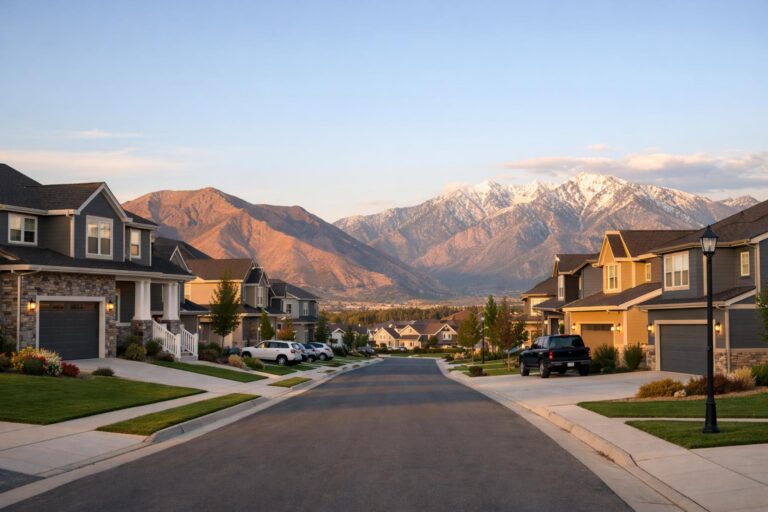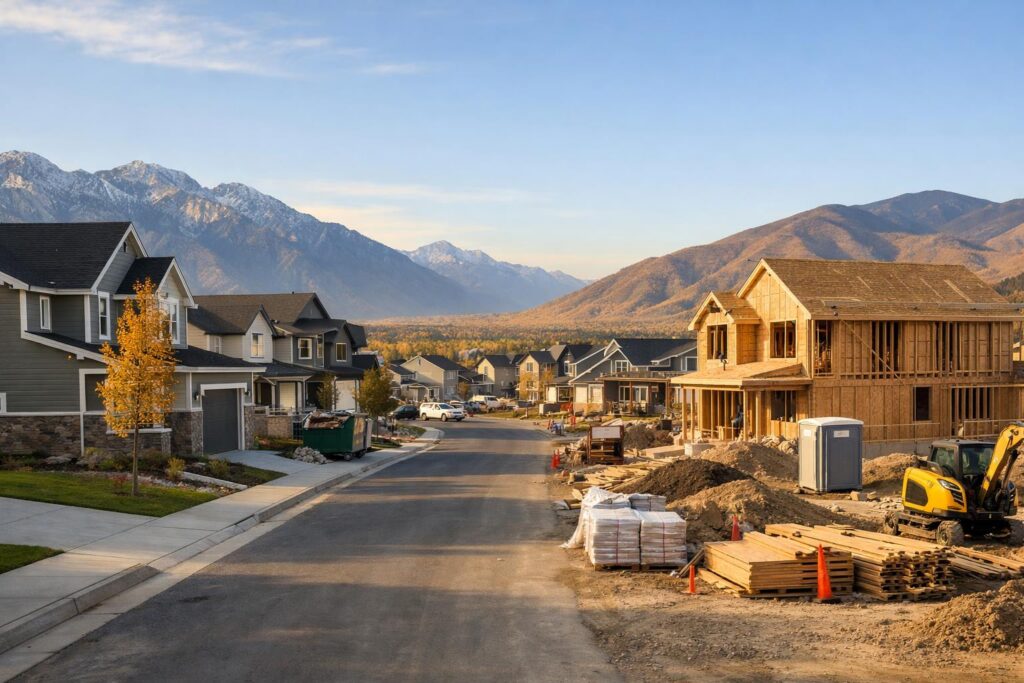
Should you buy new construction or an established home in South Jordan? I would compare certainty with customization. A new home may offer current selections and newer systems. An established home lets you see the completed street, landscaping, route, parking pattern, and condition you are actually buying.
The decision changes by pocket. A quick-move-in home near active development is not the same product as a to-be-built home, and neither should be compared casually with an east-side resale or a mature Daybreak property. I put every option into the same format: delivered cost, representation, contract, timing, inspection, HOA, daily route, and the unknowns you are willing to carry.
Choose the Unknowns You Can Manage
New and established homes give you different kinds of evidence.
What the Builder Sales Center Represents
A builder’s sales professional can explain the builder’s communities, floor plans, lots, options, schedules, and current written offers. That role represents the builder. I want a buyer to understand it before disclosing a maximum budget, urgency, negotiation limit, or the term that would make the buyer walk away.
Buyer-side guidance should focus on your comparison. Is the lot right for the routine? Which model-home features are included? What does the contract say about deposits, changes, completion, inspection access, financing, appraisal, walkthroughs, and remedies? Which established home solves the same problem with fewer unknowns?
Ask about agent registration before the first builder visit. Some builders have procedures about when an agent must accompany or register a buyer. The procedure and any compensation terms can change, so I confirm the current rule for the exact builder instead of assuming.
Keep important product statements in writing. Floor plans, elevations, specifications, option sheets, lot documents, design selections, incentives, and change orders should describe the same home. A model is an example, not the contract. If a finish or feature matters, identify where it appears in the signed documents.
Do not ask one person to fill every professional role. The lender explains the loan, the inspector evaluates condition within the allowed scope, the insurance professional explains coverage, and an attorney can advise on legal language. My job is to keep those answers connected to the housing decision.
My starting point: the sales center can be a useful source about the builder’s product. Your decision still needs an independent comparison built around your cost, contract, timing, and routine.
Base Price Versus the Real Delivered Price
The base price can leave out the lot, structural choices, design selections, landscaping, fencing, window coverings, appliances, storage, electrical work, and other items shown in a model. Ask for the written configuration that matches the home you intend to buy and compare that number with the established home’s current condition.
Start with the choices that are hard to change. Lot orientation, garage size, ceiling or opening changes, extra windows, room layout, plumbing locations, and structural options deserve early attention. Flooring and counters matter, but they should not consume the budget while the plan still misses a daily need.
Then make an absent-items list. Does the home include the refrigerator, washer and dryer, blinds, backyard landscaping, fence, patio, garage storage, water softener, fans, or the lighting shown in the model? There is no universal builder answer. A written inclusion list prevents a buyer from discovering the real move-in cost after selections are final.
Established homes need the same discipline. A mature yard, fence, window coverings, finished basement, appliances, or storage may already be present, while the roof, furnace, air conditioner, water heater, irrigation, concrete, or interior updates may need attention. Ask for records, review disclosures, and let the inspection guide the condition conversation.
Do not erase the value of time. New construction may involve interim housing, repeated site visits, rate-lock decisions, delayed deliveries, post-closing completion, and uncertainty around a target date. An established home may close sooner but require immediate work. Put those demands beside the dollars.
| Decision Line | New Construction | Established Home |
|---|---|---|
| Home definition | Lot, plan, elevation, structural options, design selections, specifications, and signed changes | Existing structure, included items, current condition, disclosures, records, and inspection |
| Outside the walls | Landscaping, fence, patio, drainage, retaining, driveway, neighboring phases, and completion duties | Mature landscape, trees, irrigation, fence, concrete, drainage, roof, and exterior maintenance |
| Association | Initial budget, dues, setup, amenities, maintenance, phase turnover, and sub-associations | Current budget, dues, reserves, insurance, minutes, assessments, rules, and maintenance history |
| Timing | Estimated completion, notice, selections, rate lock, delays, walkthrough, punch list, and warranty | Contract dates, inspection, appraisal, financing, repairs if agreed, settlement, and possession |
| Routine proof | Plans and developing context may leave future streets, neighbors, shade, and activity less certain | Current street, routes, parking, landscaping, noise, and nearby uses can be tested now |
How to Read an Incentive Without Letting It Make the Decision
Ask for the incentive in writing for the exact home. What is offered? Which lender, title provider, contract date, lot, closing date, or other choice is required? Can the amount be used for closing costs, rate-related expenses, upgrades, or price? What happens if the schedule changes?
Compare complete loan estimates for the same price, down payment, term, and timing. Rate, points, origination and other lender fees, credits, mortgage insurance when relevant, lock period, extension cost, cash to close, and payment all belong on the page.
A lower advertised rate may be permanent, temporary, or tied to upfront cost. The lender should explain the structure. A large credit may still leave a higher long-term cost than another offer. I do not choose the winner from one number.
Compare flexibility. If the preferred lender cannot meet a needed product, documentation issue, or timeline, what does the contract allow? If construction moves beyond the lock, who pays an extension? If the buyer switches lenders, which builder benefits disappear? Get the current answers before counting the incentive.
An established home can carry negotiated seller-paid costs when the parties agree, but that is not automatic. The seller’s price, proceeds, competing interest, and contract all matter. Compare a real resale structure with the builder’s real written structure rather than assuming one side will contribute.
Contract and Deadline Questions That Deserve a Slow Read
A builder may use its own contract, and the terms can differ substantially from a resale form. Read the builder agreement and every addendum. Do not assume a due-diligence right, financing remedy, appraisal provision, completion commitment, or cancellation option exists because it is familiar from another transaction.
Deposits should be mapped from the start. Record the initial deposit, lot deposit, design deposit, change-order payment, when each is due, when any amount becomes nonrefundable, and what happens if financing, appraisal, timing, or another issue prevents closing.
Completion language is another key. An estimated date is not the same as a guaranteed date. Ask how updates are provided, how much notice precedes closing, which events allow extensions, what happens if the home is early or late, and how the schedule connects to a lease, sale, rate lock, movers, and school-year plans.
Selections and substitutions need clear rules. When do choices become final? Who approves a change? What if a material is unavailable? Can the builder substitute an item? What is the buyer’s cost and remedy? A signed change order is more useful than a memory of a showroom conversation.
For an established home, use the current official form selected for the transaction and review the deadlines for due diligence, financing, appraisal, settlement, and possession. The state’s Real Estate Purchase Contract source helps identify the standard form, but legal questions about any contract should go to a qualified attorney.
I also want the buyer to identify the cost of missing a deadline. That may be a deposit, lost option, rate consequence, housing problem, or simply less time to investigate. A calendar is part of the purchase strategy, not administrative cleanup.
Source basis: South Jordan’s official Planning and Zoning page supports the local plan and map checks, while Utah’s official contract source supports the resale-form reference. Current builder terms, prices, incentives, and schedules must be verified for the exact home.
Inspection and Walkthrough Proof for Both Options
New construction should still be inspected. Ask what the contract permits, when an independent inspector can access the home, whether staged inspections are allowed, how findings are submitted, and how the builder responds. Do not wait until the final walkthrough to ask.
Use the signed home documents during each checkpoint. Plans, option sheets, specifications, electrical selections, appliance lists, and change orders create the delivery checklist. A finish can look attractive and still be the wrong product or incomplete work.
At the walkthrough, test what is safe and permitted: doors, windows, fixtures, included appliances, water flow, heating and cooling operation, outlets through the inspector’s process, cabinets, surfaces, exterior items, drainage observations, and the visible condition of every room. Photograph and describe incomplete items with their location.
Ask how punch-list work is handled. Which items will be completed before closing? Which can remain? Who owns the list? How is access scheduled after closing? What proof closes an item? Save the communication with the warranty and maintenance documents.
An established home needs its own evidence. Review disclosures, available service and permit records, insurance questions, title material, HOA documents where applicable, and an independent inspection. Pay special attention to updates that changed structure, plumbing, electrical, heating or cooling, roofing, or finished space.
Do not let age settle the argument. A newer home can have construction issues. An older home can be carefully maintained. The question is what qualified review, documents, and direct observation tell you about this home today.
Define the promised home
Collect the plan, lot, elevation, specifications, selections, inclusions, and signed changes—or the resale’s inclusions and disclosures.
Confirm investigation rights
Read the contract dates and access rules before hiring inspectors or scheduling specialists.
Use qualified review
Let the appropriate inspector, lender, insurance professional, title professional, or attorney address the issue in that person’s scope.
Document open items
Record the exact location, condition, promised action, responsible contact, and timing.
Keep the post-closing plan
Save warranty, maintenance, service, HOA, and follow-up information where the household can find it.
What an Established South Jordan Home Lets You See
You can test the current street. Park at a useful time. Notice guest patterns, mature trees, shade, driveway use, nearby activity, and the route to work or errands. A model-home visit cannot show how an unfinished future block will operate, because that block does not exist yet.
You can examine the current yard and exterior. Mature landscaping may be a benefit and a maintenance responsibility. Look at irrigation, grading, roots, concrete, drainage, fences, roof, gutters, and exterior finishes. Ask the inspector and specialists about concerns instead of judging only appearance.
You can request history. Sellers may have service records, permits, warranties, utility information, receipts, or knowledge that helps explain updates and maintenance. Availability varies, and records do not replace an inspection, but they can reduce uncertainty.
You can see which improvements already work. Finished storage, a basement, patio, fence, blinds, appliances, or garage systems may reduce move-in work. Inspect the quality and approval status of material projects. A finished space should not be valued as if its history is irrelevant.
The established context is not frozen. South Jordan’s planning maps and station-area plans show that change continues. Review nearby parcels and documented projects when they could affect the decision. The difference is that more of the immediate environment is visible today.
A newer home may still be the better fit if the buyer needs a specific layout, low near-term system age, accessibility feature, garage configuration, or structural option unavailable in a suitable resale. I use the established home as evidence, not as the automatic winner.
Street evidence
Current traffic, parking, shade, landscaping, neighbors, noise, and repeated routes can be observed now.
Home history
Disclosures, service records, permits, warranties, inspection, and visible wear help frame condition.
Installed value
Fence, yard, blinds, appliances, storage, patio, and finished space may already be functional.
Existing obligation
Older systems, trees, concrete, roof, drainage, and past work may create near-term cost or investigation.
Why the Answer Changes Across South Jordan
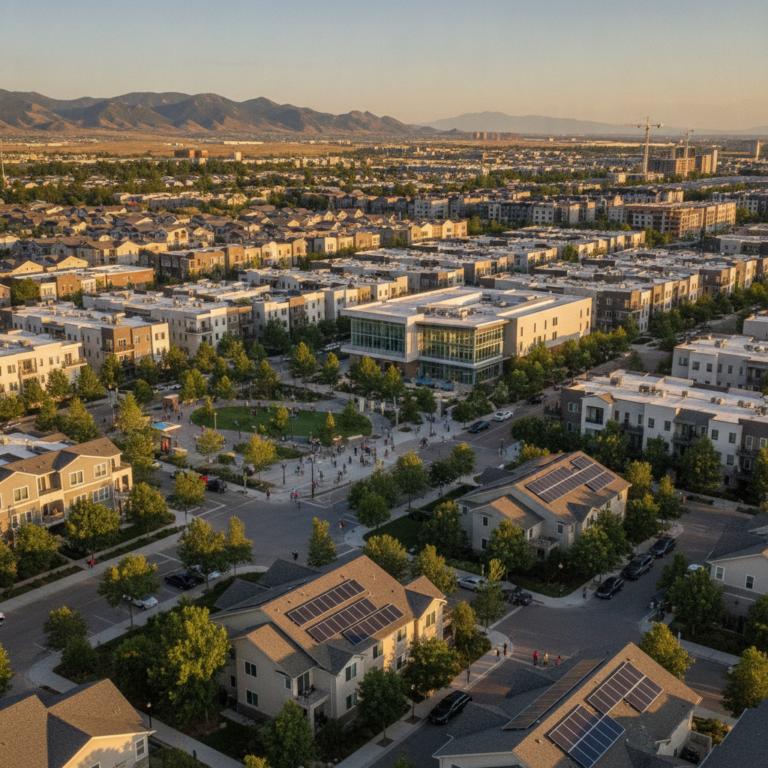
A new home in an active Daybreak village, a quick-move-in near Downtown Daybreak, a newer home elsewhere on the west side, and an established home east of Bangerter Highway do not offer one shared routine. The address decides which roads, stations, parks, errands, construction phases, and associations matter.
UTA’s Red Line serves South Jordan Parkway, South Jordan Downtown, and Daybreak Parkway. If rail matters, test the full trip from the property, check current schedules, and include the last mile. Do not attach transit value to a home simply because the station name contains South Jordan.
The South Jordan Downtown station opened in 2025, and planning around station areas continues. That is current context, not a promise about a future business, building, or completion date. Use official sources and ask which nearby changes are approved, underway, or conceptual.
HOA structure can differ across planned communities and attached housing. Confirm association layers, amenity rights, insurance, maintenance, current dues, reserve information, rules, and turnover or development-phase questions. A community sales description does not replace the governing documents.
Established pockets can differ just as much. Lot size, home age, access, private improvements, agricultural or accessory-use questions, and road orientation vary by property. South Jordan’s planning page links to zoning, future land use, and residential guides that can create the right questions for the address.
I would not use this comparison to rank east or west, Daybreak or non-Daybreak, new or established. I would use it to find the home whose known obligations and accepted unknowns fit the buyer.
Test How Complete the Surrounding Neighborhood Is
For a new home, walk beyond the model and the finished block. Note active lots, construction access, temporary roads, grading, drainage, street lighting, mail, parking, and the route to the amenity or station you expect to use. Ask which conditions are complete today and which depend on another phase.
For an established home, make the same walk. Mature landscaping and occupied streets provide evidence, but nearby parcels, road work, station-area plans, or aging private improvements can still change the routine. Use official sources for public planning and the property documents for private obligations.
Decide whether the home works with the context visible now. A future park, business, road, or phase may be welcome, but it should not carry the purchase unless its status and uncertainty are understood.
My Final Decision Matrix
Start with non-negotiables. Garage depth, main-level living, bedroom count, yard, pet rules, transit, school verification, budget ceiling, or timing can remove an option quickly. Verify each rather than accepting the listing label.
Compare delivered cost. Include the lender’s current property-specific estimate, taxes, insurance, every association, move-in work, visible repairs, landscaping, fence, window coverings, appliances, selections, and a maintenance reserve discussion.
Compare contract exposure. List deposits, investigation rights, financing and appraisal terms, closing or completion timing, extension consequences, selection deadlines, and remedies. Use the actual contract, not a prior transaction.
Compare evidence. What can you inspect? Which records exist? What is visible in the street? Which plans, specifications, disclosures, warranties, and official maps support the answer? Which important cell remains blank?
Compare routine. Drive the repeated routes, test parking, carry groceries inside, find storage, visit after work, check outdoor access, and picture the week when construction, weather, or maintenance is inconvenient.
Finally, name the unknown you are choosing. With new construction, it may be timing or surrounding phases. With an established home, it may be system age or a renovation. The right home is not the one with no unknowns. It is the one whose unknowns you understand and can manage.
Use my South Jordan real estate and housing guide and South Jordan community guide for local orientation, then send me the two real homes so I can help build the property-level comparison.
Frequently Asked Questions
What is the difference between quick-move-in and to-be-built?
A quick-move-in home is farther along or complete, so selections may be limited and timing may be shorter. A to-be-built home can allow more choices and carry more schedule uncertainty. Verify the exact status and contract.
Are builder incentives the same in every South Jordan community?
No assumption is safe. Verify the exact home, builder, contract date, closing date, lender or provider requirement, written benefit, and expiration.
What costs may sit outside a base price?
Possible items include lot, structural options, design selections, landscaping, fence, window coverings, appliances, storage, electrical work, association charges, financing costs, and other move-in completion. Use the builder’s written documents.
Can I inspect a new home?
Ask what the contract and site rules allow, when access is available, and how findings are handled. Hire qualified professionals for the permitted scope.
Is an established home more predictable?
It provides more visible street and condition evidence, but hidden defects, aging systems, past work, and future nearby change still require investigation.
What should I send Jena?
Send the two addresses, builder or listing documents, lender estimates, HOA material, known timing, and your top priorities. I can organize the side-by-side and identify the remaining verification.
Compare the South Jordan Homes You Could Actually Buy
Send me the new and established South Jordan homes, documents, or priorities you are comparing. I will help you see the delivered cost, contract, evidence, and routine before you commit.