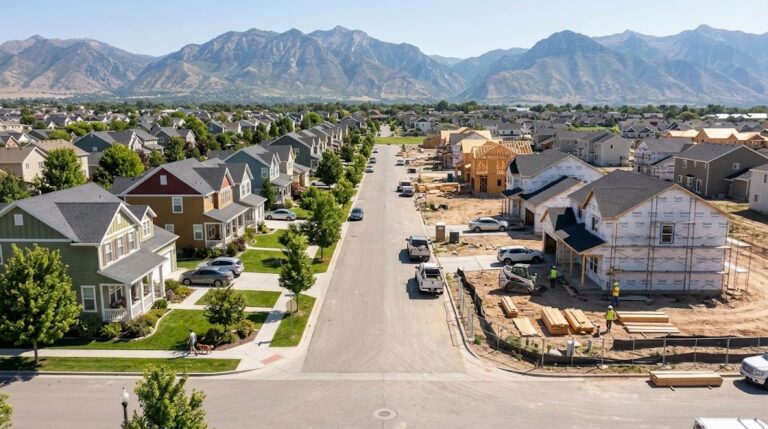

Two buyers came to me the same week last spring asking the identical question in different words: “Herriman or South Jordan?” One was leaving a condo in Draper and wanted more square footage. The other was relocating from out of state for a job near the Bingham Canyon corridor and had never set foot in either city. Neither question had a clean answer, because “Herriman” and “South Jordan” each cover a lot of very different streets.
What I actually did with both of them was pull up one specific Herriman address and one specific South Jordan address, then drive the commute, walk the lot, and read the HOA packet for each. That’s the version of this comparison that’s worth writing down — not which city “wins,” but how to run the same test yourself before you write an offer.
Pick the Address That Survives a Bad Tuesday
A house has to work on the ordinary week, not just the Saturday you toured it.
Start With the Week the Home Actually Has to Support
Before you look at another listing, write down the five trips that make up an ordinary week: the work commute, school or daycare drop-off, one recurring appointment, the grocery run, and whatever activity is hardest to get to on a weeknight. If there are two commuters in the household, map both routes — a five-minute drive for one person doesn’t offset a 40-minute one for the other.
Then add the parts of the routine that happen at the house itself. Where does the second car actually park once the garage has bikes and storage bins in it? Does the dog need a yard, or is a Herriman townhome with a nearby dog park close enough? Is there a home office that stays quiet during a Zoom call when the neighbor’s landscaping crew shows up? Who’s doing the snow removal on a driveway that faces north?
City-level numbers are close to useless here. A townhome in Herriman Springs a half-mile from the Mountain View Corridor on-ramp can beat a detached South Jordan home on the far east side that backs onto Redwood Road traffic noise. A South Jordan resale near the older Jordan Ranch area behaves nothing like a new-construction phase inside Daybreak that’s still three sales offices deep in the same development. Two homes on the same cul-de-sac can have different parking rules, different slope in the backyard, and a different HOA.
I ask every buyer to name their hardest day of the week before we tour anything. Usually it’s a snow morning, a late meeting followed by school pickup, or the week a car is in the shop. The right address is the one that keeps that day from falling apart — not the one with the nicer kitchen.
My rule: I don’t compare cities. I compare two driveways, two HOA packets, and one tested commute. Everything else is marketing copy.
Commute and Route Testing: Measure the Whole Trip, Not the Map Estimate
Google Maps gives you a starting guess, not a real number. Drive each candidate address at the actual time you’d leave and the actual time you’d get home. Start from the driveway, not from where you happen to be parked when you’re touring. Include the school-zone crawl, the light at the major intersection, and the parking situation once you arrive.
Herriman’s commute depends heavily on which pocket you’re in and how far you are from Herriman Main Street or the Mountain View Corridor. A home in the newer west-side phases can add real minutes just getting to a corridor that carries you out. South Jordan splits along Bangerter Highway: west-side and Daybreak addresses lean on that corridor and the 11800 South interchange, while east-side streets near Redwood Road connect more directly toward I-15 but eat time in local traffic first.
Test the backup route too. A closed turn lane on Herriman Main Street, an accident on Bangerter, or a TRAX delay can turn a reliable 25-minute drive into 45 minutes with no warning. If your schedule depends on a precise pickup window, that unpredictability matters more than the average number on a map.
If TRAX matters to your plan, check UTA’s current Red Line schedule. South Jordan Parkway, South Jordan Downtown, and Daybreak Parkway are three separate stations with different parking and different walk times to the platform — don’t treat “near TRAX” as one fact. Map the whole trip: driveway to platform, parking or bike storage, the wait, any transfer, and the walk at the other end, including after dark in December.
Herriman doesn’t have its own TRAX stop, so anyone counting on rail from a Herriman address is really planning a park-and-ride trip to a South Jordan or Draper station. Price that extra leg into the commute before you assume it saves you anything.
Don’t forget errands. If your grocery store, pharmacy, and gym are all on one side of Bangerter Highway and the house is on the other, you’ve built in a cross-town trip every single week. That’s a household-specific fact, not something a city-wide walkability score will tell you.
| Route Question | What to Test | What to Record |
|---|---|---|
| Morning | Driveway to work, school, or the TRAX platform at your real departure time | Door-to-door minutes, the worst intersection, school-zone timing, parking |
| Evening | The return trip plus whatever errand or pickup usually follows work | Where traffic actually backs up, lighting, and your backup route |
| Transit | Driveway to platform, the wait, any transfer, and the walk back at night | Current UTA schedule, total door-to-door time, weather exposure |
| Weekend | Groceries, gym, worship, kids’ activities, and whatever else repeats | Which errands can stack in one trip and which pull you two directions |
Housing Patterns, Home Type, and the Obligations You Inherit
Herriman has grown fast, and a lot of that growth is attached housing. The city’s own growth page puts 41 percent of homes in the city as townhomes or apartments, and says most of what’s still entitled to be built is multifamily. That’s useful context for understanding why so many Herriman listings right now are townhome product rather than detached — but it doesn’t tell you anything about the specific HOA, parking rule, or floor plan on the listing you’re looking at.
A new-construction Herriman home might give you current finishes and a layout built for how people actually live now, but it can also mean a dirt lot next door for another year and roads that aren’t finished. An established Herriman resale — closer to the original Rosecrest neighborhoods, for example — gives you a settled street and mature landscaping, at the cost of an older furnace or roof you’ll want inspected carefully.
South Jordan is the more layered of the two cities housing-wise. You’ve got established east-side streets that have been there since before Daybreak existed, newer detached product on the west side, and Daybreak itself, which is really a dozen different villages at different build-out stages — some finished and quiet, some still running active construction traffic. “Daybreak” is not one product; a home in an early, finished village is a different purchase than one in a phase still selling.
Get the actual HOA documents for anything with an association — not the listing agent’s summary. Read the dues, the budget, reserve information if it’s available, insurance requirements, what’s covered versus owner responsibility, parking rules, pet rules, rental restrictions, and whether there’s a master association sitting on top of a sub-association (common in Daybreak).
For an attached home, find out in writing who maintains the roof, the exterior, the private road, and any shared systems. Ask your insurance agent how the HOA’s master policy interacts with your own — that gap is where people get burned. Check guest parking at 8 p.m. on a weeknight, not at 2 p.m. on a Tuesday tour.
For a detached home, walk the yard and be honest about whether you want the maintenance that comes with it. Irrigation, drainage, snow removal on a longer driveway, and exterior upkeep are real weekly time, not a footnote.
Don’t take a school boundary, a utility rate, or an HOA claim at face value from the listing. Verify it directly with the district, the provider, or the association before you write the offer.
Attached home
Check parking, storage, shared walls, insurance overlap, HOA reserve health, and the actual rulebook — not the marketing brochure.
Detached home
Walk the lot, check drainage and slope, and be honest about how much yard work you actually want each weekend.
New construction
Get the builder contract’s inclusion list in writing, confirm the completion timeline, and ask what phase of construction still surrounds the lot.
Established resale
Pull permits, ask for service records, and budget for the age of the roof and mechanicals even if the kitchen was just redone.
Compare the Full Cost of the Two Homes
The list price is not your monthly payment. Get a current, property-specific estimate from your lender for each address, including down payment, loan structure, and timing — not a generic pre-approval number from three months ago.
Then stack on property taxes, homeowners insurance, mortgage insurance if it applies, every HOA layer the documents show, and any property-specific charge you found in the paperwork.
Get real utility numbers instead of guessing. Ask the seller or the utility provider for the last 12 months of usage where you can. A larger Herriman new-build with more square footage and less mature landscaping can run a higher water bill in July than a smaller, shaded South Jordan resale — size on paper doesn’t predict the bill.
Budget the first year of ownership separately from the mortgage. A new Herriman home often needs fencing, landscaping, blinds, and a patio that weren’t included. An older South Jordan resale might need flooring, a water heater, or irrigation repair. Separate what’s actually required from what’s just on your wish list.
Put a number on the commute itself — fuel, wear on the car, a TRAX pass, or the extra hour of childcare you’re paying for because the pickup window doesn’t work from that address. That’s a real recurring cost, not an abstraction.
And keep some cash in reserve after closing. A home that stretches every available dollar leaves nothing for the first repair or the first month the HOA sends a surprise assessment letter.
Growth, Construction, and Nearby Change
Herriman’s growth is part of what you’re buying into — the city’s own numbers show rapid population growth, new roads, and new parks and trails still being built out. That’s a reason to ask sharper questions about the specific address: what’s built and open today, what’s under active construction right now, and what’s just an approved plan on a map that could sit for years.
South Jordan isn’t static either. Its Planning and Zoning page has the current zoning map, the general plan, and station-area planning documents. Current zoning and a filed application are two very different things — a rendering on a developer’s website is not a completion date.
Start at the parcel level. Look at what’s on the ground today around the specific lot you’re considering, not the whole city. Ask about grading, drainage, construction traffic, and how close an active site is to the property line.
If part of your decision depends on a school, a road, or a retail center that isn’t open yet, write down where you got that information and treat it as unconfirmed until it’s built. A future TRAX extension or a planned commercial center is not something to price into your offer today.
Some buyers are fine with construction noise in exchange for a newer home and a location they want. Others need the block to feel finished. Drive by on a weekday, not just a quiet Sunday, and be honest with yourself about which kind of buyer you are.
Source basis: Herriman’s official growth page, South Jordan’s Planning and Zoning page, and UTA’s current Red Line schedule support the general context here. Always recheck zoning, construction status, and transit schedules for the specific address before you write an offer — these change often enough that a page I read last month may already be out of date.
Parks, Trails, Errands, and the Weekend You’ll Actually Use
Outdoor access isn’t a citywide amenity count — it’s the walk from your specific front door. Herriman’s trail system includes paved and natural-surface trail connecting toward Butterfield Canyon and the foothills; the useful question is whether your candidate address connects to it directly or requires a drive.
Walk or bike the actual route before you assume it works. Check the street crossings, the grade if you’re pushing a stroller, and whether the trail is lit for a winter-evening walk.
South Jordan’s outdoor draw is largely Daybreak-centered — Oquirrh Lake, the Watercourse trail system, and SoDa Row’s shops and restaurants if you’re close enough to walk. Outside Daybreak, access varies address by address; an east-side home may be closer to the Jordan River Parkway trail than to anything inside Daybreak.
Time your actual errands. If the grocery store, pharmacy, and gym you’d use are a 12-minute drive instead of 4, that’s a real weekly cost, not a preference.
Use the home tour to picture your gear, not just your furniture. Where do the bikes, skis, and muddy shoes go without taking over the entryway? Does the garage still fit a car once storage is in it?
Visit once when the neighborhood is active and once when it’s quiet. Parking, noise, and how common areas actually get used can look completely different at 6 p.m. on a Friday versus 10 a.m. on a Tuesday.
A Two-Address Decision Matrix
Pick one real Herriman address and one real South Jordan address that both actually meet your non-negotiables. Don’t compare a house you can genuinely afford against an aspirational one three streets over — that’s not a fair test.
Score the routine first: the commute, school or daycare logistics, errands, and the backup plan for a bad day. Then score the home itself: layout, parking, storage, yard, and condition. Then score the obligations: full monthly cost, HOA, and what year one actually costs to fix or finish.
Keep facts and feelings in separate columns. “The drive took 34 minutes at 7:40 a.m.” is a fact. “That felt fine” is a preference. “A new road will fix the traffic” is a prediction — write it down as one, with a source, not as a fact.
Weight the categories honestly. If a predictable pickup time matters more to your household than a formal dining room, say so in the score instead of pretending every category counts equally.
Use three outcomes per question: verified, needs verification, or doesn’t fit. A blank cell isn’t a good score — it’s an open question that needs an owner: your lender, your inspector, the title company, the HOA, or me.
| Decision Area | Herriman Address | South Jordan Address |
|---|---|---|
| Weekly routine | Measured commute, school/daycare logistics, errands, backup route | Measured commute, TRAX option if relevant, errands, backup route |
| Home function | Layout, parking, storage, yard, condition, nearby construction | Layout, parking, storage, yard, condition, HOA/village context |
| Obligations | Loan estimate, taxes, insurance, HOA, utilities, year-one costs | Loan estimate, taxes, insurance, HOA, utilities, year-one costs |
| Unanswered | Who’s answering each open question, and by when | Who’s answering each open question, and by when |
The Field Test I’d Actually Run
Start at the Herriman address on a weekday, arriving by the route you’d really use — not the fastest route from wherever you happen to be. Park where you’d actually park. Walk in, find the storage, and stand in the kitchen long enough to notice the light, the noise from next door, and whether there’s active construction visible.
Drive your most important route at the real time of day. If outdoor access matters, walk the actual trail connection instead of trusting the map. If there’s an HOA, compare what you see on the ground with what the documents say the association handles.
Repeat the exact same process at the South Jordan address, same checklist, same time budget. If TRAX is part of the plan, physically ride the trip once instead of estimating it from the schedule.
Go back after dark. Street lighting, guest parking, and how the neighborhood sounds at 8 p.m. can change your read on a house completely — this is especially worth doing if the home sits near an active construction site or a busy road.
Within an hour of each visit, write three lines: what worked, what created friction, and what’s still unverified. Start with the routine and the obligations, not the paint color.
Then put the paperwork next to the experience — the lender estimate, the inspection plan, the HOA documents, and anything you still can’t confirm. A pleasant tour and a sound purchase are related, but they’re not the same thing.
Pick two real homes
Same non-negotiables, same realistic budget — not one dream home and one backup.
Run the routes
Drive the real commute at the real time, plus the backup route and the TRAX trip if relevant.
Inspect the routine
Park, walk in, open the storage, and picture the household on its hardest day.
Read the obligations
Financing, HOA documents, inspection findings, and the construction status next door.
Assign open questions
Give each unanswered question an owner and a deadline before you write the offer.
For a deeper look at one side of this comparison, my Herriman community guide covers the pockets in more detail. Then bring me both addresses and we’ll go through the parts you couldn’t verify on your own.
Frequently Asked Questions
Is Herriman or South Jordan better for commuting?
It depends on the specific addresses, your destination, and your departure time. Herriman leans on the Mountain View Corridor; South Jordan splits between Bangerter Highway and Redwood Road depending on which side of the city you’re on. Test both routes yourself.
Does South Jordan have practical TRAX access?
The Red Line serves three South Jordan stations, but “near TRAX” isn’t the same as “useful for your commute.” Check the current schedule and test the full trip, including the first and last mile.
Is Herriman only new construction?
No — Herriman has established neighborhoods like the original Rosecrest area alongside active new-construction phases. Confirm which one you’re looking at and what obligations come with it.
Which city has lower ownership costs?
There’s no citywide answer. Compare property-specific loan estimates, taxes, insurance, HOA dues, utilities, and commute cost for the two actual addresses.
How should I compare schools?
Verify the exact school assignment for each address directly with Jordan School District — boundaries shift, especially in fast-growing areas of both cities.
How much should future development affect my decision?
Separate what’s built, what’s under construction, what’s approved, and what’s just proposed. Decide whether the home still works if a hoped-for project takes longer than expected.
What should I send you for a useful comparison?
The two addresses, the listing or builder documents, your lender’s estimate, the HOA packet if there is one, and the routes you’d actually drive every week.
Send Me the Two Addresses
Send me the Herriman and South Jordan homes you’re comparing, and I’ll help you test the commute, read the HOA packet, and run the numbers before you write an offer on either one.