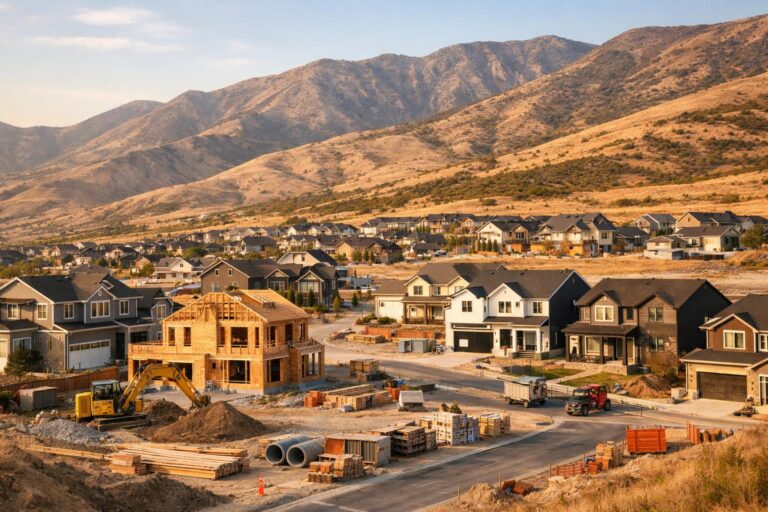

You’ve found two Herriman homes you like, and one shows lower HOA dues. Does that make it the cheaper home to own? Not necessarily, and that’s the trap I want to help you avoid.
A real Herriman HOA comparison looks past the dues figure in the listing. Compare four things side by side: everything you’ll pay, the work you’ll still do yourself, the rules you’ll live under, and the questions nobody has answered yet. The documents answer most of that. The listing usually doesn’t. Here’s how I’d lay the two homes out before you write an offer.
Compare What You’ll Owe and What You’ll Still Have to Do
Two homes with similar dues can be very different to own once you read what those dues actually cover.
Which HOA Documents Should You Request Before Comparing Two Herriman Homes?
Start with the documents. Neither home’s online listing, nor a neighbor’s description, nor a dues figure typed into an MLS field is the final word on what the HOA covers.
The standard Utah Real Estate Purchase Contract gives you a starting set. Section 7 lists the HOA’s CC&Rs and rules, along with its most recent minutes, budget, and financial statement, among the seller disclosures. That’s a good foundation. It isn’t everything you’ll want.
The state’s HOA Homebuyer Checklist, published by Utah’s HOA Ombudsman, suggests asking for more: reserve analyses, older records, and insurance information. Those extra items don’t automatically arrive before you make an offer, so ask early. Then you can see what’s actually available and how long it takes to get.
When I’m comparing two homes, I want each document matched to the question it answers. A stack of PDFs nobody reads doesn’t help you decide anything.
| Document | What It Helps You Answer | Where It Usually Comes From |
|---|---|---|
| CC&Rs and rules | What you can and can’t do: parking, pets, rentals, exterior changes, fencing, landscaping | REPC Section 7 seller disclosures |
| Budget | What the dues are meant to pay for this year, and what’s left out | REPC Section 7 seller disclosures |
| Financial statement | How the money is actually being spent and held | REPC Section 7 seller disclosures |
| Recent minutes | What the board is discussing: projects, disputes, increases, enforcement | REPC Section 7 (most recent); ask for more history |
| Reserve analysis | Which big components are aging and how the association plans to pay for them | Request separately, per the state checklist |
| Insurance information | What the association insures and what you’ll need to insure yourself | Request separately, per the state checklist |
Request the same set for both homes. If one association sends a reserve analysis and the other doesn’t, note the gap instead of assuming it means the same thing.
Are You Comparing the Full Dues, or Only One Association’s Charge?
This is where most comparisons go wrong. A dues number in a listing tells you where to start looking. It isn’t the confirmed total.
The state checklist points out that a home can be subject to more than one layer of association. If one Herriman home pays a single association and the other pays a master association plus a sub-association, their listed dues may not be measuring the same thing. Find out how many associations each home belongs to and what each one charges.
Then put every confirmed charge on the same schedule. A quarterly charge next to a monthly one looks smaller than it is. I convert each recurring charge to both a monthly and a yearly figure so the two homes line up.
Keep three kinds of costs on separate lines, because they act differently:
- Recurring dues. Regular payments to each association, at the frequency the documents state.
- One-time closing charges. Transfer, setup, or similar fees tied to the sale itself.
- Uncertain future costs. Approved increases, pending assessments, or planned projects the minutes mention but haven’t priced.
Then add the fourth column: what’s still yours to do. Lower dues can mean the association simply takes on less. If one home’s dues include exterior maintenance and the other’s don’t, the lower-dues home may cost you more over time. Read the maintenance provisions before you decide which number is “better.”
Which Rules Could Change How You Use the Home Every Day?
Dues are only part of what you’re signing up for. Rules decide whether the home actually fits how you live. Read the CC&Rs and rules with your own week in mind, not as a general legal document.
Here are the areas I’d read closely for each Herriman home:
Vehicles
Where your cars, a work truck, or a trailer can park, and how guest parking works on a busy evening.
Pets
Limits on the number, type, or size of pets, and any rules for shared areas.
Rentals
Whether renting is allowed and on what terms, if renting the home later is part of your plan.
Exterior changes
What needs approval before you paint, add a patio cover, or change the front of the home.
Fencing and yard
Fence styles and heights, landscaping standards, and who maintains which parts of the yard.
Home business and amenities
Whether working from home is restricted, and which amenities you actually have documented access to.
Make a short list of your non-negotiables first. If you’re bringing a large dog, planning a fence, or might rent the home in a few years, those rules matter more to you than the clubhouse hours.
Don’t assume a rule applies, or doesn’t, because of what you’ve seen elsewhere in the neighborhood. Whether a particular rule can be enforced is a legal question I won’t answer for you. What I can help you do is find it, flag it, and decide whether it changes your interest in the home.
City Services, HOA Services, and the Gap Between Them
This is the Herriman-specific part, and it’s easy to miss. Some things that feel like “the HOA’s job” are actually handled by the city, some are handled by nobody but you, and some depend on the exact address. Here are three local examples that show why it’s worth checking.
Why it matters for your comparison: if one listing’s photos show a park and the other’s show a clubhouse, those aren’t comparable perks until you know who owns each one. Compare the association’s documented assets and amenity-access rights, not what’s visible in listing photos.
The Blackridge permit program is a good reminder that parking can be governed in more than one place. The city maps where its permit program applies, and it isn’t citywide. Your HOA may have its own parking rules on top of that. For a home near the reservoir, I’d read both before assuming your guests can park out front.
What Do Reserves, Insurance, and Maintenance Records Actually Tell You?
This is the part of the HOA paperwork that tells you about the future, and it’s the part buyers most often skim.
The minutes
Minutes are the most underrated document in the stack. Budgets show plans. Minutes show what the board is actually discussing and deciding. I read them for a few specific things:
- Talk of a dues increase, a special assessment, or a vote on either one.
- Repair or replacement projects that come up month after month.
- Disputes with owners, contractors, or the developer.
- Changes to rules on parking, rentals, pets, or exterior changes.
- Mentions of legal counsel, claims, or construction defects.
One set of minutes is a snapshot. If something in it raises a question, ask for earlier minutes so you can see whether it’s a one-time item or an ongoing pattern. A board that discusses the same unresolved roof issue for a year is telling you something the budget won’t.
The reserve analysis
Utah’s HOA Ombudsman explains on its reserves and reserve analysis page that a reserve analysis looks at the association’s major components, their remaining useful life, what repair or replacement will cost, and a plan for funding it. In plain terms, it’s a list of what’s aging and how the association expects to pay for it.
Use it to ask what’s coming due. If the analysis shows a big-ticket item near the end of its life, check the minutes and budget for a plan to pay for it.
The analysis and the current reserve balance aren’t the same thing. Ask for the balance separately so you can compare what the plan says with what’s actually in the account.
One thing I won’t tell you is that a certain reserve level means “no assessments are coming.” Nobody can promise that from a document. What the records can do is show you where the questions are.
Insurance
Find out what the association insures and what it doesn’t. Then ask an insurance agent what your own policy needs to cover for each home. Don’t assume the association’s policy covers the interior, the roof, or anything else until you’ve seen it in writing. Ask about limits and deductibles, too, because those can affect what an owner pays after a claim.
Maintenance responsibilities
Build a simple responsibility map for each home. For every component, write down who maintains it, who insures it, and which document and page says so.
| Component | Ask | Confirm In |
|---|---|---|
| Roof | Who maintains it, who replaces it, and who insures it? | CC&Rs maintenance section, insurance information |
| Exterior | Paint, siding, and trim: whose job and whose cost? | CC&Rs, rules, budget line items |
| Yard | Front, back, irrigation: what does the association handle? | CC&Rs, landscaping rules, budget |
| Driveway and sidewalk | Who repairs them, and who clears the snow? | CC&Rs, plus Herriman’s snow-removal page |
| Private streets | Are streets private, and who maintains them? | Recorded documents, budget, reserve analysis |
| Common areas | What the association owns and maintains, and your access rights | CC&Rs, amenity documents, reserve analysis |
Where this guidance comes from: the document list follows the Utah Real Estate Purchase Contract (Section 7) and the Utah HOA Ombudsman’s Homebuyer Checklist. The reserve explanation comes from the Ombudsman’s reserves page. The local examples come from Herriman City’s snow removal, Blackridge Reservoir, and parks pages. None of these replace the recorded documents or the signed contract for a specific home, and none of this is legal, tax, or insurance advice.
What Must You Confirm for This Exact Herriman Property?
General guidance gets you to the right questions. Only property-specific records can answer them. Before I’d treat a comparison as finished, I’d want each of these confirmed for each home:
Match the documents to the parcel
Make sure the title commitment and recorded documents belong to this property, rather than to the neighborhood in general.
Identify every association
List each master association, sub-association, or other recurring charge, plus any recent amendments.
Confirm ownership type
The legal ownership form affects what you own outright versus what the association owns and maintains.
Check who’s in control
Ask whether the developer still controls the association. That can change how certain duties apply.
Look for red flags
Ask about pending litigation, defect concerns, approved assessments, and planned work.
A recent payment statement from the seller is helpful. So is a maintenance responsibility chart, if the association has one. If you can’t get an item, write down who you asked and when. That record will help when you decide how to handle your deadlines.
How Should Unresolved HOA Questions Affect Your Offer?
Here’s where the comparison turns into decisions. HOA questions don’t always need to be answered before you make an offer, but they should shape how you write it.
Under the Utah purchase contract, due diligence is a condition you choose to include. The disclosure and review deadlines go into Section 24, and extending a deadline takes a written agreement. Nothing extends automatically. Before you sign, make sure you have enough time to get and read the documents, especially anything you’ve had to request separately.
Two cost lines in the contract are worth reading carefully. Sections 4.2 and 4.3(c) let the parties choose who pays certain special assessments and change-of-ownership fees. Neither side pays them by default. They’re negotiated, so treat them as separate lines in your comparison and talk through them with me before you sign.
How I’d put it: if a missing answer would change what you’d pay or whether you’d buy at all, it belongs in your review time, not on an “I’ll find out later” list. I can help you read the contract terms. Interpreting your legal rights is a question for a real estate attorney.
Also ask yourself, honestly, whether an unresolved question would make you pause. Sometimes the right move is a longer review period. Sometimes it’s adjusting the offer. Sometimes it’s choosing the other home because its documents are complete. Any of those is a reasonable outcome.
The Two-Home Herriman HOA Comparison Sheet
This is the method I’d use to put two homes side by side. It isn’t a ranking of Herriman HOAs. It’s a way to see your two options clearly, with evidence attached.
For each home, record one line per obligation or rule:
- The item: a charge, a responsibility, or a rule.
- The amount and frequency, or what’s permitted.
- Who’s responsible: you, the association, or the city.
- The source: document name and page.
- The effective date of that document or rule.
- Any open question still unanswered.
- Who confirmed it, and when.
Then read the two sheets together and ask the questions that actually decide things:
- Which home fits how you park, keep pets, use the yard, or might rent?
- Are you paying one association, several, or another separate charge?
- What work is still yours after the dues?
- Are lower dues offset by owner-paid repairs or upcoming work that isn’t funded?
- Which costs repeat, which happen at closing, and which are still uncertain?
- Do you have the documents and enough review time to move forward?
When the sheets are done, the answer often becomes obvious. Sometimes it’s the home with the higher dues, because those dues cover more of the work.
If You’re Selling in Herriman, Get Ahead of These Questions
Buyers who read this far are going to ask you for documents. Having them ready makes your home easier to compare and reduces surprises during the buyer’s review.
- Gather your CC&Rs, rules, the current budget, recent minutes, and the latest financial statement early.
- Find out how buyers can request the reserve analysis and insurance information, and how long it takes.
- Get a recent payment statement showing your account is current.
- Know which associations your home belongs to, and be ready to explain what each one covers.
- Expect special-assessment and transfer-fee questions to be negotiated, and talk with me about how they’re handled in your contract.
Complete documents won’t win a negotiation by themselves, but they do take a lot of uncertainty out of the buyer’s decision.
Want more context before you compare? My Herriman real estate and housing guide covers ownership costs more broadly, and the Herriman community page covers what living in Herriman looks like beyond the HOA documents.
Frequently Asked Questions
Which HOA records come with the standard Utah purchase contract?
Section 7 of the Utah REPC lists the CC&Rs and rules, plus the association’s most recent minutes, budget, and financial statement. The state’s HOA Homebuyer Checklist suggests separately requesting reserve analyses, older records, and insurance information.
Can a Herriman home have more than one association or recurring charge?
It can. The state checklist notes that homes may be subject to more than one association. Confirm every layer and charge for the specific property instead of relying on the listing’s dues field.
Does a lower monthly HOA fee mean the home costs less to own?
Not necessarily. Compare what each association covers and what’s left to you. Lower dues can come with more owner-paid maintenance, or with upcoming work that isn’t fully funded.
Who pays a special assessment or transfer fee when the home sells?
It depends on the contract. Sections 4.2 and 4.3(c) of the Utah REPC let buyer and seller choose who pays covered special assessments and change-of-ownership fees, so these are negotiated terms, not automatic.
Can I cancel after reviewing the HOA documents?
That depends on the due-diligence condition and deadlines in your signed contract, so there isn’t one answer for every buyer. Review the election and dates with me before you sign, and take questions about your legal rights to a real estate attorney.
Is a nearby park or parking permit automatically part of my HOA benefits?
No. Herriman lists parks like Arches Park and Artistry Lane Park in its city directory, and the city runs a mapped parking-permit program near Blackridge Reservoir. Neither tells you what your HOA owns, funds, or permits. Check the association’s own documents.
Which Two Herriman Homes Are You Weighing?
Send me the two Herriman homes, the HOA documents you have, or the daily-life priorities you’re comparing, and I’ll give you a practical side-by-side read. If you’d rather talk it through, call me before you commit.