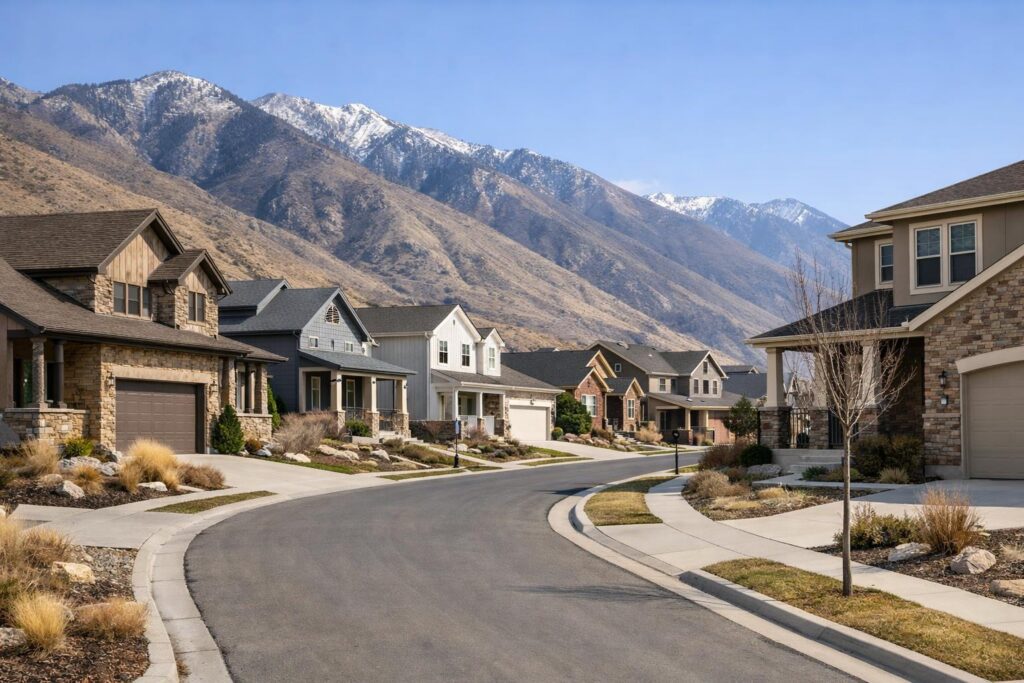

A better Herriman shortlist is not the longest list of homes that fit a price filter. It is a small group of addresses that can support your real routine, complete monthly budget, property-type needs, and tolerance for uncertainty. Build that list before touring, and the homes teach you something instead of blurring together.
I use the online search to create hypotheses, not conclusions. Each candidate should earn a tour by passing an address check, a cost check, a property-use check, and a document-risk check with the information available.
Shortlist for the Life, Then Tour the House
Translate Your Ordinary Week Into Home Criteria
Search filters usually begin with price, beds, baths, and square footage. Those fields are useful, but they do not describe the life the property must carry. Start with the week before you start with the house.
Write the activities that repeat: leaving for work, school drop-off, remote meetings, caring for someone, charging a vehicle, walking a pet, storing sports equipment, hosting family, grocery runs, yard work, trail use, and weekend travel. Then give each activity a physical requirement.
“I want a nice neighborhood” is difficult to test. “I need a route that avoids an unprotected left turn during school drop-off, a garage that fits two actual vehicles with storage, and a safe place to walk after dinner” creates shortlist criteria.
Herriman’s official growth information shows a community with substantial expansion and a mix of housing types. That context means a search may include established streets, active construction, attached homes, detached homes, and different stages of neighborhood completion. It does not tell you which option fits; it tells you to define the routine carefully.
| Routine | Property requirement | Pre-tour evidence |
|---|---|---|
| Two work routes | Acceptable access to the roads actually used | Route tests at relevant hours and a backup path |
| Vehicles and gear | Measured parking plus usable storage | Garage dimensions, photos, plat or floor plan, and rules |
| Outdoor time | Private yard, nearby trail, park, or low-maintenance alternative | Map, access point, route, grade, crossing, and maintenance responsibility |
| Remote work | Quiet separation, light, internet options, and enough power | Floor-plan location, provider check, and nearby noise context |
| Guests or care | Entry, parking, bedroom, bath, and mobility fit | Layout, stairs, path, parking rules, and measurements |
Do not optimize for the best day. Picture the least convenient ordinary day: bad weather, late arrival, packages at the door, full trash containers, a guest parked outside, and an early start. A home that functions under pressure deserves more attention than a home that only photographs well.
Use the Herriman community guide to frame local routines and the Herriman housing overview to orient yourself to the property choices. Then convert every appealing feature into a use case. If you cannot say how the feature helps your week, it belongs below the essentials.
Set Non-Negotiables, Strong Preferences, and Tradeoffs
A shortlist becomes noisy when every preference behaves like a requirement. Use three tiers. A non-negotiable is a condition that makes the home unusable, unaffordable, or inconsistent with a real plan. A strong preference creates meaningful value but can be traded. A bonus is pleasant and should not push out a better fit.
Keep the non-negotiable list short. If it contains fifteen items, some are probably preferences. Examples may include a hard total-cost ceiling, an accessibility need, enough legal bedrooms for the household, a verified school or care arrangement, a vehicle fit, or a location boundary tied to a repeated responsibility.
For every strong preference, name the acceptable substitute. A private yard might be traded for direct, practical open-space access and lower maintenance. A finished basement might be traded for a lower finished cost and a layout that already solves the needed use. A newer kitchen might be traded for better location and sound major systems.
Non-negotiable
“The complete monthly obligation must stay within this ceiling using my lender’s current property estimate.”
Strong preference
“I prefer a fenced yard, but a practical private patio plus a verified daily walking route could work.”
Bonus
“A mountain-facing primary bedroom is attractive, but it does not outrank route, parking, or budget.”
Unknown
“The listing says low maintenance, but the association documents have not confirmed the owner boundary.”
Give each non-negotiable a verification method. “Good parking” becomes actual vehicle measurements, association and city rules, guest options, and an evening visit. “Near trails” becomes the route to an official access point, crossings, grade, condition, and the way your household will use it.
Herriman reports more than 55 miles of trails on its official trails page. That is helpful community context. For a shortlist, verify the connection from each address. A nearby trail line may sit across a major road, have a steep approach, or serve a different type of use than you expect.
Set the tradeoffs before you open a new group of listings. Otherwise the most attractive new photo can rewrite the rules. The list is allowed to evolve, but changes should come from learning—not fatigue or fear of missing out.
Use one sentence per candidate
“This home stays on the shortlist because it meets every non-negotiable and offers this meaningful advantage, while its main tradeoff is this.” If you cannot complete the sentence with current evidence, label the home unresolved instead of promoting it.
Choose Property Types by Their Obligations, Not Their Labels
Townhome, condominium, and single-family are useful categories, but the ownership experience varies within each one. A townhome may reduce some exterior work and add association rules. A detached home may provide more control and require more maintenance. A newer home may need substantial completion after closing. An established home may have mature improvements and older systems.
Compare the obligations that matter to you: roof and exterior responsibility, yard work, snow removal, insurance boundary, parking, shared walls, storage, stairs, private outdoor space, association dues, rules, utilities, repairs, and future resale questions.
| Question | Attached-home check | Detached-home check |
|---|---|---|
| Exterior work | Read the exact maintenance boundary; do not assume full coverage | Price roof, siding, drainage, landscaping, snow, and exterior reserves |
| Parking | Measure garage and verify resident, street, and guest rules | Measure garage and driveway and check street or neighborhood limits |
| Insurance | Coordinate association and personal coverage with a licensed professional | Obtain address-specific coverage guidance for the full property |
| Sound and privacy | Test shared surfaces, common areas, roads, and mechanical equipment | Test lot spacing, roads, yards, equipment, and nearby uses |
| Monthly cost | Include all association layers and owner responsibilities | Include maintenance reserve and completion work, not only the payment |
Do not exclude a category before pricing the complete alternative. A townhome with dues may still create a workable obligation if those dues cover services you value and the owner boundary is clear. A detached home without dues may cost more in time, equipment, landscaping, and reserves. The documents and property condition decide the comparison.
New construction also deserves a finished-cost analysis. Include lot premiums, upgrades, landscaping, fencing, window coverings, appliances, storage, financing terms, association charges, and delivery timing. A resale home may provide completed value, while a new home may provide warranty coverage and design choices. Neither label answers the budget.
Keep at least one “learning property” when appropriate: a candidate from a different property type that meets the essentials and helps test your assumptions. If it clearly fails after one tour, remove the category with confidence. If it surprises you, the shortlist becomes more accurate.
Run an Address Precheck Before Scheduling the Tour
A precheck should take a promising listing and answer the questions available outside the home. It is not a substitute for inspection, title review, city confirmation, or a physical visit. Its job is to prevent obvious mismatches from consuming the tour schedule.
Start with the map at several scales. At the block level, identify lot orientation, parking pattern, adjacent uses, slopes, open land, water or drainage features, and construction. At the neighborhood level, trace exits, repeated routes, parks, trails, schools, retail, transit, and major roads. At the city level, understand how the address sits within your broader routine.
Review Herriman’s official construction-project information for projects that may affect the route or area. Recheck the live page because project status and schedules change. If a project matters, ask the city or project contact about the exact segment and current phase.
Confirm the address
Match the listing, parcel, map pin, and legal or tax record where available. A misplaced pin can distort every nearby conclusion.
Trace the repeated routes
Check the neighborhood exit, major turns, construction, backup options, and likely travel hours.
Inspect the edges
Identify vacant land, commercial service areas, schools, parks, utilities, retaining conditions, and active building.
Find the document flags
Note association references, ownership type, solar or lease mentions, unfinished work, basement status, and unclear included items.
Write tour questions
Turn every uncertainty into something to observe, measure, request, or send to a qualified professional.
Aerial and street imagery may be old. Listing photos may avoid a nearby use or show a wide-angle version of a space. Maps may not display private access, construction closures, grade, or the real entrance. Label the precheck findings as observed online, verified officially, reported by the listing, or still unknown.
Check public and official sources when a claim is material, but do not attempt to perform professional due diligence from a browser. Zoning, permits, title, boundaries, schools, taxes, utilities, hazards, insurance, and legal rights require the appropriate current source and sometimes a specialist.
Give the property one of three outcomes: tour, hold for an answer, or remove. “Hold” is useful when one answer could decide the fit. It prevents an unresolved listing from sitting in the same mental category as a truly qualified candidate.
Compare Full Cost and Document Risk Before the Tour
The list price is only the first number. Ask your lender for property-specific assumptions on serious candidates. Add taxes, insurance guidance, every association fee, utilities, likely maintenance, immediate repairs, move-in completion, and routine costs created by the location.
Before touring, exact numbers may not be available. Use three labels: verified amount, reasonable placeholder, and unknown. Never enter zero for an unknown cost. A blank association document, unquoted insurance question, or uncertain completion item can make a home look artificially affordable.
For association properties, request the available governing and financial documents early. For every property, request seller disclosures and relevant records on alterations or leased equipment as the transaction permits. The shortlist does not need a full legal review, but it should recognize document risk before the offer clock starts.
The official Utah Real Estate Purchase Contract shows the general state transaction framework. Your actual contract and addenda control, and due-diligence, financing, appraisal, title, and settlement terms should be discussed with the appropriate professionals.
Some online listing data changes quickly. Use your agent’s current listing source for status, price, history, remarks, inclusions, and available documents when the tour decision is being made. Do not rely on a saved screenshot after the property changes.
Rank Uncertainty Instead of Hiding It
A listing with missing information is not automatically bad. It is unresolved. The danger comes from giving missing information the most favorable answer because you like the photos.
Create an uncertainty log with four fields: the question, why it matters, who can answer it, and the deadline or stage for getting the answer. Examples include an unclear maintenance boundary, a future road connection, basement permit history, leased solar terms, insurance availability, a builder completion item, or the route from the home to a trail.
Rank each item by decision impact. High-impact uncertainty could change affordability, legal use, safety, financing, insurance, location fit, or the ability to complete the transaction. Medium-impact uncertainty affects convenience or a strong preference. Low-impact uncertainty can wait until the tour.
| Level | Examples | Shortlist action |
|---|---|---|
| High | Financing, insurability, legal use, association layer, access, major condition, or hard route limit | Hold until answered or tour only if the visit can resolve it |
| Medium | Guest parking, storage, amenity route, planned nearby use, or completion estimate | Keep with a specific tour or document question |
| Low | Paint color, removable fixture, minor finish, or easily measured preference | Do not let it crowd out higher-impact review |
Confidence should come from source quality. An official city response, recorded document, association material, lender estimate, insurance quote, inspection finding, or written builder term deserves more weight than a portal label, old image, sales statement, or assumption.
Use uncertainty to decide the order of work. A home with excellent fit and one answerable high-impact question may deserve a call before a tour. A home with five unresolved fundamentals may not. Time is part of the buyer’s budget.
When the answer arrives, update the shortlist. Do not keep a favorite’s old score because it was once at the top. The list is a decision tool, not a loyalty program.
Give Every Tour a Purpose and Use the Same Scorecard
A useful tour group is small enough to remember and varied enough to teach you something. Three to five homes can work well when each one has a role: best apparent fit, strongest value alternative, different property type, different pocket, or benchmark for condition.
Order the route to reduce bias when possible. The first home can feel better because energy is high; the last can blur after too many stops. Leave time between properties to record observations and travel the actual neighborhood exits.
Measure
Garage, key rooms, storage, stairs, furniture walls, yard, and any opening that must fit a real item.
Operate
Parking, entry, lights, doors, windows, water fixtures when permitted, and the path through ordinary tasks.
Listen
Bedrooms, yard, shared walls, mechanical areas, roads, construction, schools, parks, and common spaces.
Look outward
Drainage, grade, neighboring uses, lot relationship, routes, sun, privacy, and the features outside listing photos.
Use the same scorecard for every home: non-negotiables passed; full-cost status; daily routine; property obligations; condition; address context; document questions; and the one tradeoff you would accept. Photograph or note the same practical spaces so the comparison remains fair.
Do not score the home while standing in the most attractive room. Step outside or sit in the car and write three sentences: what works, what does not, and what remains unknown. Then decide tour, investigate, offer candidate, or remove.
Prepare one question list
Add address-specific questions beneath the same core categories for every home.
Tour with your hardest routine
Picture parking, carrying, working, storing, sleeping, maintaining, and leaving on a difficult day.
Separate facts from feelings
Record both. A feeling can reveal fit, but a factual claim still needs verification.
Eliminate with a reason
A written reason prevents the same mismatch from returning in a slightly different listing.
Rebuild after learning
Adjust property type, pocket, size, or finish expectations only when the tours reveal a genuine tradeoff.
A removed home is useful if it teaches you something specific. Perhaps the garage dimensions matter more than the third bedroom, a particular exit breaks the route, dues cover less than expected, or an older layout works better than a new one. Feed that learning back into the online search.
Stop adding homes once the shortlist contains a few candidates that pass the essentials and answer different tradeoff questions. More volume can create false urgency and decision fatigue. A focused list makes room for better verification.
My pre-tour finish line
Each home should have a reason to tour, a complete-cost range, a known primary tradeoff, an address question, and a document question. If it has only pretty photos and a matching price, it is still a search result.
Frequently Asked Questions
How many Herriman homes should be on my shortlist?
Use the smallest set that tests your real options. Three to five serious candidates can be enough for one tour group when each passes the essentials and has a clear purpose. The right number depends on availability and how different the tradeoffs are.
Should I include both townhomes and single-family homes?
Include both when each can meet the non-negotiables and complete-cost ceiling. Compare maintenance, association duties, insurance, parking, storage, outdoor space, condition, and completion rather than relying on the property label.
How do I handle listings with missing information?
Mark the missing fact as unresolved, state why it matters, identify who can answer it, and decide whether to hold, tour with a question, or remove. Do not assign the most favorable assumption.
Can online maps replace driving the route?
No. Maps are useful for screening, but a route test reveals turns, neighborhood exits, grade, crossings, construction, parking, and the final arrival. Test the trips that materially affect your decision at useful hours.
What costs should I compare before a tour?
Use the lender’s property-specific estimate when available, then include taxes, insurance guidance, every association charge, utilities, maintenance, repairs, move-in completion, and location-related routine costs. Label unknowns instead of entering zero.
What should I send Jena to help build the shortlist?
Send your budget, current financing position, target Herriman pocket, the routes you repeat, three non-negotiables, property types you are considering, and any listings already catching your attention.
Want a Sharper Herriman Shortlist?
Send me your budget, target pocket, non-negotiables, and the Herriman listings you are considering. I’ll help you cut the noise and choose the addresses worth a closer look.