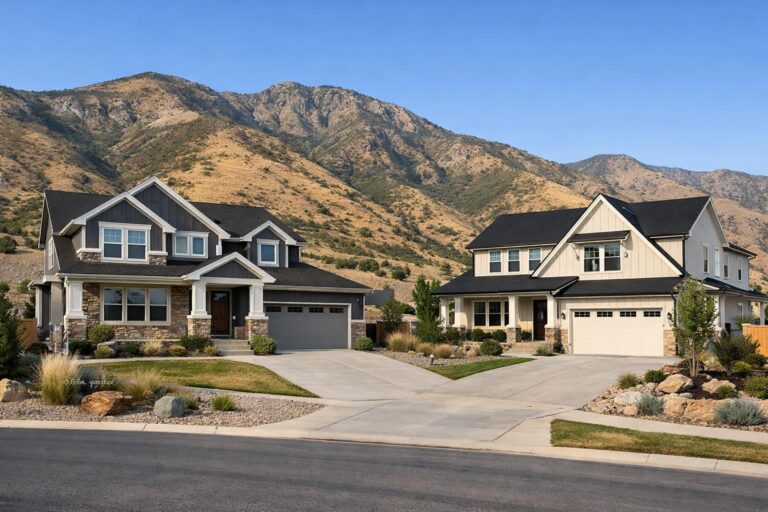

Trying to decide between a Herriman townhome and a single-family home? The better choice is the one whose monthly obligations, parking, storage, maintenance, and rules fit the way you actually live. The larger home isn’t automatically the better buy, and the lower list price isn’t automatically the lower-cost choice.
Compare two real addresses, not two property labels. A townhome near your repeated routes may make the week easier. A detached home may give you the yard, garage, and control you want, while asking more of your time and budget. Herriman has enough variation that the documents and the block matter as much as the words “townhome” and “single-family.”
Start With the Obligation, Not the Square Footage
Before you choose a property type, compare the four things that will still matter after the excitement of the showing wears off.
Why the Property-Type Choice Changes Daily Life in Herriman
A home can look easy during a twenty-minute showing and feel completely different on the third month of living there. Start with the week you already have. Where do you put a second vehicle? What happens when family visits? Where do bikes, holiday bins, tools, sports equipment, and a stroller go? If you have a dog, what does the first trip outside on a cold morning look like?
In a townhome, some exterior work may be handled through an association, but the exact line between owner and association responsibility is never something to assume. Roofs, siding, landscaping, snow, private drives, exterior insurance, and utilities can be divided differently from one community to another around Herriman — get the governing documents and current budget in front of you before the shorthand phrase “low maintenance” gets any weight.
A single-family home may give you more control over the exterior, yard, parking, and future projects. That control comes with work. Irrigation, roof condition, fencing, drainage, snow removal, trees, concrete, and exterior finishes don’t disappear because there’s no association invoice. Estimate those obligations honestly rather than assuming the absence of dues means the home is cheaper to carry.
Herriman also has a changing mix of housing. The city reports that townhomes and apartments make up 41% of its homes, and it says a large share of already-entitled future housing will be multifamily. That doesn’t tell us which property will perform better. It does tell us attached housing is a meaningful part of the local market, not an odd exception that can be evaluated with one rule.
The most useful comparison is specific: this unit, this building, this association, this driveway, this yard, this route, and this set of documents against the exact detached home you’re considering.
| Decision Area | Townhome Question | Single-Family Question |
|---|---|---|
| Parking | Are garage dimensions, driveway use, guest spaces, street rules, and overnight restrictions workable? | Will the garage, driveway, street, and any recreational-vehicle rules fit the vehicles you own? |
| Exterior work | What does the association maintain, insure, reserve for, and charge back to owners? | Which roof, drainage, concrete, landscaping, fence, and irrigation costs could arrive soon? |
| Storage | Where do seasonal items, tools, bikes, and outdoor equipment go without blocking daily space? | Is the extra storage truly usable, or is it unfinished, difficult to access, or already full? |
| Rules | What do the declarations and rules say about pets, rentals, exterior changes, signs, and use? | Are there association, subdivision, easement, or city limits on the project you have in mind? |
| Routine | Do shared walls, stairs, trash access, mail, and common areas fit the way you live? | Does the yard, snow, maintenance, and longer exterior task list fit your time? |
Compare the Full Monthly Cost, Not Just the Payment
List price is one line in the comparison. It’s not the comparison. See the payment assumption from the lender, property taxes, homeowners insurance, any association and sub-association dues, utilities, exterior maintenance, and the repairs that are visible now. If one home needs fencing, window coverings, landscaping, or a roof plan, that belongs beside the prettier monthly payment number.
Townhome dues can pay for real services. They can also cover items you wouldn’t choose or fail to cover an item you assumed was included. Look for a current budget, the most recent financial statements available, reserve information, insurance details, meeting minutes, pending assessments, litigation disclosures, and the maintenance chart or governing language that separates owner work from association work.
With a detached home, build a personal reserve line even if no one sends a monthly invoice. The roof, water heater, furnace, exterior, yard equipment, and concrete have life cycles. An inspection can help identify condition on the day of the review, but it can’t convert ownership into a fixed-price service plan. A home with no dues still needs a maintenance budget.
Insurance deserves its own conversation. Attached homes may involve a master policy and an owner policy, and the details matter. Ask the insurance professional what the master policy covers, what the owner must cover, how deductibles may be handled, and whether there are coverage details that affect the lender. For a detached home, get a real quote tied to the address rather than a casual estimate.
Utilities can also shift the answer. A larger detached home and yard may use more energy or water than a compact attached home, but don’t guess a dollar amount from property type alone. Request available history, review the home’s systems and orientation, and ask what services are separately metered.
What I Would Verify in the HOA Documents
An association isn’t automatically good or bad. It’s a set of obligations that needs to match the buyer. A well-run association may create consistency and manage shared property. A poorly understood association can create frustration even when it’s functioning exactly as its documents allow.
Start with ownership boundaries. In an attached home, the words “walls-in” and “walls-out” can sound simple while leaving important questions about windows, doors, roof, siding, balconies, utility lines, driveways, and limited common areas. Get those responsibilities confirmed in the governing documents and insurance material, not supplied by a casual comment during a showing.
Then look at money. The current assessment matters, but so do the budget, reserves, delinquency information if available, recent meeting minutes, projects under discussion, and any special assessment already approved or being considered. A low monthly charge isn’t helpful if the association isn’t collecting enough for known work. A higher charge isn’t automatically a problem if it clearly funds services and reserves the buyer values.
Use restrictions need the same attention. Rental rules, pet limits, parking, exterior changes, home businesses, signs, holiday displays, satellite equipment, and use of common facilities can be important to one buyer and irrelevant to another. Mark every rule that touches a real plan instead of reading the packet as abstract paperwork.
Finally, check how the association and lender fit together. A buyer’s lender may ask questions about insurance, occupancy, litigation, financial condition, or project eligibility. The right questions need to start early, while the contract deadlines still matter.
Source basis: Herriman’s official growth and infrastructure overview reports the city’s substantial attached-housing share and future multifamily pipeline. That’s local context only. Every HOA, insurance, price, and resale question still has to be answered for the specific property.
Parking, Storage, Yard, and Noise Are Not Small Details
Buyers often compare bedrooms and total square footage, then discover that the missing eight feet of garage depth matters more than an extra finished room. Measure the spaces that carry daily life. A garage may technically hold two vehicles while leaving no comfortable room for bins, bikes, a workbench, or opening doors. A driveway may look private but still sit under association rules.
Guest parking deserves a real test. Visit in the evening. Read the signs. Look at snow-route or overnight rules where applicable. Ask how residents actually handle visitors without treating one person’s answer as the governing rule. If street parking is essential to your household, confirm it with the city and association sources that control it.
Storage is more than a count of closets. Look for pantry depth, coat storage near the entry, linen space, garage walls, basement access, under-stair use, and where dirty or wet equipment lands. In a detached home, ask whether a shed or future storage project is allowed and practical. In a townhome, find out whether common-area rules affect bikes, strollers, or outdoor gear.
Outdoor space should be judged by use, not by size alone. A small patio that fits morning coffee and a dog may be more useful to one buyer than a larger yard that consumes every Saturday. Another buyer may need room for gardening, play, or gatherings and will feel constrained quickly in a shared or limited outdoor area.
Noise can’t be settled by property type. Shared walls, road exposure, mechanical equipment, nearby construction, playgrounds, garage placement, and the habits of current occupants all matter — especially in parts of Herriman still building out, where an active construction phase two streets over can carry more noise than a shared wall does. Tour at a second time of day, stand quietly in the important rooms, and ask property-specific questions before making a broad assumption.
Measure the garage
Bring vehicle dimensions and account for door swing, shelving, bins, chargers, and the path into the home.
Test the arrival
Drive in after work, park where you would normally park, carry something inside, and notice stairs, lighting, and distance.
Find the overflow
Decide where guests, sports gear, deliveries, trash containers, and seasonal items go before they become daily friction.
Listen twice
Return at a different hour and pay attention to roads, shared surfaces, equipment, construction, and common areas.
Ask the Resale Questions Before You Buy
This isn’t about predicting the future. It’s about avoiding an unnecessary obstacle for the next buyer. Start with the features that are difficult to change: location inside the community, parking, stairs, bedroom placement, outdoor space, association rules, and the relationship to current or future construction.
In Herriman, competing supply may include other resales and new construction. That doesn’t mean a future buyer will reject your home. It means condition, total cost, timing, incentives, and the clarity of the association documents may shape the comparison. The city’s growth numbers and future housing pipeline aren’t an appreciation forecast.
Rental plans need documented answers. If renting the home later is part of your backup plan, review the declarations, rules, current rental limits or approval procedures, city requirements, lender terms, and insurance implications. Don’t rely on the fact that another unit appears to be rented.
Financing can be project-specific for attached housing. The buyer’s lender should have enough time to review the project questions that apply. If there’s pending litigation, an insurance issue, high delinquency, or another project concern, discovering it early is far better than discovering it near a closing deadline.
Condition still matters. A newer townhome can have workmanship or maintenance issues. An older detached home can be well cared for and predictable. An inspection, document review, insurance guidance, and a property-specific cost comparison give you evidence. The year built and the property label don’t.
Choose two real candidates
Compare an attached and detached home that could both realistically work for your budget and location. A theoretical comparison hides the details that decide the purchase.
Build one obligation sheet
Put payment assumptions, dues, taxes, insurance, utilities, visible repairs, move-in completion, and maintenance responsibilities in the same format.
Read the controlling documents
Mark every HOA, insurance, parking, pet, rental, maintenance, or use rule that affects a real plan.
Run the routine twice
Visit at two useful times, drive the repeated route, park, walk the entry, listen, and picture the least convenient day of your week.
Check the next-buyer friction
Ask which limitations, project questions, competing supply, or condition items could require explanation when you eventually sell.
Why the Same Choice Changes by Herriman Pocket
Herriman is growing, and growth doesn’t land evenly. One address may sit inside an established street pattern near Rosecrest or Mountain View Village. Another may face active phases, unfinished nearby parcels, changing routes, or future amenities in the newer southwest sections of the city. Use the city’s maps and growth information to build questions, then verify what’s approved, what’s under construction, and what’s only discussed.
Trail and park access is another address question. Herriman reports about 55 miles of trails and 263 acres of park space, but a citywide total doesn’t tell you whether the route from a front door is direct, comfortable, or useful to you. Walk it. Check crossings. Notice grade and lighting. Confirm rules and access rather than assuming the amenity is part of the home.
Roads can change the property-type decision too. If a compact townhome makes your repeated route easier, that benefit may be worth more than a larger yard in a location that adds friction. If both properties share the same route, then parking, association obligations, and space may carry more weight.
Nearby housing mix also matters. A detached home near substantial future supply and a townhome in a completed pocket may face different construction and resale comparisons than their labels suggest. The city’s statement that more housing is entitled is a reason to inspect the exact context, not a reason to forecast a price.
Verify school assignment directly for the address if it matters, rather than using a neighborhood name. The same goes for future roads, zoning, and development timing. Those details can change and deserve official, property-specific confirmation.
How I Would Decide Which One Fits
First, remove any home that fails a non-negotiable. If two vehicles must fit inside, measure. If a dog rule matters, read it. If stairs won’t work, don’t rationalize them because the kitchen is attractive. If you want a garden, verify the usable area and the rules.
Second, compare the full obligation for at least the first three years, not only the closing month. That doesn’t require predicting every repair — it means identifying the work already visible, the documents that describe shared obligations, and a reasonable personal reserve conversation with the right professionals.
Third, test the routine. Drive the route when you’d use it. Park. Take groceries to the kitchen. Find the trash path. Stand in the primary bedroom while the surrounding area is active. Picture snow, guests, a sick day, and the week when no one wants to do yard work.
Fourth, ask what you’re paying to avoid. Townhome dues may purchase exterior coordination, common amenities, or landscaping you value. A detached home may purchase control, private outdoor space, and fewer shared decisions. The question isn’t which obligation is smaller on paper — it’s which obligation you actually want.
Finally, review the exit questions. Not a price prediction — just the limitations and strengths the next buyer will see. When the property, documents, cost, and routine all point the same direction, the decision usually gets calmer.
If you’re still split, send me the two addresses and the documents you have. You can also use my Herriman real estate and housing guide and Herriman community guide to put each home in its larger local context.
Frequently Asked Questions
Are Herriman townhomes always less expensive month to month?
No rule makes that true. The purchase price, financing, taxes, insurance, every association charge, utilities, move-in work, and owner maintenance all belong in the comparison. Use property-specific estimates and documents.
What HOA documents should I review?
Ask for the declarations, bylaws, rules, current budget, available financial and reserve information, insurance details, meeting minutes, assessment information, maintenance responsibilities, and any resale or disclosure documents provided for the transaction. Ask the appropriate professionals about anything unclear.
Does an HOA fee mean the exterior is fully covered?
No. The maintenance and insurance boundary varies. Roofs, siding, windows, doors, balconies, driveways, utilities, landscaping, and deductibles can be treated differently, so the governing documents and insurance material need to answer the question.
Is a single-family home automatically easier to resell?
Not necessarily. Price, condition, location, layout, financing, market conditions, competing supply, and buyer needs all matter. Identify property-specific friction before purchase.
How should I compare parking?
Measure the garage, read association and city rules, visit in the evening, locate guest options, and test the vehicles you actually own. Don’t rely on listing counts alone.
What should I send Jena for a side-by-side review?
Send both addresses, the listing links, your lender’s current estimates, available HOA documents, your top three non-negotiables, and the part of the decision that still feels unclear.
Want a Practical Herriman Side-by-Side?
Send me the two Herriman homes, documents, or priorities you are comparing. I will help you identify the obligations and daily-life differences that deserve attention before you commit.