
Does South Jordan’s 2040 growth plan tell you what will happen next to a home you are considering? It tells you the city’s adopted direction, but it does not make every mapped idea an active construction project. Buyers should separate adopted policy, approved entitlements, funded work, active construction, and early concepts before attaching a timeline or value assumption to any address.
I have worked in Utah real estate for 36 years, and the pattern I trust is simple: strong decisions come from small, verified comparisons. A broad market label can help you begin, but it should never do the work of the address, the documents, the current source, or your own comfortable limits.
Quick orientation
Use these four checks to keep the address, current facts, timing, and remaining unknowns in the same comparison.
This guide is built to help you organize growth-plan verification before a showing, offer, listing decision, or due-diligence deadline. It does not replace legal, tax, lending, insurance, inspection, engineering, appraisal, association, or municipal advice. When a question belongs to one of those professionals, I want the right person answering it.
Why the 2040 plan matters to today’s buyers
A general plan provides a framework for land use, mobility, housing, services, and public investment. It is valuable because it shows the questions the city is preparing to answer. It is not a parcel warranty, construction schedule, or promise that a concept will be built exactly as first illustrated.
Use the plan to identify themes and areas for deeper review. Then move to the current zoning map, application record, staff report, adopted approval, capital plan, or construction notice that matches the specific question.
How I turn this into an address-level check
I treat this as a decision to document, not a detail to remember later. Write down the current source, the date you checked it, the address-specific answer, and the remaining uncertainty. That record makes it easier to compare two homes without allowing the newest tour or strongest photograph to replace the facts you already gathered.
- Current fact: identify the official, primary, transaction, or professional source that owns the answer.
- Exact scope: confirm whether the information applies to the city, a village or association, the street, or the parcel.
- Date: record when the source was published or checked and whether it can change before the decision.
- Open item: state the unanswered question in one sentence and assign the next verification step.
- Decision effect: note what you would do if the answer is different from your current assumption.
What is currently approved for construction
“Approved” can refer to different actions: zoning, a development agreement, a site plan, a subdivision plat, a building permit, or a funded public project. Each answers a different question. A concept mentioned at a meeting is not equivalent to a recorded plat or active permit.
Ask for the document date, approving body, conditions, expiration terms if applicable, and the remaining steps. This prevents a single status word from doing more work than the record supports.
How I turn this into an address-level check
The useful comparison is always specific. Put the same question to every serious property, use the same source standard, and note when the answer depends on a future event. Consistency exposes the real tradeoff. It also keeps a confident verbal answer from receiving more weight than a dated document or an official current record.
- Current fact: identify the official, primary, transaction, or professional source that owns the answer.
- Exact scope: confirm whether the information applies to the city, a village or association, the street, or the parcel.
- Date: record when the source was published or checked and whether it can change before the decision.
- Open item: state the unanswered question in one sentence and assign the next verification step.
- Decision effect: note what you would do if the answer is different from your current assumption.
Downtown Daybreak and nearby mixed-use growth
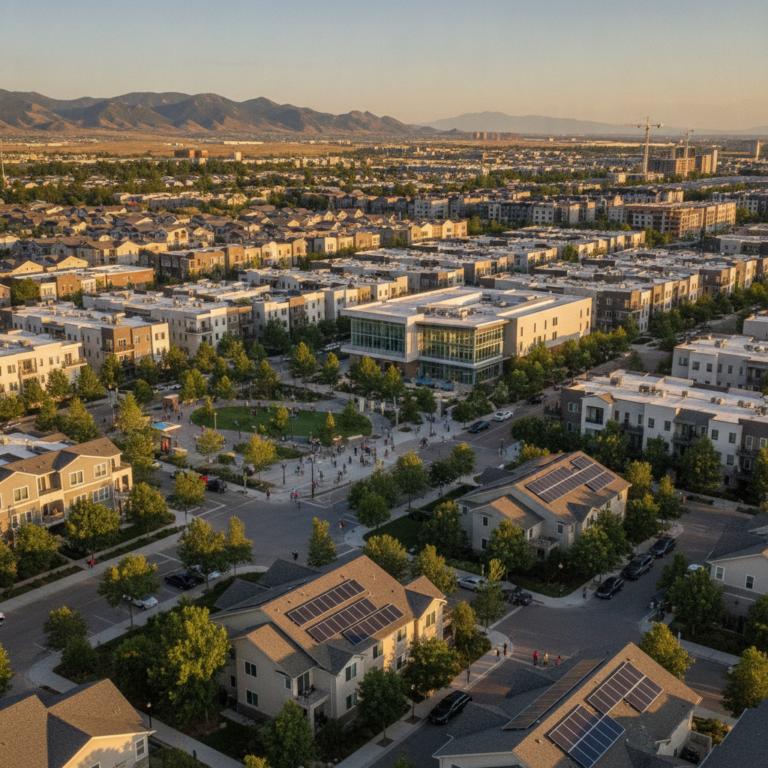
Downtown Daybreak is planned as an urban center within the larger 4,200-acre Daybreak community. Current official materials describe continuing residential, commercial, civic, and entertainment activity. The scale makes it relevant to western South Jordan, but the effect varies by street and by project phase.
Compare the home with existing destinations and current work first. Treat future retail, events, employment, and transit-oriented activity as items to monitor until the responsible party publishes a current commitment and schedule.
How I turn this into an address-level check
A practical review has three layers: what is true across South Jordan, what is documented for the smaller pocket or association, and what is verified for the parcel. Keep those layers separate. A citywide fact can orient you, but only the address-level layer can resolve a property-level responsibility or condition.
- Current fact: identify the official, primary, transaction, or professional source that owns the answer.
- Exact scope: confirm whether the information applies to the city, a village or association, the street, or the parcel.
- Date: record when the source was published or checked and whether it can change before the decision.
- Open item: state the unanswered question in one sentence and assign the next verification step.
- Decision effect: note what you would do if the answer is different from your current assumption.
Transportation infrastructure projects underway
The city’s planning library includes a current transportation plan and station-area planning. The construction page identifies active work, while project-specific notices carry the details. U-111 work is one example of infrastructure that can affect western access patterns.
For any route you depend on, record the agency, project limits, current phase, funding status, detours, and public contact. Recheck because transportation schedules can change.
How I turn this into an address-level check
I also ask what would change the decision. If a revised fee, route, condition report, comparable sale, or association rule would matter, name that threshold before the deadline. Buyers and sellers make clearer choices when they know which new fact is material and which one is only interesting.
- Current fact: identify the official, primary, transaction, or professional source that owns the answer.
- Exact scope: confirm whether the information applies to the city, a village or association, the street, or the parcel.
- Date: record when the source was published or checked and whether it can change before the decision.
- Open item: state the unanswered question in one sentence and assign the next verification step.
- Decision effect: note what you would do if the answer is different from your current assumption.
How growth affects specific pockets differently
A new connection may shorten one trip and add activity near another street. Mixed-use growth may improve access to services while changing traffic, light, construction noise, or parking. The same citywide policy can therefore matter differently to two homes a mile apart.
Study the immediate block, the likely travel route, and the broader district separately. This three-scale review is more useful than labeling all of South Jordan as simply “growing.”
How I turn this into an address-level check
Do not rush past the “who confirms this?” question. City staff, the association, a lender, title, insurance, an inspector, a builder, and the parties to the transaction have different roles. A source can be credible and still be the wrong source for the exact conclusion you need.
- Current fact: identify the official, primary, transaction, or professional source that owns the answer.
- Exact scope: confirm whether the information applies to the city, a village or association, the street, or the parcel.
- Date: record when the source was published or checked and whether it can change before the decision.
- Open item: state the unanswered question in one sentence and assign the next verification step.
- Decision effect: note what you would do if the answer is different from your current assumption.
Questions before you bet on future value
Future-value claims are where planning research is most often overstated. A buyer can evaluate current use, documented approvals, known public work, and reasonable personal fit, but appreciation and delivery timing remain uncertain.
Make sure the home works if the hoped-for amenity is later, smaller, changed, or never built. If the purchase only makes sense under one future scenario, that dependency deserves direct discussion.
How I turn this into an address-level check
The final check is personal fit. Facts describe the property and the current context; they do not choose your acceptable commute, maintenance load, monthly margin, home type, or uncertainty. I can organize the evidence and show the tradeoffs, but the plan should still sound like your life when I read it back with you.
- Current fact: identify the official, primary, transaction, or professional source that owns the answer.
- Exact scope: confirm whether the information applies to the city, a village or association, the street, or the parcel.
- Date: record when the source was published or checked and whether it can change before the decision.
- Open item: state the unanswered question in one sentence and assign the next verification step.
- Decision effect: note what you would do if the answer is different from your current assumption.
Source basis: South Jordan City’s planning page links the current General Plan, 2025 housing and transportation plans, and a 2024 station-area plan. The city’s construction and public-notice records are the better sources for current project status. Review the named current source.
Use one comparison sheet for the decision
The table below is not a score or a prediction. It is a way to keep categories aligned while you compare. Add the source date, the exact address, and a note for anything that still requires a document or professional answer. If two sources measure different things, keep both labels instead of averaging them into a number that neither source published.
| Status | What it usually means | What to request |
|---|---|---|
| Adopted plan | Policy direction | Adoption date and relevant map/text |
| Application filed | A request is under review | Application number and staff page |
| Approved entitlement | A governing body granted defined rights or conditions | Approval document and conditions |
| Funded project | Money is assigned through an adopted process | Budget or capital-plan record |
| Under construction | Physical work is active | Current project notice and contact |
| Concept or proposal | An idea may still change | Latest official description; do not assume delivery |
You can use my South Jordan topic guide for the narrower subject and the South Jordan community page for broader orientation. Those pages are starting points. A live property decision still needs current facts and the documents tied to that property.
A clean order of operations
Define the decision
Comfortable total cost, timing, required destinations, property type, and non-negotiable constraints.
Step 2
Collect current broad context from the named official or primary sources without turning a citywide measure into a parcel claim.
Build a small set of genuinely comparable homes
Routes, documents, or choices and label why each belongs.
Step 4
Tour or review with the same questions for every option; photograph or record only what you are authorized to retain.
Route specialized issues to the lender
Inspector, title professional, attorney, tax adviser, insurer, association, builder, or public agency responsible.
Recheck the facts that can change before the relevant deadline
Then make the choice with the remaining uncertainty visible.
The order matters today. If you begin with a favorite answer, later research tends to become a search for support. If you begin with the decision and the comparison rules, attractive features can still matter without erasing cost, condition, responsibility, or timing.
I also separate reversible choices from expensive-to-reverse choices. Paint and furniture are different from a street pattern, association structure, lot, home form, or recurring payment. Give durable factors more attention, then decide which cosmetic or short-term compromises you are happy to handle.
Verify the decision at the moments that matter
A good growth-plan verification review is not one long research session. It is a short series of checks placed near the moment when the answer can affect your options. I use the same written list from the first conversation through the final deadline, but the source and level of detail become more specific as the property becomes more serious. That keeps early research efficient without allowing an old snapshot to survive into a signed decision.
Before you spend time on the property
Start with the threshold questions. Does the location serve the required destinations? Is the broad total cost inside a comfortable range? Is the home type workable? Is there an obvious rule, route, condition, or timing issue that conflicts with a non-negotiable need? At this stage, the answer can be a qualified “worth investigating.” It does not need to be a final conclusion, but it should come from a current source and a clearly identified address.
During the tour or first document review
Use the property to test the information you already have. Look for the physical detail behind the listing language, map label, public record, association description, or market number. Note what you can observe and what requires a document or professional opinion. I avoid diagnosing a condition from appearance alone. The value of the visit is that it turns vague concerns into exact questions for the seller, builder, association, inspector, lender, insurer, title team, or public agency.
Before an offer or listing launch
This is the point to make assumptions visible. Write the price and term strategy, the strongest comparable evidence, the material unknowns, and the deadlines that protect further review. Sellers should understand how preparation, timing, and competition support the proposed position. Buyers should understand what they are asking for, what they are accepting, and what information still depends on due diligence. A plan is stronger when everyone can describe why it fits without relying on a promised outcome.
Before a due-diligence or closing deadline
Recheck anything that can change: listing status, project information, association figures, lender terms, insurance availability, title items, repair agreements, public notices, and other property-specific documents. Confirm that the correct professional answered each specialized question and that the written answer matches the decision. If an item is still open, decide explicitly whether to extend, investigate, renegotiate, accept, or step away under the applicable agreement and professional advice.
When new information appears
Do not treat a changed fact as a failure of the process. Current information is supposed to update the decision. Return to the comparison sheet, revise only the affected rows, and ask whether the conclusion changes. This is calmer and more accurate than rebuilding the entire emotional case for or against the property every time a number or document moves. It also creates a clear explanation if you need to change direction quickly.
Keep the final file small enough to use: the current documents, the comparison sheet, the open-items list, and the contact information for each responsible source. A larger pile of screenshots is not necessarily better evidence. Label each item by address and date, remove sensitive account information before sharing, and retain transaction records in the manner your broker, attorney, lender, title company, or other responsible professional recommends.
Questions buyers and sellers ask
Is the 2040 plan a construction schedule?
No. It is a long-range policy framework. Use current approvals, budgets, permits, and construction notices for project status.
What does approved mean?
It depends on the approval. Ask whether it is zoning, a development agreement, a plat, a site plan, a permit, or funded public work.
Is Downtown Daybreak already part of South Jordan?
Yes. Official materials describe Downtown Daybreak within South Jordan and the larger Daybreak community, with development continuing in phases.
Can I rely on a proposed road or amenity?
Treat it as uncertain until current official records show approval, funding, and an active delivery step.
Does planned growth guarantee appreciation?
No. Planning direction does not guarantee property performance, timing, or a particular buyer outcome.
My bottom line
It tells you the city’s adopted direction, but it does not make every mapped idea an active construction project. Buyers should separate adopted policy, approved entitlements, funded work, active construction, and early concepts before attaching a timeline or value assumption to any address.
The goal is not to remove every uncertainty. It is to verify the material facts, assign the remaining questions, and choose with a clear view of the tradeoffs. That approach is useful in a fast week and in a slow one because it does not depend on pressure or prediction.
Talk through your South Jordan decision
Send me the question this guide didn’t fully answer for your South Jordan situation, or call (801) 400-7787 to talk it through directly.