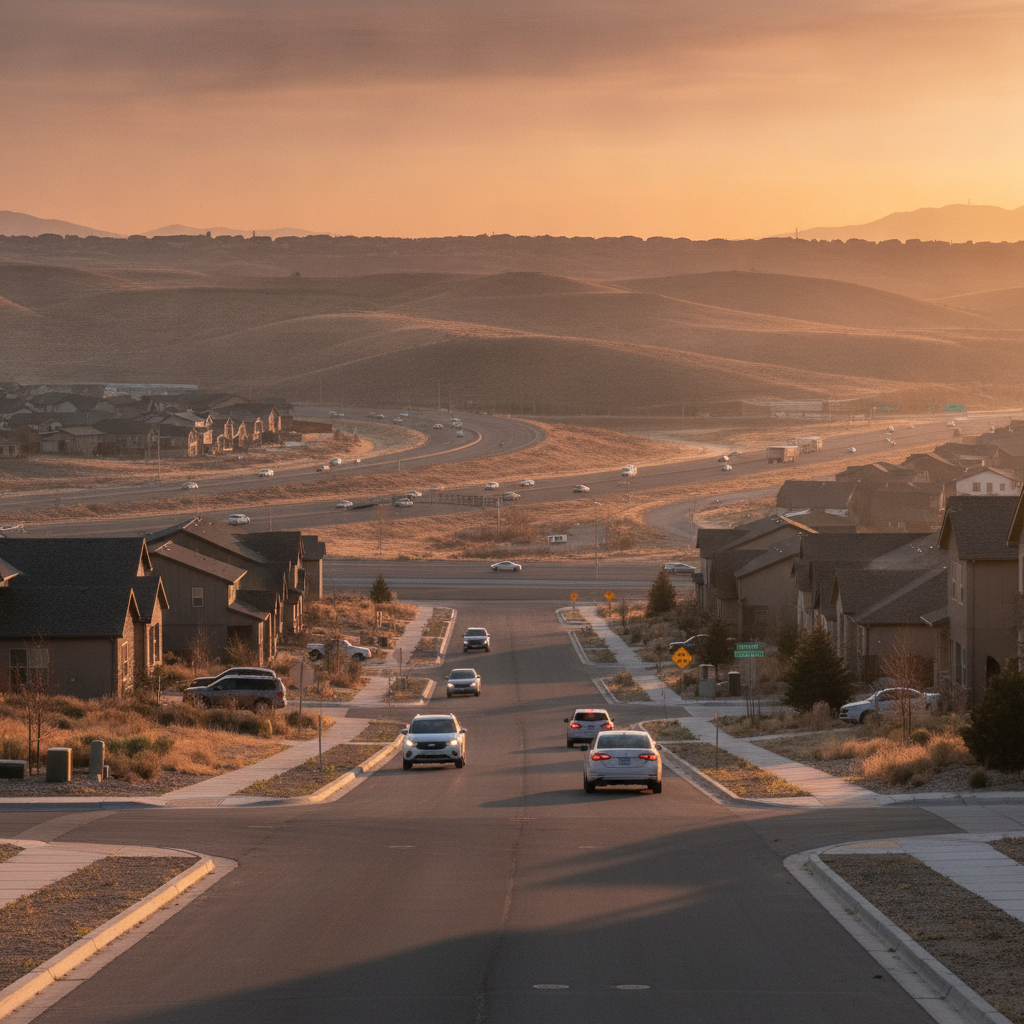
Are you looking at a Herriman home and wondering whether the commute will still feel reasonable after the excitement of the showing wears off? The honest answer is that a map estimate is not enough. Before I would write an offer, I would run the exact Herriman commute test twice on real weekdays, add every school or activity stop you actually make, check current road conditions, and drive one backup route.
That test will not give you a permanent promise. It will give you something more useful: a clear picture of how this address fits your schedule right now, where the route is vulnerable, and whether you can live with the variation.
What Should a Herriman Commute Test Include?
Test the home as part of a full weekday routine, not as a pin on a map. I would compare the same route in the morning and evening, record any unusual incident, add school and errand stops, and make the current commute work before giving future road projects any credit.
Why Is Map Distance Not Enough for a Herriman Offer?
A map can tell you how far the home sits from a workplace. It cannot tell you how the entire routine feels. That difference matters in Herriman because the first part of the trip may involve neighborhood streets, school activity, a specific turn onto a larger road, and then a regional corridor. Two homes with similar mileage can create very different days.
I start at the driveway. Which direction can you leave? Is the route you want available from that side of the neighborhood, or does the street pattern send you around? Where is the first signal, merge, or turn that you cannot avoid? How much of the trip happens before you reach Mountain View Corridor, Bangerter Highway, Redwood Road, or another major route?
Those questions are more useful than asking whether a listing has “easy access.” That phrase does not explain access to what, in which direction, or at what time. A home may connect well to one destination and poorly to another. Your workplace may be only part of the decision if you also need a school, a childcare stop, a medical appointment, or an evening activity on the opposite side of the route.
Map estimates also change with the moment. An off-peak result can look calm. A school-day result can tell a different story. A crash can make one test look worse than normal. Construction can shift the preferred path for a period. The point of the Herriman commute test is not to find one perfect number. It is to learn the pattern and decide whether that pattern fits your tolerance.
Here is what I would write down before the first drive:
- The exact home address and the driveway or neighborhood exit you expect to use.
- Every destination in the order it normally happens.
- The time you must arrive, not only the time you hope to leave.
- The latest return time that still works for dinner, homework, caregiving, or sleep.
- The amount of variation you can absorb without changing the rest of the day.
That last point is personal. One household may accept a route that varies because work hours are flexible. Another may need a narrow arrival window for school pickup. A remote worker may drive less often but care more about the one or two weekly trips that cannot move. The same Herriman address can fit one routine and fail another without either person being wrong.
| Test layer | What to record | What the result can tell you |
|---|---|---|
| Morning drive | Departure time, arrival time, school overlap, route used, and any unusual incident. | Whether the address supports the start of your actual weekday. |
| Evening return | Work departure, errands or activities, neighborhood entrance, and time home. | Whether the return works when your energy and schedule are tighter. |
| Official conditions | Crash, construction, road weather, delay, or closure information before the drive. | Whether the result reflects a normal pattern or a one-time event. |
| Backup route | Full route, extra turns, road type, stop sequence, and whether you would use it. | Whether your plan has a practical alternative when the main path changes. |
| Current-project check | Project status and present road configuration from an official source. | What exists now, without turning a future phase into a commute promise. |
How Do You Run the Two-Time Weekday Commute Test?
I would run the first drive on a normal weekday morning at the time you expect to leave. Not ten minutes earlier because the schedule is easier. Not on a holiday week. Not on the quiet Saturday when you toured the home. Use the time that will become part of your life.
Before you pull out, check UDOT’s current-conditions tools. UDOT directs travelers there for current crash, construction, road-weather, delay, and roadway-camera information. The agency also says its Traffic Operations Center monitors Utah roads around the clock. That does not make every report perfect or every drive predictable. It gives you an official way to identify a condition that may be influencing the test.
Record what you saw before the drive. If a crash is already affecting the main route, do not throw the result away. Keep it as an incident-day test. Then repeat the route on another weekday so you can compare it with a day that does not show the same event. The comparison is the useful part.
Run the evening test from the real destination back to the home. Evening traffic may use a different route, and your stop sequence may change. You might leave work, pick up a child, stop for groceries, and enter the neighborhood from a direction you never saw during the first showing. Test that version.
I like a simple notes format:
- Date and day: Keep the day visible so you do not compare a regular Tuesday with a school break and call them equal.
- Weather and official notices: Mark anything that could have changed the route that day.
- Departure and arrival: Use actual clock times, but do not publish them as a Herriman-wide promise.
- Route taken: Name the neighborhood exit and the major roads used.
- Friction point: Note the turn, merge, signal, queue, or detour that shaped the experience.
- Household reaction: Ask whether you would accept this pattern several times a week.
Do not chase the fastest possible trip. You are looking for a repeatable trip. A route that works only when every turn goes perfectly may not give you the same confidence as one with a little more distance but fewer fragile points. That is a judgment you make after driving both, not something a listing can decide for you.
It also helps to test the route on the same day you tour the house a second time. You can arrive after the morning drive, stand in the kitchen, and imagine what happens next. Where do bags land? How quickly do you need to leave again? Does the garage make the next trip easy? Commute fit includes the transition into and out of the home.
Source basis: The transportation facts here come from official UDOT materials for current conditions, the Mountain View Corridor, and the U-111 extension project. Those pages establish current tools, project scope, and phased context. They do not establish a universal commute time for a Herriman address.
Separate the route from the incident
One difficult drive can still teach you something. It shows how the route behaves when something goes wrong and whether the backup is useful. It should not become your only evidence.
The opposite is true, too. One unusually smooth trip does not prove the commute will always feel that way. That is why I want two time windows and, when the decision is tight, a second day. The goal is not certainty. The goal is enough clarity to understand what you are choosing.
Ask yourself one direct question after each drive: Would I still choose this home if the commute remains exactly as it is today? That keeps a future road phase, a hoped-for schedule change, or a remote-work assumption from carrying more weight than it should.
What Changes When You Add School, Childcare, and Activities?
A work-only route is often the cleanest version of the day. Many households do not live that version. The school stop may take you away from the direct path. Childcare may require a turn that changes which corridor makes sense. An evening practice may place you on the opposite side of Herriman before you head home.
Build the test in the order you would actually drive it. For example: home, school, childcare, workplace in the morning; workplace, practice, groceries, home in the evening. Do not run each leg separately and assume the pieces will fit. The transition between stops is often where the friction appears.
If school is part of the plan, verify the exact assignment through the district before you test that route. Do not use a nearby building or a listing note as the destination unless the assignment is current for the address. The commute article is not the place to make a school-boundary claim.
Then use the time window that matches the activity. A route tested after school has already started will not show the same pickup pattern. A practice route tested at noon will not explain the evening return. You are trying to see your own overlap, not label a road as busy for everyone.
Here are the questions I would ask at each stop:
- Can I enter and leave in the direction my next destination requires?
- Does the stop force me back through the same intersection or neighborhood access point?
- Will another driver in the household use a different sequence?
- What happens when a child is sick, practice runs late, or I need a grocery stop?
- Does the home still work if the person who usually drives is unavailable?
That last question catches a lot of hidden assumptions. A commute can look manageable because one household member has learned a specific routine. The home decision should account for the days when the schedule changes.
Remote work does not remove the test. It changes it. If you drive to an office twice a week, those two days may carry more stops. If you work from home but make frequent airport, client, medical, or family trips, test the route that matters most. “I do not commute every day” is useful context, but it is not the same as “transportation does not matter.”
The school-day version
Use the verified school destination, the actual drop-off or pickup window, and the next stop. Do not publish a fixed delay or assume every Herriman pocket has the same overlap.
The split-household version
Run both drivers’ routines. A home may favor one destination while adding friction to the other, and that tradeoff belongs in the offer decision.
The activity-night version
Test the return after practice, errands, or dinner. The evening neighborhood entrance may matter more than the morning route.
The changed-plan version
Ask who drives when the normal schedule breaks. A workable commute should not depend on one person making every connection perfectly.
How Should You Check Mountain View Corridor, Bangerter, and Local Access Roads?
Mountain View Corridor and Bangerter Highway are useful regional anchors. They are not interchangeable answers. The route that serves a specific listing depends on the origin, destination, direction, and current road configuration.
UDOT maintains a dedicated Mountain View Corridor project site and describes the corridor as a phased project. That word matters. Phased means you should verify the portion you will use today instead of assuming the full future concept is available. Look at the current route, current intersections, current construction information, and the direction of your trip.
Bangerter may matter later in the route, while Mountain View Corridor may shape the western approach. Redwood Road and 13400 South may appear in other versions. Porter Rockwell Boulevard, South Jordan Parkway, Herriman Boulevard, and U-111 can matter closer to the neighborhood or as connecting roads, depending on the address.
UDOT’s U-111 project information identifies an extension from South Jordan Parkway to Herriman Boulevard and describes a planned five-lane roadway with two lanes in each direction and a center turn lane. That is project scope. It is not proof of a future travel-time improvement, and it should not rescue an address whose current route does not work for you.
Here is the clean way to treat road projects:
I also separate the regional corridor from the neighborhood access layer. A major road can look close while the home still depends on one local exit. Drive the route from the driveway. Do not begin the test at the corridor entrance.
On the return, notice whether you can use the same neighborhood entrance or whether the direction changes the path. A right turn in the morning and a left turn in the evening can create two different experiences. Record both without turning either into a citywide claim.
Check the project, then check the pavement
Official pages tell you what UDOT is building, studying, or maintaining. Your drive tells you how the current roadway connects to your life. You need both.
Use the source to avoid stale assumptions. Use the route test to avoid broad claims. Then decide how much you are willing to depend on a project that may still be changing. I would rather see you choose a home whose commute works today and treat future improvements as a possible benefit than watch you bet the whole move on a date or outcome no one can guarantee.
What Makes a Backup Route Realistic?
A backup route is not the gray line you noticed under the preferred route in an app. It is a route you have driven, understood, and accepted.
Run it from the same origin to the same destination. Include the same school, childcare, or errand stops. Notice whether it uses roads you would avoid in poor weather, after dark, or when you are tired. Ask whether another household driver would take it without needing a detailed explanation.
The backup does not need to be equal to the main route. It needs to keep the day functioning when the main route is disrupted. That may mean more turns, a different corridor, or a changed stop order. What matters is whether the alternative stays within your tolerance.
I would test these four conditions:
- Main route unavailable: Can you leave the neighborhood and reach the destination without returning to the same blocked point?
- One stop changes: Does the backup still work when school, childcare, or practice stays in the route?
- Evening return: Would you take the backup after a long day, or would you wait for the main route?
- Other driver: Can someone else in the household use it comfortably?
If the backup depends on a road you have never driven, add it to the showing day. A second route can change how you compare two Herriman homes. One may have a slightly better ideal drive. Another may give you two practical ways in and out. There is no automatic winner; there is a tradeoff you can now see.
Keep the result tied to your address. Do not call one corridor the best Herriman route. A road that works for a northern destination may not serve a southern one. A route that helps one neighborhood may not help the next. The exact driveway, time, and destination remain the unit of comparison.
What Should Buyers and Sellers Confirm Before an Offer?
Before you offer, put the commute result beside the home features. Do not let the kitchen erase the drive, and do not let one difficult incident erase a house that otherwise fits. Look at the evidence together.
For a buyer, I would complete these steps:
Define the real routine
List every required weekday stop, time constraint, and driver. Use the schedule you expect after moving, not the easiest version of today.
Check official conditions
Review current UDOT information before each test and label any crash, weather, closure, or construction event that affected the drive.
Drive morning and evening
Use the exact address and destinations at the times you expect. Record the route and the friction points.
Add the complete stop sequence
Include school, childcare, activities, groceries, and other recurring stops in the order they happen.
Drive one backup
Do not accept a map alternative without testing it. Decide whether the household would use it when the main route changes.
Separate today from the project plan
Verify current project context, but make the current roadway carry the decision. Do not assume a future phase will fix the route.
Set your tolerance before you offer
Decide what amount of variation or route friction is acceptable. The home should fit that limit without constant renegotiation.
For a seller, clear route context is more useful than a commute promise. Name the nearby roads accurately. Share known current construction information from official sources. Let the buyer test the route. Avoid a fixed-minute claim, a fastest-route claim, or a promise that a project will improve access.
This is practical communication, not legal advice. Any formal disclosure question belongs with the appropriate professionals and documents. My point is simpler: specific, current information gives a buyer more confidence than broad language.
When you compare homes, use the same test for each address. The same origin, destinations, time windows, and stop order create a fair comparison. Otherwise, you may test one home on a quiet day and another during an incident, then mistake the difference for a property fact.
Frequently Asked Questions About the Herriman Commute Test
How many times should I test a Herriman commute before offering?
At minimum, I would run the exact route once in the weekday morning and once in the weekday evening. When one drive includes an unusual crash, weather event, closure, or construction condition, repeat that time window so you can separate the incident from the normal pattern.
Should I trust the commute time shown in a listing or map app?
Treat it as a starting estimate, not an offer-level fact. A listing or app cannot know your exact departure time, school stops, activity route, neighborhood exit, tolerance, or whether a one-time event is affecting the result.
How do Mountain View Corridor and Bangerter Highway affect different Herriman addresses?
They are regional route anchors, but their usefulness depends on the exact home, destination, direction, and current configuration. Drive from the driveway rather than assuming proximity to a corridor creates the same result for every listing.
Where can I check current road construction or incidents?
Use UDOT’s official current-conditions tools and current project pages, then pair that information with current Herriman City notices for local streets. Recheck close to each test because incidents and project details change.
What stops belong in the commute test?
Add every recurring stop that shapes the day: school, childcare, work, practice, groceries, fitness, medical appointments, or a second household driver’s destination. Test them in the order you normally travel.
Should I rely on a future road project to make a Herriman home work?
I would make the current route work first. An official project page can explain planned scope and present status, but it cannot guarantee your completion date, route benefit, or future travel time.
Want to Test the Herriman Route You Will Actually Drive?
Send me the Herriman address, your workplace, school or activity stops, and the amount of commute variation you can tolerate. I will help you organize a route-risk review before you offer, so you compare homes by daily-drive reality rather than a single map estimate.
Want to know whether the current route fits your week before the home becomes your default?