Who should live in Daybreak, Utah: families, downsizers, remote workers, or buyers who want daily walkability? The honest answer is that Daybreak can fit all of those households, but not for the same reasons and not in every village, home type, or association setup.
Here is what I would do before deciding that the Daybreak lifestyle fits you: test the same six things at every address—school or childcare routes, the places you want to walk, HOA comfort, maintenance, parking, and commute. The community name gives you possibilities. The exact property decides whether those possibilities work in your week.
Daybreak Is a Collection of Routines, Not One Lifestyle
Daybreak’s first-party materials present multiple villages and districts. That means the right question is not simply, “Does Daybreak fit?” It is, “Which address, home type, and set of rules fit the way I live?”
Why Is Daybreak Not One Single Lifestyle?
Daybreak is often discussed as though every street offers the same home type, walkability, maintenance level, and daily rhythm. That is not how I would evaluate it. Daybreak’s own village and district materials show a community made up of multiple places, each with its own housing patterns, nearby anchors, and stage of development.
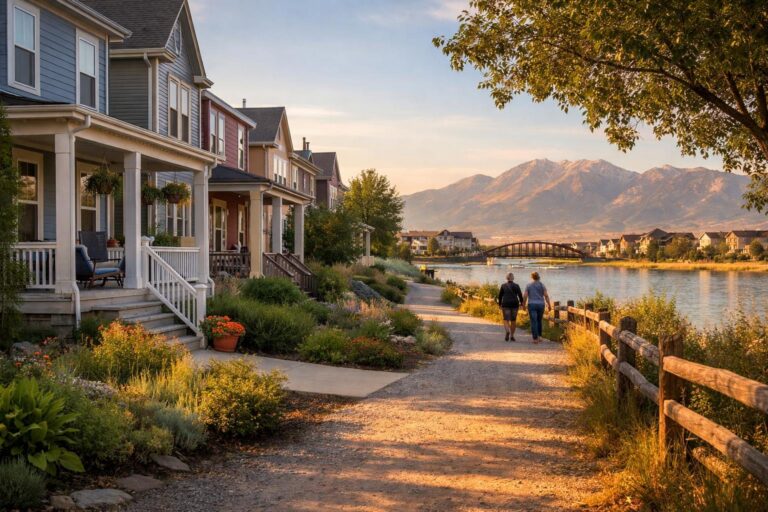
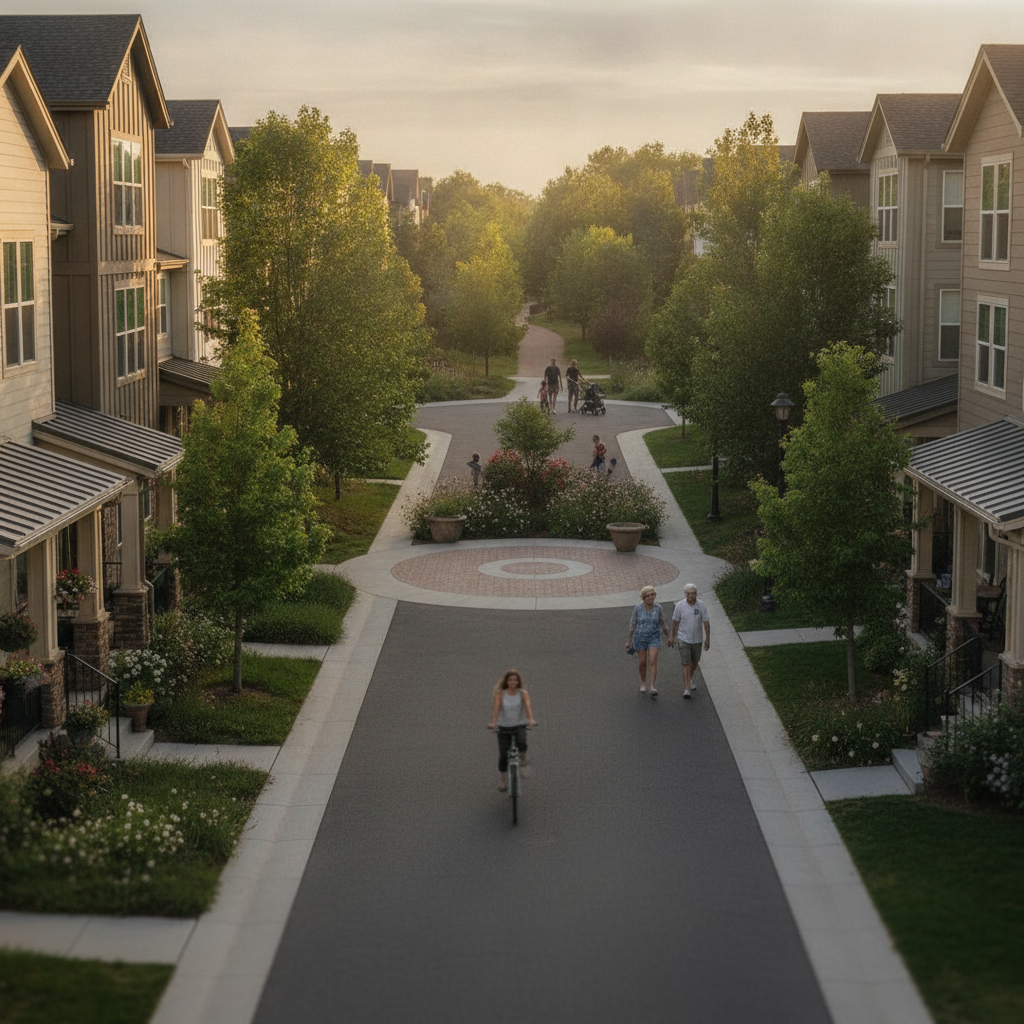
A porch-oriented street near a pocket green can support one kind of routine. A townhome closer to a commercial anchor can support another. A home near Oquirrh Lake may give you a particular walking destination, while an upper-village address may point you toward The Watercourse or a different trail pattern. Downtown Daybreak creates a district-level choice that is not the same as living elsewhere in the broader community.
That variety is exactly why broad claims can mislead you. “Daybreak is walkable” leaves out the destination. “Daybreak is low maintenance” leaves out the property documents. “Daybreak is good for families” leaves out school routes, parking, storage, and commute. “Daybreak is good for downsizers” leaves out stairs, age qualifications, and who maintains what.
Real talk: a lifestyle label is only useful after you turn it into a weekly action. Where will you walk? Which errands will you repeat? What do you want the association to handle? How often will you attend events? What does the garage need to hold? Which route must work on a school morning or a winter weekday?
I use the same six-part test for every buyer because it keeps the comparison fair. It also avoids stereotyping. A family may care more about low exterior maintenance than a downsizer does. A downsizer may want a large hobby space. A remote worker may not care about walkability if the home office is wrong. Your life stage can shape the questions, but it should not decide the answer before you tour.
| Household priority | What can make Daybreak worth exploring | What the exact property must prove |
|---|---|---|
| School-day household | Multiple villages, parks, trails, and community anchors create different routine options. | Exact school assignment, pickup route, childcare/activity overlap, storage, parking, and commute. |
| Downsizing household | Different home forms and a verified 55+ village give buyers more than one way to reduce or reshape maintenance. | Stairs, bedroom placement, exterior duties, age eligibility, association layers, dues, parking, and future mobility. |
| Remote-work household | Trails, greens, Oquirrh Lake, SoDa Row, and other named anchors may support breaks outside the home. | A usable office, internet needs, noise tolerance, midday route, guest parking, and the commute on office days. |
| Amenity-first household | Community facilities, events, parks, lake and water features, and mixed-use districts can shape free time. | Included access, current rules, operating details, parking, frequency of use, and whether the route is repeatable. |
| Commute-sensitive household | Different villages and districts create different starting points for regional routes and transit. | The exact weekday drive, school overlap, backup route, and whether future development is needed to make the location work. |
Source basis: The community structure in this article comes from Daybreak’s Villages & Districts page, the Daybreak Association’s explanation of assessments and shared operations, and its current governing-document resources. Those sources confirm the choices and due-diligence process. They do not establish the terms for a specific home.
The source distinction matters. Daybreak’s community site can describe villages and named features. The Daybreak Association controls current governance information, assessment resources, design review, and association operations. The property-specific documents tell you what applies to the home you may buy. One source cannot replace the others.
What this means for you is simple: choose the property in layers. First, decide whether the home works. Second, decide whether the village routine works. Third, decide whether the association structure and cost feel reasonable for what you receive. Only then should the broad Daybreak idea influence the decision.
What Should Families Test Beyond the School Name?
For a family, Daybreak fit starts with the week between 7:00 a.m. and bedtime. School is part of that, but it is not the whole answer. The exact address has to work with childcare, work, activities, groceries, park time, equipment, guests, and the return home.
Do not infer school assignment from a village label or from the school that looks closest on a map. Use the district’s exact-address tool for the current school year. Then test the route in the order you will actually drive it. A home-to-school trip by itself may look simple, while school-to-childcare-to-work creates a very different loop.
Parking belongs in the family test. Look at the garage, driveway, street rules, guest pattern, and the way you would load children or equipment. A compact street can feel friendly and connected, but you still need enough practical space for the household you have. Do not assume every Daybreak property has the same parking setup or rules.
Storage matters too. Where do bikes, scooters, sports bags, strollers, holiday items, and outdoor gear go? If your reason for moving to Daybreak includes parks, trails, or lake time, the home needs to support the gear that makes those activities possible. An attractive route is less useful when every outing begins with a storage problem.
I also ask families to test the after-school window. Drive from pickup to the activity you attend most, then to dinner or groceries, then home. Walk the route to the park you think you will use after dinner. Notice crossings, sidewalk continuity, grade, lighting, and the return trip. Observe without making a universal safety claim. Your household decides whether the route feels appropriate.
Family fit questions I would answer during a tour
- Which school, childcare, activity, and work stops belong in the same route?
- Can the garage and entry handle the equipment that comes with the lifestyle?
- Where will visitors park, and what do the current documents allow?
- Which park, trail, lake, or green will the household use often enough to matter?
- Does the home give everyone enough quiet, work, play, and storage space?
- Would the routine still work if a future amenity or commercial use arrives later than planned?
A Daybreak home can fit a family beautifully when the property and route support the real schedule. The community label alone cannot answer that.
What Should Downsizers Verify About Maintenance, Home Type, and 55+ Options?
Downsizing is not always about buying the smallest home. It can mean fewer exterior responsibilities, a main-floor bedroom, room for visitors without unused daily space, better storage, or a location that makes walking and social activity easier. Start with the reason you want to change, not with a square-footage target.
Daybreak identifies SpringHouse Village as a 55+ village. That gives you a verified age-qualified option to explore. It does not mean every SpringHouse property has identical terms, every low-maintenance home in Daybreak is age-qualified, or every downsizer should choose a 55+ setting.
For any property, obtain the current documents and confirm age eligibility, association layers, assessment amounts, maintenance allocation, design review, parking, use restrictions, and included amenities. The Daybreak Association publishes 2026 assessment resources, but there is no single number I would apply to every home. A master association, benefited service area, or sub-association can change the total obligations and the services connected to that property.
The association explains that assessments support operation and maintenance of common areas and amenities. That makes HOA comfort a value-and-control question. Do you want shared areas and amenities maintained through an association? Are you comfortable with the current cost and rules? Does the property shift the exterior work you want to avoid, or does it leave responsibilities you assumed were covered?
Walk the home with future mobility in mind, even when mobility is not a concern today. Count the stairs between parking, kitchen, bedroom, laundry, outdoor space, and guest rooms. Check doorways, bathroom layout, storage height, snow or landscape responsibility, and where deliveries arrive. A neighborhood can feel walkable while the home itself creates unnecessary friction.
Maintenance
Ask for a written allocation of what the owner handles and what the association or sub-association handles. Marketing language is not enough.
Age qualification
SpringHouse is the verified 55+ example, but eligibility belongs in current property documents. Do not generalize the restriction.
Home function
Test main-floor living, stairs, laundry, storage, guests, hobbies, and how the layout would feel on an ordinary day.
Parking and visitors
Confirm garage dimensions, driveway use, street rules, guest options, and any association limits before assuming a compact home is easier.
Here is the honest answer: low maintenance is not a look. It is a documented division of responsibility. A smaller yard, townhome exterior, or age-qualified label can point you toward the right questions, but the documents and the home layout must give you the answer.
Can Remote Workers Get the Walkable Breaks They Actually Want?
Remote workers often tell me they want to step outside at lunch, walk to coffee, use a trail, or change scenery without getting in the car. Daybreak has named anchors that can support those goals, including Oquirrh Lake, SoDa Row, Downtown Daybreak, The Watercourse, trails, and neighborhood greens. The key is deciding which destination you mean.
“Walkable” can describe several different things. It can mean a five-minute loop around a pocket green. It can mean reaching a lake path. It can mean walking to a commercial area. It can mean getting to transit. Those are not the same routine, and one address will not automatically deliver all of them.
Start inside the home. Where will you work? Can you close a door for calls? What is above, below, or beside the room? How does natural light change during the day? Is there enough storage for work equipment? Can another person work or study without sharing the same sound zone?
Then run the midday-break test. Leave the front door at the time you normally take a break. Walk to the exact destination you expect to use. Notice the route, grade, crossings, shade pattern, construction, and the time it takes you personally. Do not rely on a broad community description or a straight-line map.
If you work from home only part of the week, test the office-day commute too. A home can support excellent midday walks and still miss your tolerance on the days you drive. Remote-work fit is the combination of the room, the break, the association environment, and the commute—not one of those pieces alone.
Use named anchors carefully
Oquirrh Lake can be a walking-route test point. SoDa Row can be a commercial or social route anchor. Downtown Daybreak can represent a more active mixed-use destination. The Watercourse can be relevant in upper-village discussions, but current phase and access must be verified. Proximity to one does not prove proximity to the others.
I would not say a property is “walkable to Daybreak.” Daybreak is too broad for that sentence. I would say the property is being tested for a specific route to a specific destination, at a specific time, by the person who may live there.
How Do Walkability, Events, Parking, and HOA Rules Change the Fit?
Amenity-first buyers may be drawn to community programming, parks, pools, lake activity, trails, mixed-use areas, or events. Those features can add real value to your week when you use them. They can also add cost, rules, parking questions, and activity you may or may not want near home.
First, verify access. A Daybreak feature may be a resident amenity, a public place, a business, a district destination, or a future feature. Each category has different rules. Do not assume a named amenity is included with every property or open to every visitor.
Second, verify frequency. How many times did you use a similar amenity during the past month? How often would you realistically attend an event after work? Would you use a pool weekly, or only when visitors come? Would you walk to SoDa Row several times a week, or drive there occasionally?
Third, test the activity tradeoff. A buyer who likes events may want a simple route to Downtown Daybreak or another activity center. A buyer who wants more separation may prefer to visit and return home. Test event-night parking, the route home, sound expectations, guest access, and your own tolerance without declaring one pocket better.
Fourth, review the rules. Design review, parking, use restrictions, maintenance obligations, and sub-association terms can shape daily life more than a brochure does. Read the current documents for the exact property. Ask questions during the review period. Do not substitute a neighbor’s arrangement or a past fee sheet for the current home.
Future district plans need the same care. A first-party page may describe a residential project or leasing target, but that is not the same as an available home today. If a future feature is part of your fit, ask whether Daybreak would still work for you if that feature arrives later, changes, or remains outside your normal route.
What Questions Should You Answer Before Touring Daybreak Homes?
Before touring, write a one-page household brief. This keeps the community image from taking over the property decision. I would include the following:
Name the repeated destinations
List the school, childcare, workplace, grocery store, park, trail, lake, commercial area, transit stop, and activity you expect to use. Rank them by frequency.
Define walkability in one sentence
Write what you want to reach on foot and how often. “Walkable” becomes useful only when the destination and routine are specific.
Set your maintenance boundary
Decide which exterior, landscape, snow, building, and common-area tasks you want to handle. Then compare that preference with the property documents.
Set your HOA comfort range
Think about cost, rules, design review, shared operations, sub-association layers, and the amenities you will actually use. Verify the current amounts rather than relying on a general estimate.
Test parking and storage
Bring the vehicles and equipment into the conversation. Measure the garage, check the driveway, review guest options, and decide where daily gear will live.
Drive and walk the actual week
Run the school, work, activity, errand, and midday routes at the time you would use them. Test one ordinary evening and, if relevant, one event-active period.
Choose the home before the label
Return to layout, monthly comfort, maintenance, parking, and the current routine. Let Daybreak support a strong property choice rather than hide a mismatch.
Families, downsizers, remote workers, amenity-first buyers, and commute-sensitive households can all use this checklist. The answers will be different. That is the point.
I would also give every household one “no” condition. Maybe it is a commute threshold you discover during testing. Maybe it is a maintenance duty you do not want. Maybe it is a parking rule, an association layer, stairs, or a route that does not fit. A clear boundary keeps you from trying to make the wrong home work because the community idea is appealing.
Frequently Asked Questions About Who Fits Daybreak
Is Daybreak better for families or for downsizers?
Neither group has a universal advantage. Families should test school-day logistics, storage, parking, and activities. Downsizers should test layout, maintenance, association obligations, parking, and age qualification. The exact home and routine decide the fit.
Is all of Daybreak walkable to shops, parks, or Oquirrh Lake?
No broad statement can establish that. Daybreak includes multiple villages and districts. Name the destination you want, then test the exact route from the property at the time you would use it.
Does Daybreak have a 55+ village?
Yes. Daybreak identifies SpringHouse Village as a 55+ village. Verify age eligibility and all current property documents before relying on that designation for a specific home.
Are HOA dues and maintenance the same for every Daybreak property?
No single amount or maintenance scope should be applied across the community. Review the master association, benefited service area, sub-association, and property-specific documents that apply to the home.
Does a remote worker need to live near Downtown Daybreak?
Not necessarily. Start with the home office and the specific midday destination you want. A trail, green, lake route, or neighborhood loop may matter more than a mixed-use district, depending on your routine.
Should I rely on a future Daybreak amenity or residential plan?
Treat future information as qualified context. Verify the current status and decide whether the home still fits if the feature arrives later or changes. Current routine should carry the decision.
Want to Compare the Daybreak Idea With Your Actual Week?
Send me your household priorities—schools, walkability, HOA comfort, maintenance, commute, parking, home type, and budget. I will help you test whether a Daybreak property fits the life you plan to live, not a broad lifestyle label.
Which part of your week has to work before Daybreak can be the right move?