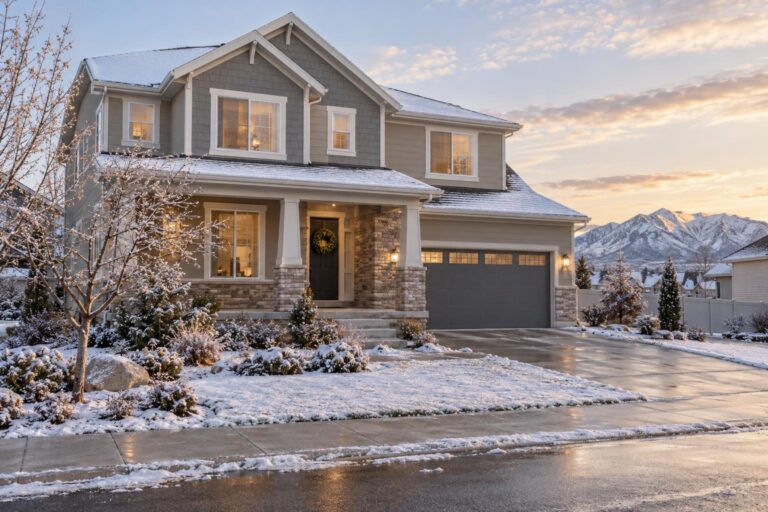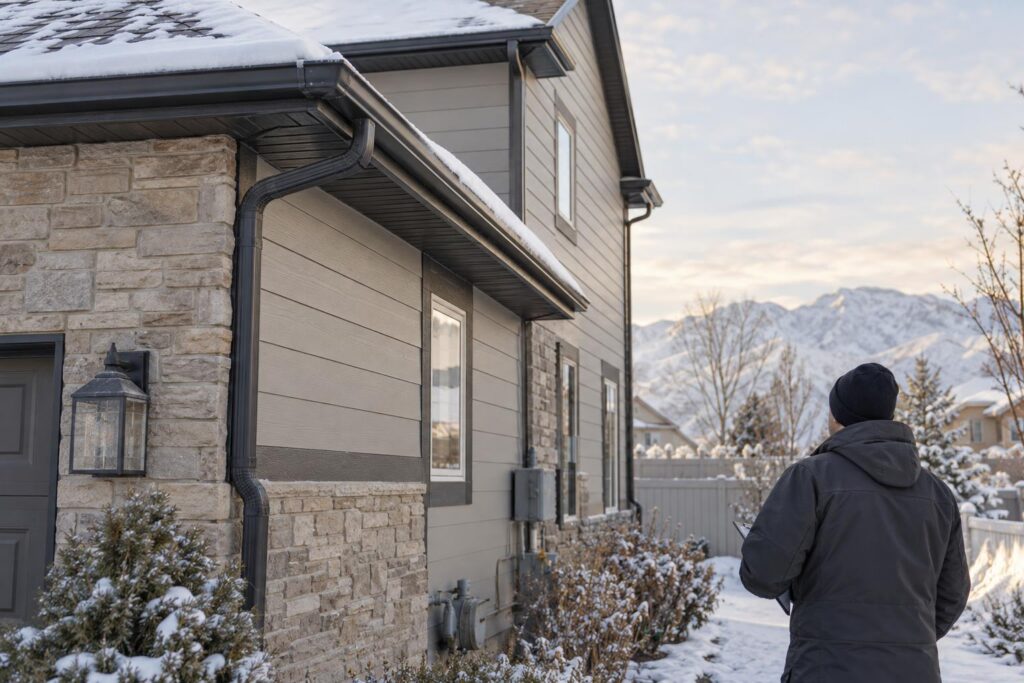
The most important line in a winter inspection report may be the one that says an item was not inspected. For a South Jordan purchase, I would want every weather or access limitation turned into a clear follow-up question before your due diligence deadline.
A standard visual inspection has limits in any season. Snow, ice, and cold can add more. The answer is to understand what was checked, what was only observed, and what still needs a decision—not to treat a clean-looking report as a guarantee about the whole house.
Ask about the inspection scope before the appointment
Read the inspector’s written agreement. Ask which systems and areas are included, how weather may limit the work, and how any limitations will be documented. If you want an additional service, confirm whether it is included or needs a separate appointment.
Also ask about access requirements. Are utilities expected to be on? Which areas need to be accessible? What information would help the inspector prepare? Coordinate those requests through the proper transaction contacts rather than entering or changing anything yourself.
The ASHI discussion of restricted access emphasizes documenting areas obscured by snow that were not inspected. That is a useful principle for reading your report: a limitation should be visible enough that you can act on it.
Do not assume an inspector follows a particular organization’s standards merely because you read that organization’s guidance. Ask which standards and agreement apply to the professional you hire.
Start with the exterior areas winter can hide
Snow can cover roof surfaces, walkways, landscaping, and parts of the ground around the house. Ask what was visible and what method was used to examine it. A photograph of a snow-covered roof does not establish the condition of the surface underneath.
For each obscured area, identify the unanswered question. Is it a question about the material’s condition, drainage, a reported repair, or an area the seller has disclosed? The next step depends on the question, not simply on the presence of snow.
Available maintenance records and seller disclosures may provide useful context, but they do not necessarily replace an examination. A past repair invoice describes work at a particular time. Ask the appropriate professional what it does and does not resolve for today’s purchase.
Do not climb onto a roof or remove barriers to recreate an inspection yourself. Arrange suitable professional follow-up with authorized access. If conditions prevent that work within the current schedule, bring the limitation into the contract discussion promptly.
Separate operation from a complete system assessment
A system turning on is one observation. It is not a promise about its remaining life or every aspect of its performance. Ask the inspector to explain what was operated, what was observed, and what warrants a specialist.
Cold conditions can affect whether cooling equipment should be operated. There is no universal temperature cutoff I would apply to every system in an article. The equipment, conditions, manufacturer’s guidance, and inspector’s procedures matter.
If cooling was not operated, record that plainly. “Not tested because of conditions” is different from “tested and no issue noted.” Ask what information or further assessment could reduce the uncertainty and what would still remain unknown.
For heating, bring specific concerns to the inspector rather than diagnosing the equipment by age. If a room feels different from the others during the showing, describe where and when you noticed it. The professional can determine what further evaluation is appropriate.
Ask about available service records, but avoid converting them into a guarantee. A documented service visit may answer one question while leaving another open. Keep the evidence attached to the claim it actually supports.
Look closely at water and access questions
Winter can make exterior water-related questions harder to evaluate. Ask whether any relevant fixtures or systems were winterized, inaccessible, or outside the inspection scope. A winterized item should not silently become a tested item in your notes.
Inside, describe any visible staining, moisture concern, or disclosed past issue to the inspector. Do not assume a mark proves an active leak, and do not assume a dry visit rules one out. The appropriate follow-up depends on the findings and available history.
Basements, crawlspaces, utility areas, and storage rooms can also have access limitations unrelated to weather. If belongings block a component, ask whether authorized access can be arranged and whether a return visit is available. Availability and scope should be confirmed, not presumed.
For a South Jordan home with finished lower-level space, think about how you intend to use it. That can help you identify additional questions about inspection scope and separate testing. It does not establish a defect or a result for that property.
| Report status | Meaning to clarify | Next question |
|---|---|---|
| Operated or tested | What procedure was performed and what was found? | Does the finding need further evaluation? |
| Observed only | What could be seen without full operation or access? | What remains unknown? |
| Not inspected | What prevented access or examination? | Can suitable follow-up occur before the decision deadline? |
| Specialist recommended | What specific question needs expertise? | Who can evaluate it, and when? |
Confirm additional tests instead of assuming they are included
A general home inspection does not automatically include every test you might want. Radon testing, for example, should be discussed and arranged explicitly rather than inferred from an inspection booking.
Ask about each additional service’s scope, provider, timing, and report. If the test needs access over a period of time, coordinate that with the seller’s side. The appointment should fit your decision calendar, not merely the day you happen to be at the property.
The Utah DEQ transaction guidance provides a starting point for radon questions. Have the testing professional explain the appropriate protocol and interpretation for the home. A general inspector’s visit does not establish a radon result.
Keep separate reports together so you can see whether one raises a question relevant to another. That does not make you responsible for diagnosing systems; it helps you direct questions to the right professional while there is time to receive an answer.
Resolve the decision before the deadline
Once the report arrives, create a short list of issues that could change your purchase decision. Include material limitations as well as identified concerns. A lengthy report can distract from a small number of unresolved items that matter most to you.
For each item, record the question, the professional responsible for answering it, the available appointment, and the date by which you need to decide. If the timing does not work, tell your agent immediately.
Your rights and deadlines depend on the signed purchase agreement and its selected terms. An untested item does not automatically extend due diligence, require the seller to repair it, or create a future inspection right. Any proposed arrangement needs the appropriate agreement and professional review.
I would not promise an escrow holdback as a simple solution. Whether a particular arrangement is available or acceptable depends on the transaction and the relevant parties. Ask the lender, title company, and agent about the actual options rather than relying on a generic workaround.
When reviewing South Jordan homes, remember that an unresolved question can affect your willingness to proceed even when no defect has been confirmed. You are deciding how much uncertainty you can reasonably accept.
Turn the report into a short decision sheet
Reading a long report from beginning to end is necessary, but it can still leave the important questions scattered across pages. After the review, create a separate sheet containing only the items that could change your decision or require timely action.
For each item, use the report’s wording accurately. Do not upgrade “not visible” into “damaged,” and do not soften “specialist evaluation recommended” into “probably fine.” Preserve the distinction between a finding and a limitation.
Add the specific question you need answered. For a roof obscured by snow, that may concern what can be evaluated under current conditions. For equipment not operated, it may concern an appropriate specialist assessment. For a disclosed repair, it may concern whether the available records address the present issue.
Then identify the person who can answer and the evidence you expect to receive. A quote for proposed work, a specialist’s report, and a seller’s explanation serve different purposes. Keep them separate instead of treating any response as resolution.
Before discussing a repair or concession request, review this sheet with your agent. It helps distinguish a preference from a material concern and an unanswered question from a confirmed condition. That makes the negotiation more specific and gives the seller a clearer understanding of what you are asking.
If an issue cannot be resolved before the deadline, acknowledge that directly. The decision is then about the uncertainty and the options available under your agreement. It should not be hidden by a summary that says only “inspection complete.”
Keep the final reports after closing as part of the home’s records. They can help you organize recommended follow-up, while still remembering that an inspection describes the scope and conditions of a particular visit rather than guaranteeing future performance.
What people get wrong about a winter inspection
“If the report doesn’t list a defect, the item works.”
Check whether it was inspected at all. An inaccessible or unoperated component may have no finding because it could not be evaluated.
“The inspector will come back in spring automatically.”
A return visit requires an actual arrangement, and its timing may fall outside your purchase protections. Confirm the scope, availability, cost, and contractual implications before relying on it.
“The seller has to fix everything the report mentions.”
The report provides information. Contract rights and any negotiated repair obligations are separate. Discuss the relevant findings and options under your agreement.
“Newer equipment doesn’t need further questions.”
Age alone does not establish condition, installation quality, or performance. Use the inspection findings and suitable professional evaluation.
Useful questions for the report review
What should I ask when an area is marked inaccessible?
Ask why it was inaccessible, what could not be evaluated, what follow-up is appropriate, and whether it can occur within your decision timeline.
Should I attend the inspection?
Ask the inspector about the preferred process and when questions can be discussed. The important outcome is that you understand the report, its limitations, and the next steps.
Can a repair receipt close out a concern?
It may provide useful evidence, but ask the relevant professional whether it answers the specific question. A receipt is not automatically a current condition assessment.
Ask the inspector which findings deserve your earliest attention. That prioritization helps you schedule the next professional conversation without assuming that report order reflects urgency.
Buying a South Jordan home this winter?
Send me the listing and your due diligence dates. I’ll help organize the inspection questions and follow-up schedule so important limitations remain visible before you decide.