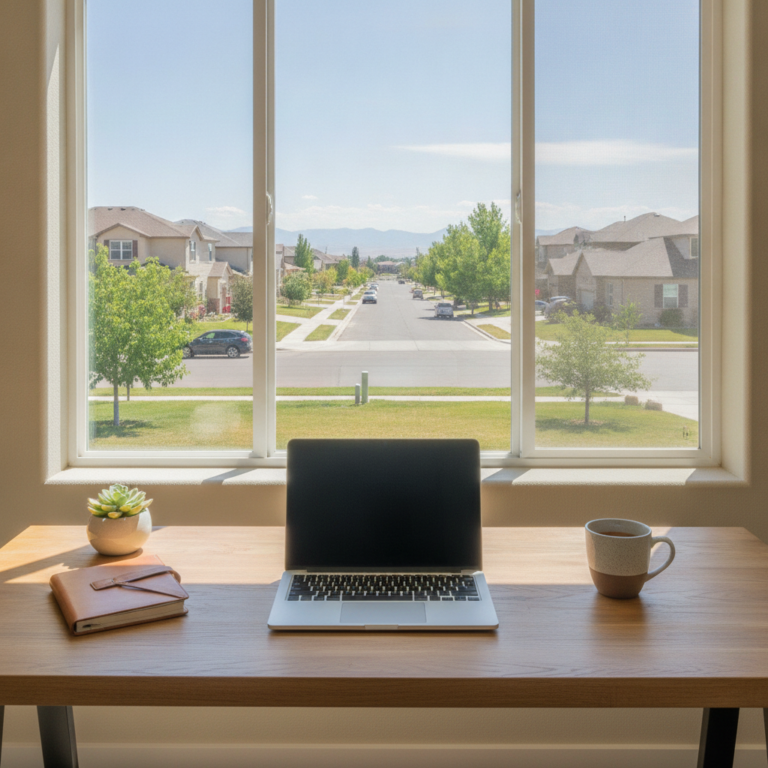
Why South Jordan Works for Buyers Who Want Suburban Life Near Job Centers
Are you looking at South Jordan because you want a quieter suburban home base without feeling cut off from work, errands, healthcare, restaurants, and the south-valley job corridor? The honest answer is yes, South Jordan can work very well for that kind of buyer — but only if you choose the right pocket for your real commute, not just the nicest-looking listing.

Here is what I would tell you over coffee: living in South Jordan Utah often works for buyers who want the feel of suburban streets, parks, schools, and family routines while staying close to employment corridors, medical offices, retail centers, and major south-valley routes.
The important part is not just whether South Jordan has jobs nearby. It does. The better question is whether the exact home you are considering gives you the right kind of access for your work schedule, errands, school drop-offs, and weekend life.
- Does South Jordan work for buyers who want suburban life near job centers? Yes, especially if your work, errands, school routes, or healthcare needs connect to the south end of the Salt Lake Valley.
- What makes the location practical? South Jordan has local employers, retail centers, medical services, transit connections, and access to nearby employment areas in Sandy, Draper, Riverton, Lehi, and Salt Lake County.
- What should you verify first? Test your actual commute, check the routes you use most, and compare homes by road access — not just square footage or finishes.
- Who should look closely at South Jordan? Professionals, hybrid workers, medical employees, tech-adjacent workers, growing families, and move-up buyers who want neighborhood life without feeling disconnected from work.
Why this question matters before you buy
South Jordan is not just a bedroom community anymore. The city’s own economic development information lists a population of 89,114, 28,989 dwelling units, and a median household income of $134,047 based on city planning data from February 2026. It also notes nearly 2,000 active business licenses as of April 2026, representing more than 27,000 jobs.
What this means for you is simple: South Jordan has become more than a place people leave every morning to work somewhere else. Many buyers still commute, of course. But the city now has its own employment base, medical presence, shopping districts, restaurants, and service centers that can make daily life feel more complete.
That matters when you are comparing South Jordan real estate. A home near job access is not just about your 8 a.m. drive. It is about how many small trips you can simplify during the week. Grocery runs. Doctor appointments. A lunch meeting. A quick stop at The District. A school pickup before an evening work call. A shorter hop to a south-valley employer.
In 36 years in this market, I have watched buyers get too focused on the house and not enough on the weekly pattern around the house. The home gets the showing appointment. The routine decides whether you still like living there six months later.
A South Jordan home can look perfect online, but if it adds 20 minutes to the part of your day that already stresses you out, it may not be the right move. Access is not a bonus feature. It is part of the house.
What to verify locally
The first thing I would verify is where your work life actually points. Are you driving north toward Salt Lake City? East toward Sandy or Cottonwood Heights? South toward Draper, Lehi, or the Silicon Slopes area? Staying close to South Jordan employers? Working hybrid from home and only commuting two days a week?
Those are different decisions.
South Jordan City’s economic development page is useful because it gives you a clearer picture of local business activity. It identifies employment highlights such as Downtown Daybreak, The District, RiverPark, Merit Medical, Ultradent, University of Utah South Jordan Health Care, Morgan Stanley, Cricut, and other major employers. I would use that kind of information as context, not as a promise that a particular home will shorten your commute.
You should also verify what your daily route really feels like. Do not just check a map at 2 p.m. on a Tuesday. Drive it when you would actually leave. Try the route in both directions. If you have school drop-offs, include them. If you use Bangerter Highway, Mountain View Corridor, I-15, Redwood Road, or 11400 South, test the exact route from the specific home.
| What to verify | Why it matters | What this means for you |
|---|---|---|
| Your actual commute | A home can be close to job centers generally but still awkward for your specific route. | Drive from the house to work at the real time you would leave. |
| Access to major roads | Different pockets of South Jordan connect differently to Bangerter, Mountain View Corridor, Redwood Road, and I-15 routes. | Compare road access before comparing kitchen finishes. |
| Work-from-home setup | Hybrid workers need quiet, natural light, office space, internet reliability, and separation from busy household areas. | A better floor plan may matter more than shaving a few minutes off a commute. |
| Errand pattern | Job access is only one piece. Groceries, childcare, healthcare, fitness, and restaurants also shape your week. | Map the full week, not just the work address. |
| Nearby employment growth | Economic activity can support convenience, services, and resale interest, but it can also change traffic and density. | Review city planning and economic-development resources before buying near growth corridors. |
How this affects home choice
When you search South Jordan homes for sale, it is tempting to sort by price, bedroom count, and square footage. Those matter. But for buyers who care about job access, I would add one more filter: how does this home make your work week feel?
If you work long hours, being close to services may matter more than having the largest yard. If you work hybrid, a dedicated office or quiet flex space may be worth more than a formal dining room. If you drive to Lehi twice a week and Salt Lake City once a week, you may need a different pocket than someone working in Sandy or at a South Jordan medical office.
South Jordan offers several versions of suburban life. Some areas feel closer to established neighborhoods and mature services. Some connect more directly to Daybreak, Downtown Daybreak, and west-side growth. Some feel convenient to shopping and restaurants near The District. Some may be better for a buyer who wants quick access out of the city.
None of those is automatically better. The right answer depends on your routine.
Professionals
You may care most about commute predictability, road access, a real home office, and quick access to restaurants, gyms, medical offices, and errands after work.
Hybrid workers
You may need a home that supports both quiet work hours and neighborhood life. Look closely at floor plan, internet setup, natural light, and household noise patterns.
Growing families
You may need job access plus school routines, parks, childcare, activities, and grocery convenience. The best location is the one that reduces the number of hard transitions in your day.
Move-up buyers
You may be balancing equity, commute, bigger space, and long-term resale appeal. A practical location can protect your quality of life more than one extra feature inside the house.
What I would watch in this community
I would watch three things in South Jordan right now: employment nodes, traffic patterns, and whether the home’s location matches your actual schedule.
Employment nodes matter because South Jordan has several areas that pull people during the workday: RiverPark, The District, Downtown Daybreak, medical offices, university-related healthcare, professional services, and local employers. Being near one of those can be useful if it matches your life. It can also mean more movement, more traffic, and more activity nearby.
Traffic patterns matter because South Jordan’s value is tied to access. If a neighborhood gives you a beautiful house but puts you through the hardest part of the drive every morning, that tradeoff needs to be intentional. I would rather you know that before you write an offer.
Your schedule matters most. A professional who leaves before 7 a.m. may experience South Jordan differently than a parent doing two school drop-offs at 8:15. A remote worker who needs a quick coffee meeting twice a week may care more about nearby commercial access than freeway distance. A buyer who works in Lehi may read the map differently from someone commuting to downtown Salt Lake.
Questions to ask before making a decision
Before you choose South Jordan because it looks close to job centers, I would slow down and ask a better set of questions.
Where do I need to be three times a week?
Not once a month. Not theoretically. Three times a week. That is the location that should guide your home search.
Does this pocket shorten my day or just my map distance?
A route that looks short can still feel slow. Test the road, the signal timing, the school traffic, and the turn patterns.
Am I buying near convenience or too close to activity?
Being close to shops, offices, and restaurants can be helpful. Being too close to constant traffic may not fit you. Walk the area and drive it at different times.
Does the floor plan support my work life?
If you work from home, do not treat office space as an afterthought. A good work-from-home layout can change how livable the house feels.
Would this location make sense to the next buyer?
Homes with practical access, clear neighborhood logic, and broad buyer appeal are easier to explain when it is time to sell.
A practical way to compare South Jordan job access
If you are moving to South Jordan because you want suburban life near work, I would compare homes through three buckets: work access, daily services, and home function.
| Decision bucket | What to look at | Why it matters |
|---|---|---|
| Work access | Commute route, drive time, transit options, route alternatives, and how often you physically go to work. | This shows whether South Jordan actually supports your job routine. |
| Daily services | Grocery stores, restaurants, healthcare, fitness, childcare, schools, parks, and errands. | This tells you whether your week gets easier or just your address changes. |
| Home function | Office space, parking, storage, internet needs, layout, noise, and flexibility as your work changes. | This helps you choose a home that supports both career and household life. |
If you want more context before narrowing your search, start with the South Jordan economy and employment guide and the broader South Jordan community guide. Use those pages to understand the city, then use your actual schedule to judge the home.
So, why does South Jordan work for buyers who want suburban life near job centers?
Because South Jordan gives you a middle ground that many buyers are trying to find. You can have neighborhood life, parks, schools, shopping, and a suburban setting while staying connected to local employers and regional job centers across the south end of the valley.
But the honest answer is not “buy anywhere in South Jordan.” The better answer is: choose the pocket that matches your work life.
Here is what I would do. Pick the three places you go most often during a normal week. Your work address. Your grocery store. Your school, gym, childcare, medical office, or family member’s house. Then test each home against those three places. If the house makes that triangle easier, it deserves attention. If it makes the triangle harder, the pretty kitchen may not be enough.