Should You Buy in Daybreak for the Home or for the Community Design?
Are you drawn to Daybreak because of a specific house, or because the whole community feels different? The honest answer is that Daybreak real estate works best when both pieces make sense: the home needs to fit your budget and daily life, but the community design is often the reason buyers choose Daybreak over a more traditional South Valley neighborhood.

Here is what I would tell you across the table: in Daybreak, the house is only part of the decision. You are also buying into a planned environment with villages, trails, parks, Oquirrh Lake, community amenities, sidewalks, gathering areas, and association rules that shape daily life.
That can be a real advantage if you will use it. It can also feel like an unnecessary premium if you only want the floor plan and do not care much about the neighborhood design. The goal is not to decide whether Daybreak is “good.” The goal is to decide whether Daybreak is good for your move.
- Should you buy in Daybreak for the home or the community? Ideally, both. If the home works but the community design does not matter to you, you may be paying for benefits you will not use.
- What makes Daybreak real estate different? The homes sit inside a planned community structure with villages, parks, trails, Oquirrh Lake, amenities, walkable pockets, and association standards.
- What should you verify first? HOA fees and rules, amenity access, village location, commute, parking, school boundaries, rental restrictions, and whether your daily routine lines up with the neighborhood design.
- Who is Daybreak often best for? Buyers who value connected streets, trails, community spaces, water features, events, and a more intentional neighborhood rhythm.
Why this question matters before you buy
When you are looking at Daybreak homes for sale, it is easy to fall into a normal checklist: price, bedrooms, garage, square footage, lot size, condition, and commute. Those things matter. I would never tell you to ignore the basics.
But Daybreak asks one more question: do you want the community design enough for it to shape your purchase?
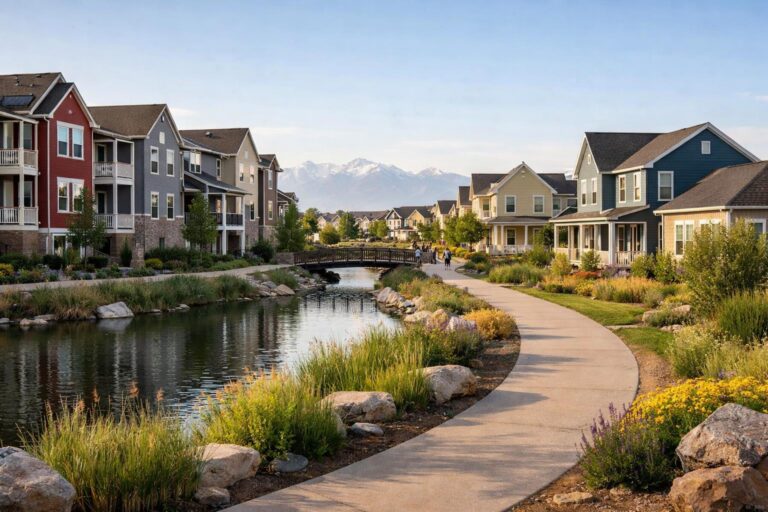
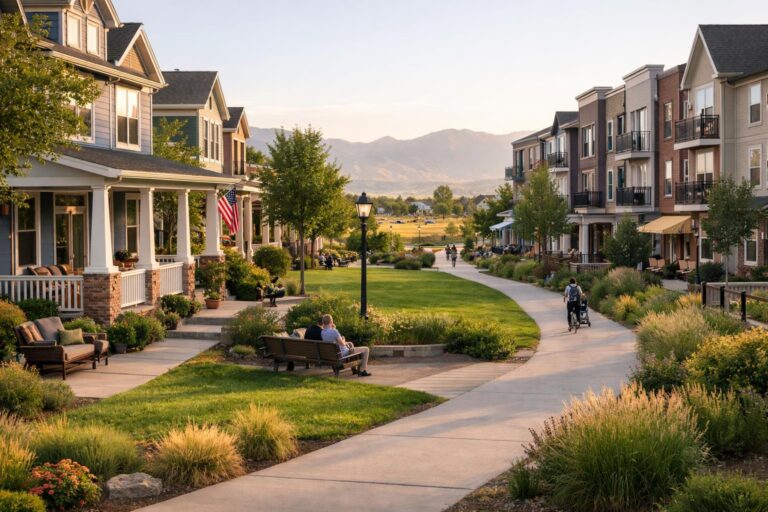
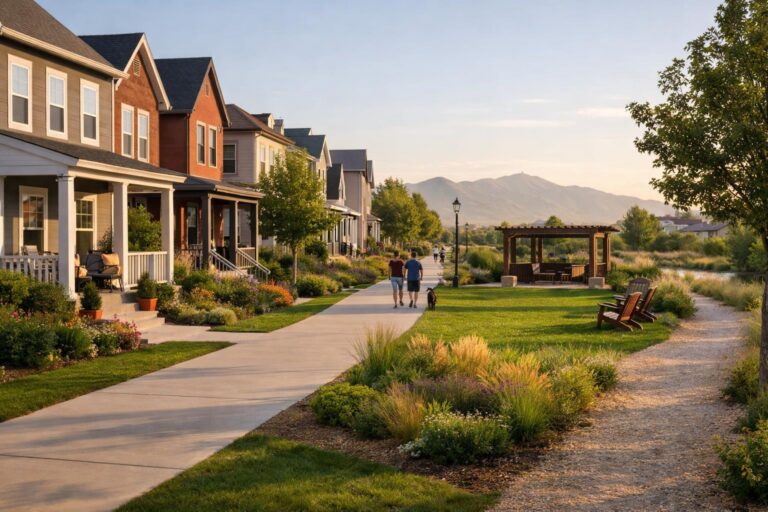
That matters because Daybreak is not laid out like every other South Valley subdivision. It was planned around villages, walkability, parks, trails, Oquirrh Lake, neighborhood amenities, and a stronger relationship between homes and shared outdoor spaces. Official Daybreak resources describe community features like Oquirrh Lake, parks, trails, pools, shopping, and recreation areas as part of the lifestyle experience.
Here is what that means for you: two homes with similar square footage can live very differently depending on where they sit inside Daybreak. A home near Oquirrh Lake, a trail connection, a village center, a school route, or a park may support your week in a way a similar house elsewhere does not. But if you rarely use shared amenities, do not like HOA structure, or prefer more separation, the same design may feel less valuable.
Buyers often say, “I just want the best house for the money.” Then we walk Daybreak, and the conversation changes. They start noticing whether they would use the trail after dinner, whether the kids could bike to a park, whether SoDa Row feels convenient, and whether the community rhythm actually fits them. That is the Daybreak decision.
What to verify locally before choosing a Daybreak home
The first thing I would verify is the Daybreak association structure. Community design has value, but that value comes with rules, fees, standards, and shared responsibilities. You should review current HOA documents, transfer fees, amenity access, rental rules, exterior standards, parking restrictions, pet rules, and any village-specific details before making an offer.
The second thing I would verify is the exact village or pocket. Daybreak is not one single experience. A home near lake activity may feel different from a quieter interior street. A townhome closer to shopping may feel different from a single-family home farther from gathering areas. A newer village may feel different from a more established section with mature landscaping and known traffic patterns.
You can use the official Daybreak website and its amenities information as a starting point for community features, but I would still verify property-specific details directly through the association, seller disclosures, title documents, and your inspection process.
| What to verify | Why it matters | What this means for you |
|---|---|---|
| HOA and community rules | Daybreak’s design depends on shared standards, amenities, and association management. | Read the current documents before you decide the lifestyle premium is worth it. |
| Village location | Different pockets can change your access to trails, parks, water features, shopping, schools, and commute routes. | Buy the specific location, not just the Daybreak name. |
| Amenity use | Parks, pools, trails, Oquirrh Lake, and community spaces have the most value when you actually use them. | If those features are not part of your life, compare the home against non-Daybreak options. |
| Parking and storage | Some planned-community layouts can require closer attention to garage size, street parking, guest parking, and storage. | Make sure the home works for your vehicles, gear, guests, and routines. |
| Commute and errands | Daybreak may feel connected inside the community, but your external commute still matters. | Drive your actual routes during the times you use them. |
How this affects home choice in Daybreak
If you are researching living in Daybreak Utah, I would not start by asking whether you like the prettiest listing. I would ask what kind of daily life you are trying to build.
If you are a growing family, you may care about sidewalks, parks, school routines, trail access, and whether the home gives you a real neighborhood feel. In that case, the community design may be one of the strongest reasons to choose Daybreak.
If you are a professional or remote worker, you may care about nearby coffee, walking breaks, fitness access, commute routes, and whether the community gives you a little structure outside the house. The home office matters, but so does what is outside your front door.
If you are downsizing, you may care about lower-maintenance living, walkability, social connection, and access to trails without taking on a large yard. But you should be honest about HOA rules, stairs, parking, storage, guest space, and how often you want community activity around you.
Buy for the home
Prioritize layout, condition, price, garage, storage, bedroom count, yard size, and whether the property works even without the community features.
Buy for the design
Prioritize trails, parks, walkability, Oquirrh Lake, village feel, community programming, and how the neighborhood supports your week.
Buy for both
The strongest Daybreak fit usually happens when the home works on paper and the community design makes everyday life easier.
Pause if only one works
If the house is right but the community is wrong, or the lifestyle is right but the property is stretched, slow down before writing the offer.
What I would watch in this community
I would watch four things in Daybreak: the premium, the pocket, the parking, and the practical use of amenities.
The premium matters because planned-community benefits are part of the value equation. You are not only comparing wall color and countertops. You are comparing the full environment. Ask whether the added lifestyle value is something you will use weekly, monthly, or almost never.
The pocket matters because Daybreak changes street by street. Some areas feel more active. Some feel quieter. Some are closer to Oquirrh Lake, SoDa Row, parks, or trails. Some may better support walking, biking, or school routines. A home can be “in Daybreak” and still not fit the Daybreak experience you imagined.
Parking matters because daily frustration often starts with the practical details. Do you have enough garage space? Is guest parking easy? Will a teen driver, work vehicle, outdoor gear, or visiting family create pressure? I would rather you answer that before you buy than after you move in.
Amenity use matters because the community features are not decoration. They are part of why people choose Daybreak. If you love trails, parks, lake walks, community spaces, and a more connected neighborhood design, that matters. If you prefer a quiet, less structured suburb, that matters too.
Questions I would ask before making the decision
Before you decide whether to buy in Daybreak for the home or the community design, I would walk through these questions slowly. They are simple, but they cut through the noise.
Would I choose this home if it were outside Daybreak?
If the answer is no, the community design is carrying a lot of the decision. That may be fine, but you should know it.
Would I use the trails, parks, lake, and amenities enough to value them?
Do not pay for a lifestyle you only like in theory. Think about your actual Tuesday, not just a sunny Saturday showing.
Does the village fit my routine?
Look at walking routes, school routes, grocery access, commute patterns, park proximity, and whether the street feels right at different times of day.
Am I comfortable with the HOA structure?
Review the rules, fees, architectural standards, rental limits, maintenance expectations, and any changes that could affect your ownership experience.
Will this home still work in 5 to 7 years?
Think about family size, work changes, storage, stairs, yard needs, parking, resale appeal, and whether Daybreak still fits the next version of your life.
A practical way to compare Daybreak homes
When you are comparing Daybreak real estate, I like to put each option into three buckets: property fit, community fit, and ownership fit. That keeps the decision grounded.
| Decision bucket | What to look at | Why it matters |
|---|---|---|
| Property fit | Layout, condition, price, garage, storage, yard, bedroom count, and long-term livability. | This tells you whether the house itself is strong enough to justify the move. |
| Community fit | Village feel, trails, parks, Oquirrh Lake, amenities, walkability, events, and neighborhood rhythm. | This tells you whether Daybreak’s planned design adds real value to your life. |
| Ownership fit | HOA rules, fees, parking, rental limits, maintenance expectations, commute, and resale logic. | This tells you whether the purchase still makes sense after the excitement fades. |
If you are early in the decision, start with the Daybreak real estate guide and the broader Daybreak community guide. Use those as context, then narrow the decision to the exact home, village, and daily routine.
So, should you buy in Daybreak for the home or for the community design?
The honest answer is both, but not equally for every buyer.
If you are the kind of person who will use the trails, walk the lake, meet neighbors at parks, appreciate the village layout, and value a more intentional community rhythm, then the design may be a major reason to choose Daybreak. In that case, the right home inside the right pocket can be a strong lifestyle fit.
If you mainly want the floor plan and do not care much about the community structure, I would compare carefully. You may find another South Valley home that gives you more of what you need without paying for features you will not use.
Here is what I would do: pick your top two or three Daybreak homes, then test each one against both sides of the decision. Does the property work? Does the community work? Do the fees and rules work? Does the location work on a normal weekday? If the answer is yes across the board, Daybreak may make real sense for you.