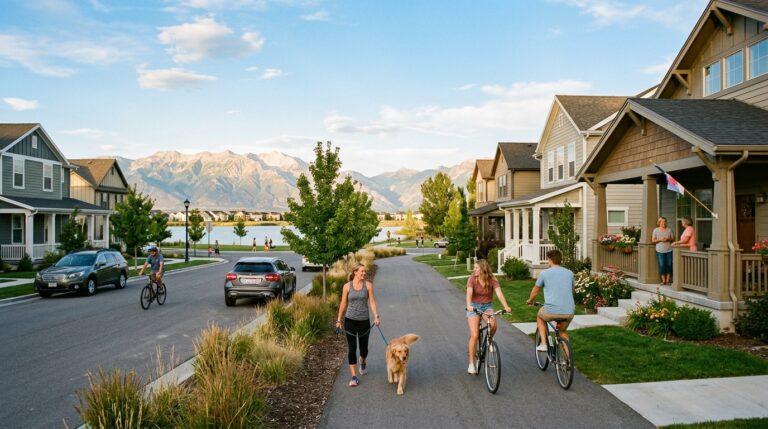
Is Daybreak the Right Fit if You Want Walkability, Events, and Built-In Community?
If you want Daybreak for walkability, events, trails, parks, and a built-in community feel, the honest answer is yes — it can be a very strong fit. But only if you actually want the structure that comes with it: HOA standards, shared amenities, resident programming, village planning, and a more social neighborhood rhythm than many traditional suburbs.

Daybreak is one of the clearest lifestyle decisions you can make in South Jordan. You are not only choosing a house. You are choosing a planned community with trails, parks, resident amenities, neighborhood events, village design, and daily-life structure built into the community itself.
Here is what I would tell you after 36 years watching Utah buyers sort through the difference between a good house and a good fit: Daybreak works best when the community experience is part of the reason you are buying, not just a bonus you may or may not use.
Quick answers if you are comparing Daybreak right now
Is Daybreak walkable?
Parts of Daybreak can feel very walkable, especially near trails, parks, Oquirrh Lake, village centers, and community amenities. The exact street still matters.
Are the events and amenities worth it?
They can be, if you will actually use them. If you prefer privacy and fewer community structures, the value may feel different to you.
Is Daybreak good for families?
Many growing families like the parks, trails, pools, and activity rhythm. But you should still verify school boundaries, HOA rules, commute, and the specific village before buying.
Should I buy for the house or the lifestyle?
In Daybreak, I would evaluate both together. A good floor plan in the wrong village may not feel right. A great location with the wrong house may not work either.
Why this question matters before you buy
Daybreak is different from many South Valley neighborhoods because it was designed to make community life easier to find. That is a real benefit for some buyers. It can also be too structured for others.
If you are searching Daybreak lifestyle, you are probably trying to answer a deeper question: “Will I feel connected here, or will I feel like I am paying for amenities I do not use?” That question is worth asking before you fall in love with a kitchen, a porch, or a listing photo.
Daybreak’s official resident resources describe a community with trails, parks, pools, recreation amenities, resident programming, and neighborhood gathering spaces. The community’s trail information notes more than 50 miles of trails winding through villages, parks, and around Oquirrh Lake, with many trails paved and accessible. The official resident amenities resources also point buyers toward pools, the community center, parks, recreation spaces, and amenity access details.
That sounds attractive. And for the right buyer, it is. But the practical question is not whether Daybreak has amenities. The practical question is whether those amenities match the way you live on a Tuesday night, a Saturday morning, and a school-week evening when everyone is tired.
- Daybreak works well when you want sidewalks, trails, parks, and community activity to be part of ordinary life.
- Daybreak may feel less ideal if you want a quieter, less programmed neighborhood with fewer shared rules.
- The best Daybreak decision is street-by-street, not just “Daybreak yes” or “Daybreak no.”
What to verify locally before you decide
Before you buy in Daybreak, I would verify the community details directly through official Daybreak and resident resources, not only through listing descriptions. Start with Live Daybreak for resident information and Daybreak’s official trails page for trail details. Then compare that information with the specific home, village, HOA documents, and daily routine you are considering.
Here is what I would verify before you make a serious offer.
How close is the home to the lifestyle you want?
Do not assume every Daybreak address feels the same. A home near Oquirrh Lake, trails, parks, or a village center may live very differently from one farther from the amenities you picture using. Walk the route. Time it. See whether it feels natural or like something you would still drive to.
Which amenities are included, and what rules apply?
Look at HOA and community association documents, amenity access, guest policies, pool rules, facility reservations, resident cards, rental restrictions, parking rules, and exterior standards. Built-in community works best when the rules feel reasonable to you.
Will the event calendar fit your personality?
Some buyers love a place where events, concerts, markets, gatherings, and resident activities are easy to find. Others prefer to keep home life quieter. Neither answer is wrong. You just need to know which one sounds like you.
How does the village feel at different times of day?
Visit before work, after school, on a Saturday, and in the evening. You will learn more from 20 minutes on the sidewalk than from 20 listing photos. Watch parking, noise, trail activity, traffic flow, and how people use the shared spaces.
How this affects your home choice
When you are looking at Daybreak homes for sale, the home matters. Of course it does. Bedrooms, storage, garage space, yard size, layout, and price still need to work.
But in Daybreak, the surroundings can change the value of the house to you personally. A smaller yard may feel easier if the park is close. A front porch may matter more if the street has real foot traffic. A townhome may feel more livable if trails, restaurants, or events are close enough that you actually use them. A larger single-family home may feel less connected if it sits in a pocket that does not match your routine.
That is why I like to separate the decision into two questions.
| Question | What you are really evaluating | Why it matters |
|---|---|---|
| Does the house work? | Layout, bedrooms, garage, storage, yard, condition, price, and future flexibility. | The lifestyle will not fix a floor plan that does not fit your life. |
| Does the community work? | Walkability, events, HOA structure, trails, parks, pools, village feel, and daily convenience. | The house may not feel worth the premium if you do not use the community around it. |
| Does the exact location work? | Street, village, parking, commute, school-boundary verification, amenity distance, and future development nearby. | Daybreak is not one identical experience. The address matters. |
If you are moving to Daybreak because you want connection, I would not treat walkability as a vague feeling. I would test it. Can you walk to the trail you care about? Can your kids bike where you think they will bike? Can you reach the amenity you are excited about without turning it into a full outing? Can you live with the parking and HOA structure?
That is the kind of clarity that helps you buy with confidence instead of just buying the idea of Daybreak.
I have watched buyers light up in Daybreak for two very different reasons. Some love the house. Some love the feeling of stepping outside and having a trail, park, pool, lake loop, or event nearby. The happiest Daybreak buyers usually know which reason matters more before they write the offer.
What I would watch in this community
Daybreak has a strong identity. That is part of its appeal. But a strong identity also means you should be honest about fit.
I would watch three things closely: how much community you want, how much structure you can live with, and how the village you choose supports your daily rhythm.
1. How much community do you actually want?
Built-in community sounds wonderful, especially if you are relocating, raising kids, or trying to feel rooted faster. Events, trails, parks, pools, and gathering spaces can make it easier to meet people and build routines.
But community is not only a feature. It is a lifestyle. If you do not want neighbors walking by, kids biking past, HOA standards, shared amenities, or resident programming, a more traditional neighborhood may feel calmer.
2. How much structure feels helpful instead of restrictive?
Daybreak’s community design has rules and expectations. That is part of how the area maintains a consistent look and shared amenity experience. Some buyers appreciate that. Some buyers feel boxed in by it.
Read the documents before you make assumptions. Ask about fences, parking, rentals, exterior changes, landscaping, guest access, and anything that affects the way you live day to day.
3. Which village matches your actual routine?
Daybreak has different pockets, and they do not all feel the same. Some buyers want to be closer to Oquirrh Lake. Some want easier road access. Some want trails. Some want parks. Some want a quieter street. Some want the energy of community events and nearby destinations.
Here is what that means for you: do not buy “Daybreak” in general. Buy the Daybreak location that fits your life.
Questions to ask before making a decision
Before you choose Daybreak, ask questions that connect the lifestyle to your real routine. Not the brochure version. Your actual life.
- Will I use the trails, parks, pools, lake areas, and community events often enough to value them?
- Do I want a more social, visible neighborhood rhythm, or do I prefer more privacy?
- Does the specific village match my commute, school needs, errands, and weekend routine?
- Have I read the HOA and community association documents closely?
- Do parking, yard size, exterior rules, and amenity access work for the way I live?
- Would I still choose this house if it were not in Daybreak?
- Would I still choose Daybreak if this exact house were not available?
How Daybreak compares with a more traditional neighborhood
If you are comparing living in Daybreak Utah with a more traditional South Valley neighborhood, the difference often comes down to structure.
A traditional neighborhood may give you fewer shared amenities, fewer rules, less programming, and more of a “come home and do your own thing” feel. Daybreak tends to offer more intentional connection: trails, parks, amenities, village design, gathering spaces, and a calendar of resident life.
That structure can feel valuable. It can also feel like more than you want. I would rather have you know that before you buy than discover it after the moving boxes are unpacked.
For more local context, you can compare this with my broader Daybreak demographics and lifestyle guide and the larger Daybreak community guide.
FAQ: Daybreak lifestyle, walkability, and built-in community
Is Daybreak a good fit if I want walkability?
Daybreak can be a good fit if walkability is one of your priorities, especially if you choose a home near trails, parks, Oquirrh Lake, village amenities, or community gathering spaces. The exact street still matters, so I would test the routes before you buy.
Does Daybreak have a strong community feel?
Yes, Daybreak is designed around a built-in community feel with trails, parks, amenities, resident resources, and neighborhood programming. Whether that feels valuable or too structured depends on your personality and daily routine.
Are Daybreak amenities worth the cost?
They can be worth it if you actively use the amenities and appreciate the planned-community structure. If you rarely use pools, trails, events, or shared spaces, you may want to compare the value against a more traditional neighborhood.
Should I buy in Daybreak for the house or the lifestyle?
I would evaluate both together. The right Daybreak home should fit your floor-plan needs and your lifestyle priorities. A good house in the wrong village may not feel right, and a great community location still needs a home that works for your life.
What should I verify before moving to Daybreak?
Verify HOA rules, community association fees, amenity access, school boundaries, commute routes, parking rules, exterior standards, rental policies, and the exact village location. Do not rely only on listing language or neighborhood reputation.