Which Herriman Parks and Trails Actually Improve Everyday Life?
Are you looking at Herriman and wondering whether the parks and trails are just nice extras, or whether they actually change daily life? The honest answer: Herriman parks and trails matter most when they line up with your routine — kids, dogs, exercise, school schedules, weekend plans, and how much time you really want to spend outside without driving across the valley.
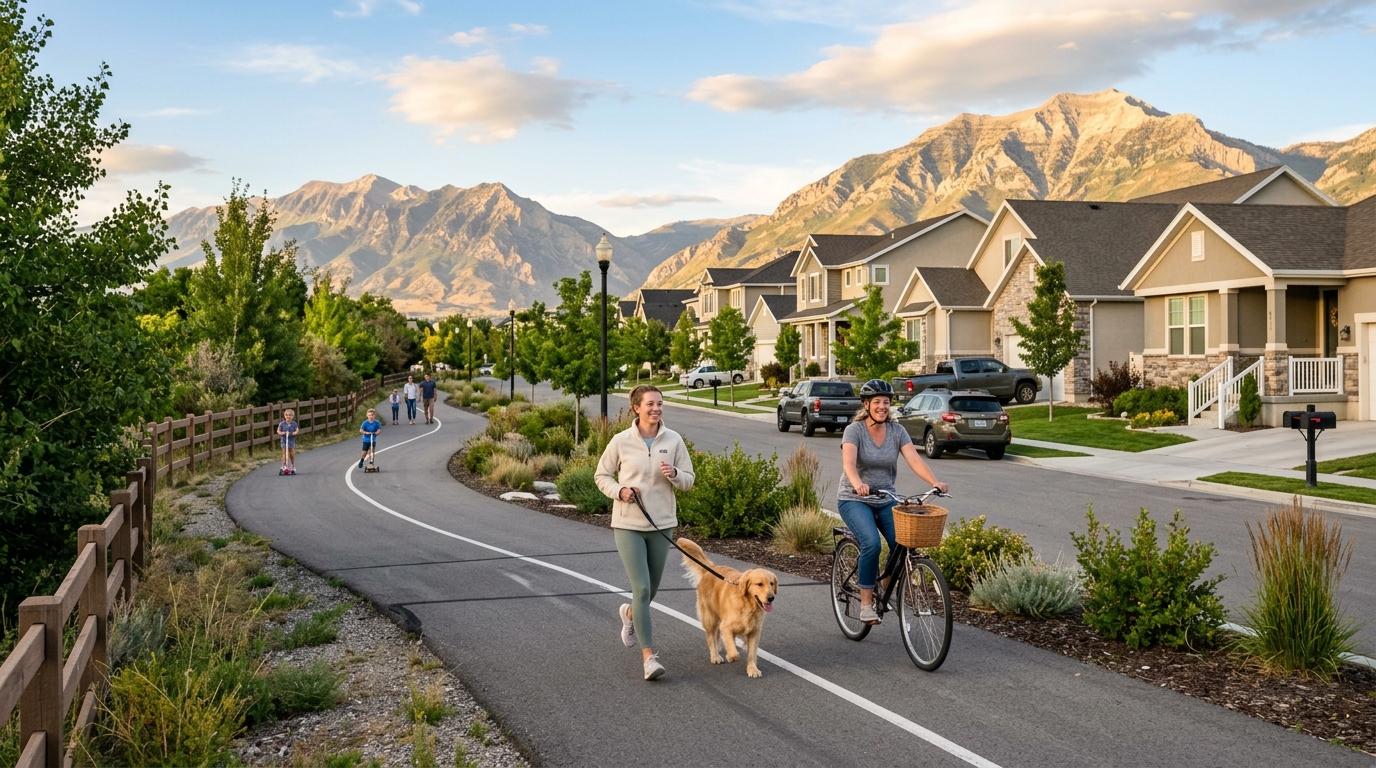
Here is what I would tell you if you were sitting across from me: parks and trails are not automatically valuable just because they show up on a map. They become valuable when they make your Tuesday easier, your Saturday more enjoyable, your dog walk more realistic, or your kids’ routine less dependent on a car.
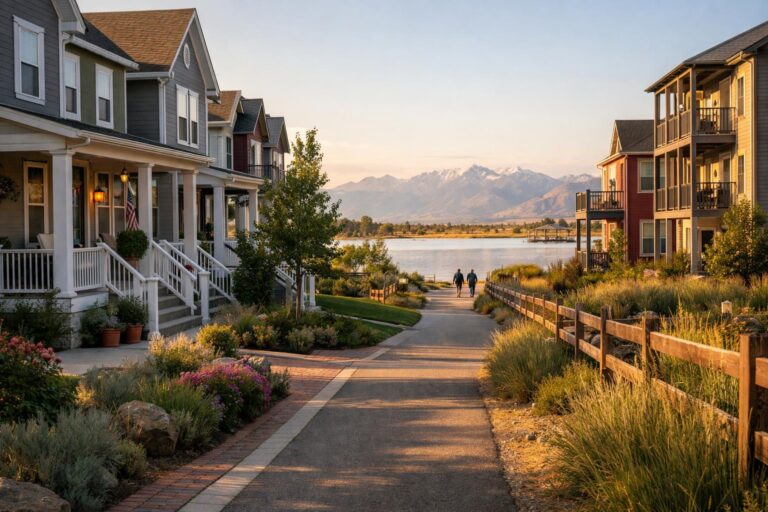
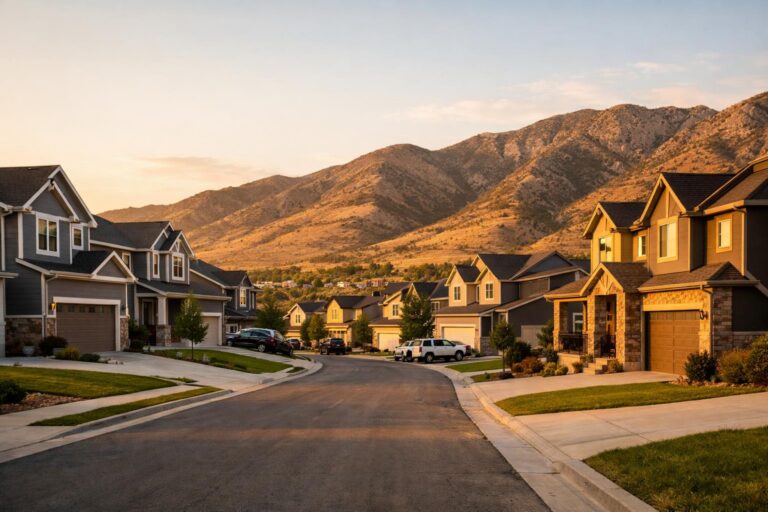
In Herriman, the park and trail conversation is tied directly to neighborhood choice. A home near a small pocket park may feel different from a home closer to Blackridge, Butterfield Canyon access, neighborhood sports fields, a paved trail connection, or one of the city’s newer recreation projects. The right answer depends on how you actually live.
- Do Herriman parks and trails affect home choice? Yes — especially if your daily routine includes kids, pets, walking, biking, sports, or quick outdoor time after work.
- Which amenities matter most? The useful ones are the ones you will use weekly: nearby playgrounds, paved trails, sports fields, dog-friendly walking routes, shade, parking, restrooms, and safe access from your street.
- What should you verify? Check trail connections, park amenities, reservation rules, parking, seasonal access, nearby traffic, and whether the walk from the home feels realistic.
- What is the biggest mistake? Buying “near a park” without walking the actual route, checking the amenities, or thinking through noise, parking, sports schedules, and weekend traffic.
Why this question matters before you buy
In Herriman, parks and trails are part of the lifestyle pitch — but I want you to look past the pitch. The better question is not, “Are there parks nearby?” The better question is, “Will these parks and trails make my normal week better?”
That is a very different standard.
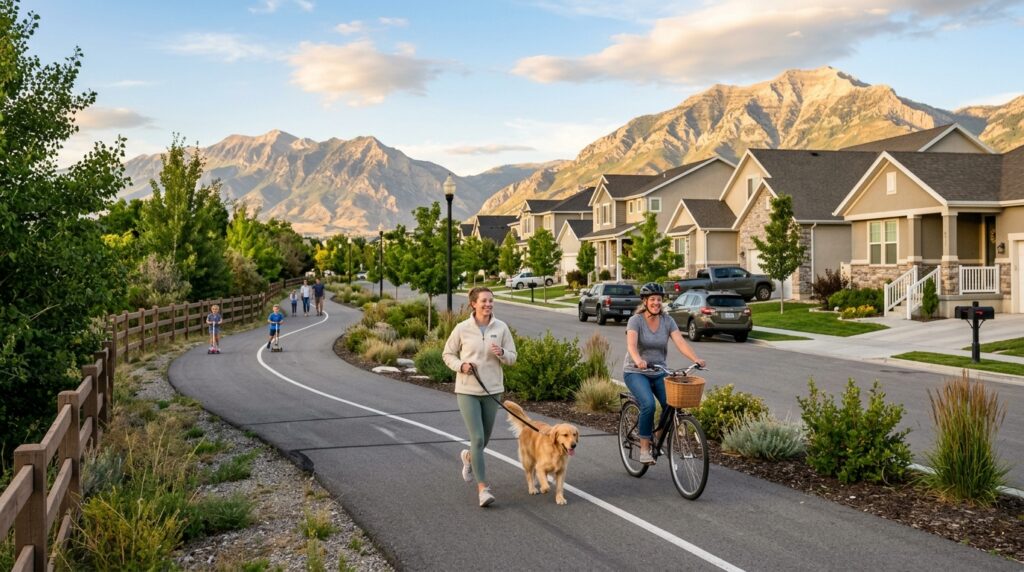
If you have young kids, a five-minute walk to a playground may matter more than an oversized yard you rarely use. If you have a dog, a reliable trail loop may matter more than being close to a large regional park. If you work from home, a nearby paved trail may become your sanity break. If you have teens, sports fields, bike access, and safe routes may matter more than toddler-friendly playgrounds.
That is why Herriman parks and trails should be evaluated as part of the home search, not as decoration after you already like the house.
Herriman City’s official parks information describes the Parks Department as maintaining parks, facilities, trails, and open spaces for residents, and the city also provides a dedicated trails page with interactive map resources and trail-use notes. Those are good starting points, but the real due diligence happens when you test the park or trail like you already live there.
Buyers often overvalue amenities they imagine using and undervalue the ones that make a normal Tuesday easier. A nearby trail you use four times a week can matter more than a larger park you visit twice a year.
What to verify locally before you choose a Herriman neighborhood
The first thing I would verify is the exact park or trail access from the home. Not the map distance. The actual route. A home may look close to a trail online, but if the path requires crossing a busy road, walking along a narrow shoulder, or loading everyone into the car, it may not function the way you hoped.
You can start with Herriman’s official parks page and trails page. The parks page is useful for park locations and amenities, while the trails page points residents toward interactive online map resources and notes that motorized vehicles are not allowed on Herriman City trails.
From there, I would verify the practical details.
| What to verify | Why it matters | What this means for you |
|---|---|---|
| Walking route | A park that is “nearby” may still be inconvenient if the route is awkward, exposed, steep, or interrupted by traffic. | Walk it from the house before you treat it as a daily-life benefit. |
| Amenities | Playgrounds, restrooms, pavilions, shade, parking, courts, fields, grass areas, and trailheads serve different households. | Match the park to your real routine, not just the listing description. |
| Noise and activity | Sports fields, pavilions, popular trailheads, and parking lots can change the feel of a nearby street. | Visit at weekday evenings and weekends, not only during a quiet showing window. |
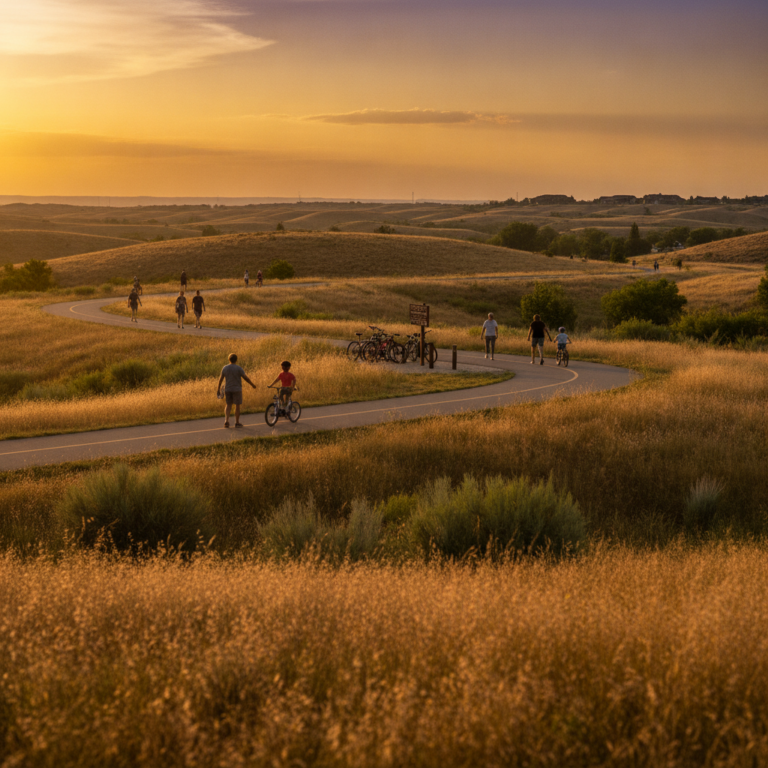
| Trail type | Paved trails, primitive trails, bike-focused routes, and neighborhood walkways feel very different. | Choose based on whether you walk, run, bike, push a stroller, or want casual evening loops. |
| Future improvements | Herriman is still growing, and recreation projects can change access, demand, and nearby traffic over time. | Check city updates before buying near open land, future trail connections, or planned park areas. |
How this affects home choice in Herriman
When you look at Herriman homes for sale, parks and trails can influence the right choice in at least four ways: routine, resale appeal, tradeoffs, and long-term fit.
Routine comes first. A park that fits your life will get used. A park that does not fit your life becomes a nice bullet point. If your kids are little, nearby playgrounds and open grass may matter. If your kids are older, sports fields, bike access, and trail connections may matter more. If you are moving to Herriman for outdoor access, look carefully at trailheads, parking, grade, and whether the trail experience feels like recreation or just a sidewalk next to traffic.
Resale appeal matters, too. A home with practical access to parks and trails may appeal to a wider group of future buyers, especially families, pet owners, runners, walkers, and people who want an active neighborhood feel. I would not buy a home only for resale, but I would pay attention when a location makes everyday life easier for more than one type of buyer.
Tradeoffs need real talk. Being close to a park can mean more activity near your home. That may be a positive if you like the energy. It may be frustrating if you want quiet evenings, less parking near your street, or fewer people walking past your yard. Neither preference is wrong. You just need to know your own tolerance.
Long-term fit is the quiet one. A playground may matter now. A trail loop may matter later. A park with courts, fields, restrooms, and parking may matter differently as your household changes. This is where I like to ask: will this location still make sense three life stages from now?
For families with young kids
Look for playgrounds, shade, restrooms, safe walking routes, open grass, and routes that do not require loading everyone into the car.
For dog owners
Focus on daily walking loops, sidewalks, trail access, lighting, grade, and whether the route feels comfortable in the morning or evening.
For active buyers
Compare paved trails, primitive trails, bike access, trailhead parking, and how easily you can turn exercise into a habit.
For quiet-lifestyle buyers
Do not assume every park-adjacent home is ideal. Check noise, parking, events, ballfield activity, and weekend patterns.
What I would watch in this community
I would watch four things in Herriman: actual access, neighborhood traffic, maintenance patterns, and future recreation growth.
Actual access is the piece buyers miss most often. If a park is close enough that you can use it without thinking, it becomes part of life. If it still requires effort, it may not. Herriman has neighborhoods where outdoor access feels woven into the day, and others where the park is technically nearby but not as convenient as it looks online.
Neighborhood traffic matters because parks create movement. That can be good. It can make a neighborhood feel alive. But it can also bring cars, games, events, and visitors. If you are looking at a home near a popular park or trailhead, I would visit after school, on a Saturday morning, and during an evening sports window before you decide.
Maintenance patterns matter because amenities are only as useful as they are cared for. Look at grass, playground condition, restrooms, trash areas, trail surfaces, lighting, parking, and how the space feels when people are actually using it. Herriman’s Parks Department maintains city parks and open spaces, but individual experiences can still vary by location, season, and use level.
Future recreation growth matters because Herriman is still changing. City updates have referenced ongoing park, trail, and recreation improvements over time, including newer park openings and trail-related projects. Those improvements can add value to daily life, but they can also change traffic and usage patterns near certain neighborhoods.
Questions to ask before making a decision
Before you decide that a Herriman park or trail is a meaningful benefit, ask practical questions. Not tourist questions. Homeowner questions.
Can I get there without making it a project?
If the park or trail requires packing the car, crossing awkward roads, or planning around parking every time, it may not improve daily life as much as you think.
Does the amenity fit my household now and later?
A toddler playground, paved trail, sports field, bike route, or quiet grass area each solves a different problem. Choose based on your season of life.
What does the area feel like at busy times?
Visit during evenings and weekends. That is when you see the real parking, noise, activity, and neighborhood rhythm.
Would I still like the house without the park?
This is a good gut check. The park can add value, but the home still needs to work on layout, price, condition, commute, schools, and long-term fit.
What should I verify with official sources?
Check Herriman City’s park and trail pages for current information, reservation details, maps, rules, and updates before making a park-driven decision.
A practical way to compare Herriman parks and trails
When you are comparing living in Herriman Utah, I like to sort parks and trails into three categories: daily use, weekend use, and special-use amenities.
| Category | What it usually includes | How it affects your home search |
|---|---|---|
| Daily use | Small parks, walkable playgrounds, sidewalks, paved trails, dog-walking loops, nearby open space. | This matters most for convenience and daily quality of life. |
| Weekend use | Larger parks, pavilions, sports fields, reservoirs, trailheads, longer recreation routes. | This can shape lifestyle, but it may not need to be right outside your door. |
| Special use | Courts, bike-focused areas, organized sports spaces, reservation facilities, event-oriented parks. | This matters when a specific hobby, sport, or family routine is central to your move. |
If you are early in your search, start with the Herriman parks and attractions guide and the broader Herriman community guide. Use those as context, then narrow the decision to the exact street, route, and park access that would shape your week.
So, which Herriman parks and trails actually improve everyday life?
The ones you use without having to talk yourself into it.
That is the simplest answer. A useful park is not always the biggest park. A useful trail is not always the prettiest trail. A useful amenity is the one that fits into your actual rhythm: after-dinner walks, stroller loops, weekend soccer, dog exercise, bike practice, quiet morning runs, or quick outdoor time between errands and homework.
If you are buying in Herriman, I would look at parks and trails the same way I look at commute routes and school routines. They are not side details. They shape how the home lives after the closing papers are signed.
Here is what I would do: pick your top two or three homes, then test the closest park or trail from each one. Walk the route. Visit at a busy time. Check the amenities. Ask whether you would use it in a normal week. If the answer is yes, that location may deserve more weight. If the answer is no, do not overpay emotionally for a feature that will not change your life.