
What Daybreak’s Lifestyle Mix Means for Your Next Move
May 24, 2026
See how Daybreak’s parks, trails, housing mix, and daily rhythm shape real buying and moving decisions.
Read article →Herriman is not just “a growing city.” It is a daily-life decision. The right pocket can give you space, mountain views, parks, trails, newer housing, and a strong suburban rhythm. The wrong fit can leave you with a beautiful home and a Tuesday routine that feels harder than it should.
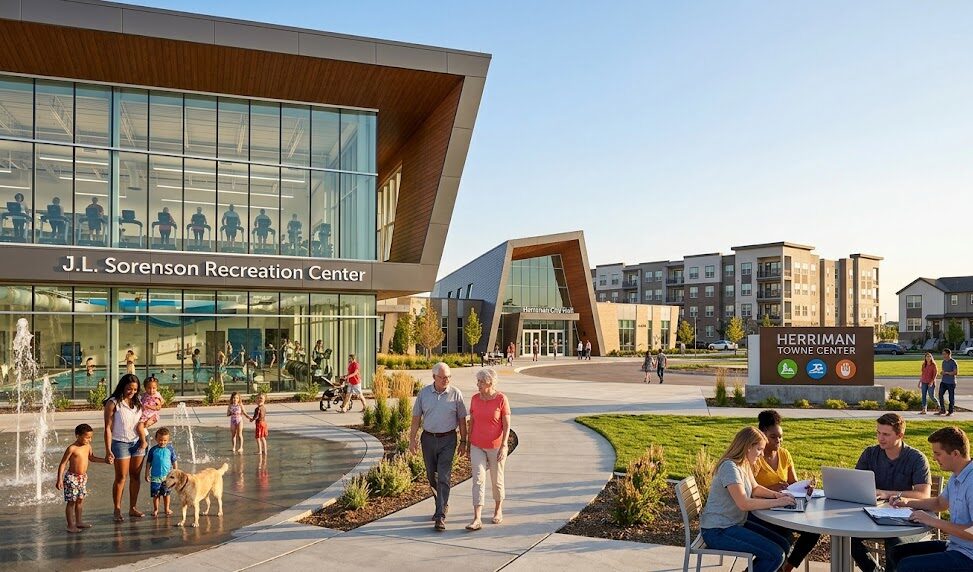
My quick answer: Herriman tends to fit people who want a newer-feeling southwest valley community with room to grow, strong park and trail access, family-oriented routines, and a more residential pace than the urban core. It is especially appealing if you want space, newer homes, mountain-edge scenery, and a practical suburban base.
But I would not want you to choose Herriman based on the city name alone. Your fit depends on the exact pocket, the commute route, school timing, HOA rules, future growth nearby, and what you need your normal week to feel like.
This page uses current public data from Census Reporter and U.S. Census Bureau sources for demographic context, plus Herriman City’s own growth, infrastructure, and community-facts pages for local growth, housing mix, recreation, and services context. Always verify details like HOA rules, school boundaries, commute timing, utilities, and municipal services for the exact address.
When you look at Herriman’s demographics, a few themes stand out: it is a young, growing, higher-income community with larger-than-average households and a strong owner-occupied housing profile. That supports the “family, space, and growth” story people often associate with Herriman — but it does not answer everything.
Numbers can tell us the broad pattern. They cannot tell us whether a specific home is the right fit for your commute, your kids’ schedule, your trail habits, your HOA tolerance, or your errands loop.
For buyers, the data says Herriman is not a sleepy rural edge anymore. It is a serious southwest valley housing market with strong household income, a younger resident profile, and a growing housing base. For sellers, it means your buyer pool may include families, relocators, commuters, remote workers, and people comparing Herriman against South Jordan, Daybreak, Riverton, Bluffdale, and Lehi.
| Data signal | What it suggests | What I would still verify |
|---|---|---|
| Younger median age | Herriman often attracts households in active building years: careers, children, upgrades, and long-term housing decisions. | School boundaries, activity routes, park access, and commute timing from the exact address. |
| Larger household size | Space, bedrooms, storage, garage use, and family logistics matter in many searches. | Driveway/parking reality, basement usability, yard maintenance, and HOA restrictions. |
| Higher income profile | Buyers often compare lifestyle value, monthly cost, commute tolerance, and long-term growth potential. | True monthly cost, HOA fees, utilities, insurance, property taxes, and future development nearby. |
| Commute above metro/state averages | Herriman can work beautifully, but commute routine has to be tested — not assumed. | Morning and evening routes on real weekdays, especially if you commute to Salt Lake City, Draper, Lehi, or multiple job sites. |
Herriman makes more sense when you compare it with nearby southwest-valley options instead of looking at the city in isolation. The pattern is clear: Herriman is younger than South Jordan, Riverton, Bluffdale, and Salt Lake County overall, has a larger household profile than the county, and carries a longer mean commute than several nearby alternatives.
That does not mean Herriman is better or worse. It means buyers should treat Herriman as a lifestyle tradeoff: more space-and-growth energy in exchange for careful commute, school-route, HOA, and future-development due diligence.
| Place | Population | Median age | Median household income | Persons per household | Mean commute | What it suggests |
|---|---|---|---|---|---|---|
| Herriman | 59,346 | 29.8 | $122,650 | 3.4 | 27.1 min | Younger, family-sized household pattern with strong income and a commute that needs to be tested carefully. |
| South Jordan | 86,172 | 33.0 | $161,025 | 3.5 | 24.1 min | Higher-income, larger city profile with strong household size and generally shorter mean commute in the data. |
| Riverton | 45,457 | 34.4 | $126,910 | 3.3 | 24.8 min | Slightly older nearby profile with similar family-size rhythm and a shorter mean commute than Herriman. |
| Bluffdale | 18,797 | 30.6 | $129,531 | 3.3 | 21.1 min | Smaller-city profile with young households, strong income, and a shorter mean commute in the Census profile. |
| Salt Lake County | 1,216,274 | 34.4 | $99,353 | 2.7 | 23.0 min | Broader county baseline; Herriman is younger, higher-income, and larger-household than the county overall. |
Comparison figures come from Census Reporter ACS 2024 profiles for Herriman, South Jordan, Riverton, Bluffdale, and Salt Lake County. Some larger geographies use ACS 2024 1-year data, while smaller-city profiles may use ACS 2024 5-year data. Use this table as a practical relocation comparison, not a substitute for a lender, school district, city planner, or commute test.
Herriman’s growth is not background noise. It changes traffic, housing mix, schools, amenities, services, and the way different pockets feel over time. Herriman City has stated that the city grew from about 20,000 to about 64,000 residents in roughly 15 years, and that 41% of homes are townhomes or apartments. The city also notes that another 14,000 homes have already been entitled to developers.
That matters because “Herriman lifestyle” is not only about today. It is also about what is coming near the property you choose.
Herriman City’s Growth & Infrastructure page discusses the city’s rapid population growth, current housing mix, multi-family share, entitled future homes, and affordability pressure. Use this as a planning context, then verify specific development impacts around any property you are considering. View source
It depends on where you are standing. Growth can bring better services, more retail, stronger city investment, and more housing choices. It can also bring construction, traffic changes, school pressure, and a different neighborhood feel than what you saw on one showing day.
Use it to ask sharper questions. What is entitled nearby? What roads may change? What type of housing is planned? Where will errands improve? Where might construction affect daily life? A good Herriman decision looks at today’s house and tomorrow’s surroundings.
| Growth factor | Why it affects lifestyle | Buyer/seller implication |
|---|---|---|
| More housing types | Townhomes, apartments, new construction, and single-family neighborhoods can create very different daily rhythms. | Buyers should compare property type and HOA structure; sellers should know which buyer profiles their home fits. |
| More residents | More demand for roads, schools, parks, public safety, and commercial services. | Buyers should test commute and errands; sellers can position convenience and future access carefully. |
| More services over time | Growth can improve convenience, but the transition period can feel messy. | Look at both today’s friction and future upside. |
Herriman daily life is usually built around space, driving, outdoor access, school routines, and neighborhood pockets. It is not the same as living in downtown Salt Lake City, and it is not the same as living inside Daybreak’s more master-planned lifestyle system. It has its own rhythm.
The big question is: what do you need to be easy every week? If your answer is “space, parks, trails, newer homes, and a family-centered routine,” Herriman may be a strong match. If your answer is “walk everywhere, avoid driving, and keep everything urban-close,” we need to be more careful.
It can be, especially for households that value space, parks, newer neighborhoods, school routines, and suburban structure. But the right answer depends on the specific home. I would want you to verify the school boundary, activity route, commute, and the “after dinner” reality — where you go, how long it takes, and whether the neighborhood feels right at the time you actually use it.
Yes, outdoor access is a major part of Herriman’s lifestyle appeal. Herriman City describes approximately 2,700 acres of open space, parks, and trails, plus recreation options like sports fields, a community garden, skate park, horse trails, splash pads, and nearby recreation facilities. The practical test is whether those features are easy from your address — not just somewhere in the city.
For many Herriman households, yes. You may love the space and views, but most buyers should assume that driving remains part of daily life. That does not make Herriman a bad fit. It just means we need to test the routes you will actually repeat: work, school, groceries, sports, church, dinner, gym, and family visits.
Herriman City’s Community Facts page lists quality-of-life amenities including public education, medical access, recreation, parks, trails, and open space. Use these as city-level context, then test the actual 10–15 minute radius around each property. View source
The demographics point toward a younger, higher-income, family-sized community, but the best local decision still depends on how you live. Use this section to translate the data into a practical fit check.
| Buyer or lifestyle type | Herriman fit | Why it can work | What to verify before you choose it |
|---|---|---|---|
| Young family | Often strong | Younger median age, larger households, parks, schools, and suburban routines can line up well. | School boundaries, drop-off routes, after-school activities, and future growth near the home. |
| Remote or hybrid worker | Good if the home supports work | Herriman can offer space for an office, newer layouts, and a quieter residential base. | Internet options, office privacy, daylight, noise, parking, and occasional commute routes. |
| Outdoor-focused buyer | Often strong | Open space, parks, trails, views, and southwest-valley recreation access are part of the appeal. | Actual trail distance, winter usability, slope, wind exposure, and whether you will use the access on weekdays. |
| First-time buyer | Mixed | Townhomes and newer attached options may create entry points that single-family homes do not. | HOA fee, reserves, parking, rental restrictions, payment comfort, and resale audience. |
| Move-up buyer | Often strong | Many buyers compare Herriman for space, bedrooms, garages, basements, and a longer runway. | Yard usability, commute friction, future construction, maintenance, and true monthly cost. |
| Downsizer | Address-specific | Low-maintenance townhomes or newer layouts can work well for some downsizers. | Stairs, snow removal, medical access, HOA rules, guest parking, and proximity to daily services. |
You want newer housing, family-sized space, parks and trails, mountain-edge scenery, and you are comfortable testing commute and growth tradeoffs before choosing a home.
You need a highly walkable urban routine, a short east-side commute, mature retail on every corner, very limited driving, or a neighborhood with no nearby growth or construction exposure.
When people tell me they want Herriman, they usually mean one of four things. Naming the pattern helps us avoid choosing the wrong home for the right reason.
| Lifestyle pattern | What you may be looking for | What we should verify |
|---|---|---|
| Space-first living | You want more room, bigger layouts, storage, garages, basements, yards, and a home that can grow with you. | Monthly cost, yard upkeep, HOA limits, parking, snow exposure, and how far you drive for weekly needs. |
| Family-routine living | You want school routines, after-school activities, parks, and neighborhood rhythm to work without daily stress. | School boundaries, pickup/drop-off routes, activity locations, commute timing, and evening errands. |
| Outdoor-driven living | You want trails, views, open space, recreation, and an easy way to get outside without planning a full weekend trip. | Trail access from the address, parking, grade, winter usability, and whether outdoor routines are realistic on weekdays. |
| Low-maintenance living | You want a townhome, condo, or HOA-supported property that reduces yard and exterior maintenance. | HOA fees, what is covered, guest parking, pet/rental rules, exterior restrictions, and long-term resale fit. |
Demographics are useful, but routine is what you actually buy. Before you decide Herriman is the right fit, run the home through a few ordinary-life scenarios.
Start at the home during a normal weekday. Drive the school route, check likely drop-off and pickup pressure, stop at your usual grocery option, and then test the evening activity route. A family-friendly city still has to work at 7:45 a.m. and 5:30 p.m.
Stand in the room that would become the office. Check light, noise, privacy, internet options, and where other household members will be during work hours. Then test the commute you will still make on office days, client days, airport days, or downtown days.
Drive or walk to the trail, park, reservoir, or recreation space you think you will use. Check parking, crossings, grade, shade, winter exposure, and how long it takes from the front door. Outdoor lifestyle is strongest when it is easy enough to repeat.
Herriman has a mix of single-family homes, townhomes, apartments, condos, and new construction. That mix is important because the lifestyle changes by property type. The same city can feel spacious, busy, quiet, structured, flexible, high-maintenance, or low-maintenance depending on where and what you buy.
| Home type | Best lifestyle fit | Tradeoffs to consider |
|---|---|---|
| Single-family home | Space, privacy, yard use, storage, hosting, long-term family routines. | More maintenance, higher monthly costs, snow/yard work, and possibly more driving depending on location. |
| Townhome | Lower-maintenance living, newer construction, simpler exterior care, and often a more manageable entry point. | Shared walls, HOA rules, parking limits, guest parking, less yard flexibility, and resale audience differences. |
| Condo or apartment-style ownership/rental | Convenience, simplified upkeep, lock-and-leave lifestyle, and budget control for some households. | Building rules, HOA/rent terms, storage, noise, parking, pets, rentals, and long-term space needs. |
| New construction | Newer systems, modern layouts, design choices, and growth-area upside. | Construction delays, nearby development, changing roads, upgrade budgets, and uncertainty around future surroundings. |
That is why I would not only ask what price range you want. I would ask: how much maintenance do you want, how many cars do you need to park, how much privacy matters, how sensitive are you to HOA rules, and what does “home” need to do for your week?
If we were talking through Herriman together, I would not start by pushing listings. I would start with your real life. These are the questions that usually reveal whether Herriman is a good fit — and which part of Herriman deserves your attention.
| Question | Why it matters | How to test it |
|---|---|---|
| What does your Tuesday look like? | Most lifestyle regret shows up on ordinary weekdays, not on showing day. | Map work, school, groceries, activities, dinner, gym, and family errands from the exact address. |
| Where is your work anchor? | Herriman can work differently if you commute to Salt Lake City, Draper, Lehi, the airport, or multiple job sites. | Drive the route at your real departure and return times on two weekdays. |
| Do you want space or convenience more? | Herriman often gives strong space value, but some pockets require more driving. | Define your non-negotiable radius: grocery, park, school, work, recreation, and medical access. |
| How much HOA structure do you want? | HOA can help with consistency and maintenance, but it can also restrict parking, exterior changes, rentals, and pets. | Read CC&Rs and current policies before you write an offer. |
| What future growth is nearby? | Growth may improve convenience but also affect traffic, noise, schools, and pocket feel. | Review city planning context and ask what is entitled near the specific property. |
| How does this home compare with South Jordan, Riverton, or Bluffdale? | Nearby cities can offer different commute, housing, income, and lifestyle patterns. | Compare the actual address, not just the city name: drive times, home type, HOA rules, school routes, parks, and access to services. |
| Would you still like it in winter? | Outdoor lifestyle and commuting feel different in darker, colder, or snowy months. | Check slope, driveway exposure, road access, snow removal, and whether your outdoor habits are seasonal or year-round. |
Share your work anchor, school needs, preferred home type, parking needs, and what you want your normal week to feel like. I can help you compare Herriman pockets through a practical lens — not just price, photos, and square footage. No pressure. Just a clear conversation from someone who knows how quickly this southwest valley has changed.
Reminder: Verify HOA rules, school boundaries, commute routes, utilities, public services, and future development details using official sources for the exact address.