
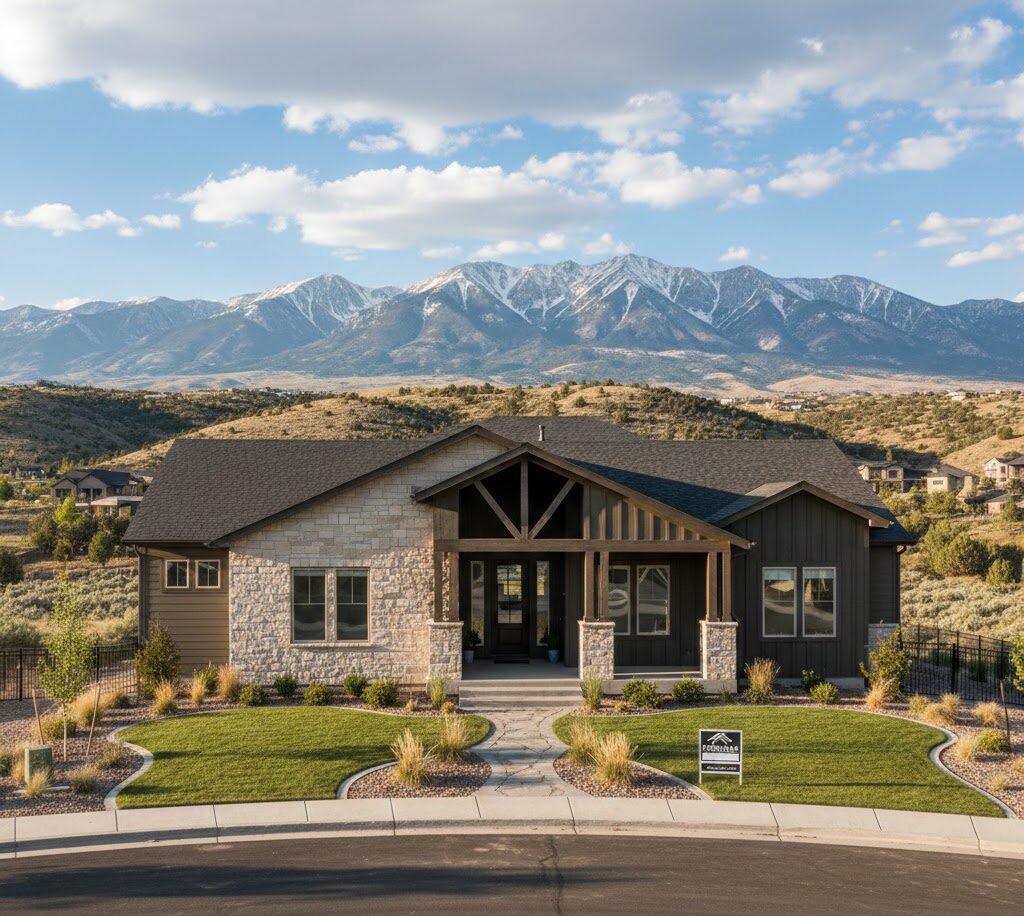
Herriman at a glance: the questions locals get asked most (and the answers that matter)
If you’re moving to Herriman UT or comparing it to South Jordan, Daybreak, or Draper, you’ll notice a pattern: everyone can find listings. The harder part is translating “Herriman” into daily life—commute realities, neighborhood feel, HOA rules, school logistics, wind/snow exposure, and how errands actually flow on a weekday.
This page is built for decision-ready research. It’s educational, locally grounded, and calm on purpose. You’ll see tradeoffs (not hype), plus “what to verify” notes so you can avoid common home-search mistakes—especially the ones that only show up after you’ve moved in.
Quick way to use this: skim the sections that match your household (commute, schools, housing type, lifestyle), then use the checklists before you tour. If you want to browse while you read, start here: Herriman community page. For a fast market pulse, keep this open too: Herriman properties overview.
Request a local market snapshot Browse articles How Jena works
What this page covers
Herriman community insights—housing, schools, commute, amenities, and services—written for buyers, sellers, and relocators who want clarity without pressure.
What it avoids: hype, guarantees, and advice that should come from licensed professionals (legal/tax/lending/financial). When a detail can change (boundaries, HOA rules, municipal policies, commute time), you’ll see a clear verification note.
Helpful links while you research:
- Herriman listings hub: jenahunt.com/community/herriman/
- Compare nearby: South Jordan and Daybreak
- Explore by price (Herriman): $250K–$500K, $500K–$750K, $750K–$1M, $1M+
- Explore by size (Herriman): 2K–3K sqft, 3K–4K sqft, 5K+ sqft
Note: If this image does not display, the Drive file is likely not public. Upload it to WordPress Media Library and swap the URL.
Herriman in one paragraph (what people mean when they say “Herriman”)
Herriman is on the southwest side of the Salt Lake Valley, and people usually choose it for a specific bundle of reasons: newer housing options, a suburban pace that feels more “planned” than older core neighborhoods, access to outdoor space, and a family-friendly rhythm. The tradeoffs are also consistent: your commute timing matters more than you think, wind/snow exposure can vary by micro-area, and “Herriman” is not one uniform experience—some parts feel closer to the valley’s hubs, and others feel quieter but farther from daily errands.
Decision framing: instead of asking, “Is Herriman good?” ask, “Which part of Herriman fits my weekday life?” That one shift prevents a lot of regret.
The 60-second fit check (before you favorite 20 listings)
- Commute anchor: Where do you drive most often (Draper, Lehi, downtown, airport, hospitals, etc.)?
- Schedule reality: Are you traveling at peak rush hour or flexible hours?
- Non-negotiables: What must be within ~10 minutes (groceries, daycare, trails, rec center, school drop-off routes)?
- Home type preference: Do you want low-maintenance (often HOA) or more control (often single-family lots)?
- Budget comfort: Are you optimizing for monthly predictability or for space/features? (Different neighborhoods “price space” differently.)
What changes by neighborhood (the stuff listing photos don’t tell you)
Locals get asked “where should we look?” because the differences show up after move-in: noise patterns, wind pockets, street parking friction, school traffic, and how quickly you can get onto your main route.
Instead of trying to memorize every subdivision name, use the “difference makers” below. When you tour, you’re not just touring a house—you’re test-driving a routine.
| Difference maker | What changes | What to verify |
|---|---|---|
| Commute friction | A small location change can shift where you hit bottlenecks and how many turns/merges your day includes. | Drive it at your real time (weekday, not weekend). Test a “backup route,” not just the fastest one. |
| Wind + snow exposure | Some streets feel calm; others regularly get gusts or drifting snow (especially in open or elevated pockets). | Ask neighbors and the listing agent. Look at fence wear, landscaping, and snow drift signs in winter months. |
| HOA rules + feel | HOAs can range from minimal to strict. They also shape parking, rentals, exterior changes, and sometimes landscaping. | Review CC&Rs, fee breakdown, and any restrictions that affect your lifestyle (rentals, pets, parking, exterior updates). |
| Lot usability | “Big yard” and “usable yard” are not the same. Slope, layout, and setbacks matter. | Stand in the yard and picture real use: kids, pets, garden, gathering space. Measure where shade hits. |
| School logistics | Boundaries and programs can differ. Drop-off patterns can add time you didn’t budget for. | Confirm boundaries with official sources. Drive the route during drop-off/pick-up windows if possible. |
The questions locals get asked most (and the answers that actually matter)
Below are the questions you’ll hear at open houses, from coworkers, and from neighbors who’ve already done the move. Each answer is paired with a “what to verify” note—because the goal is confidence, not guesswork.
1) “Is Herriman a good place to live?”
For many households, “good” means: newer housing options, a neighborhood feel that supports families, parks/trails access, and a calmer pace than more central areas. Herriman can be a strong fit if your work and daily errands align with the southwest valley and you’re comfortable with a suburban pattern (driving to errands rather than walking to everything).
Common mismatch: people who commute downtown at peak hours five days a week and underestimate how much that shapes quality of life. Another mismatch is expecting every part of Herriman to feel the same—micro-location matters.
You want newer neighborhoods, more space for the price (relative to some nearby areas), and a family-oriented rhythm.
Your schedule is rigid and downtown-centered, or you need a highly walkable “everything nearby” lifestyle.
Drive your real commute and your “errands loop” (grocery → school → home) at real times.
Open these hubs side-by-side: South Jordan and Daybreak.
2) “How far is Herriman from Salt Lake City?”
The most honest answer is: it depends on where in Herriman and what time of day. People often quote a single number and then feel blindsided by rush hour patterns. If your life includes downtown frequently, treat commute testing as part of your home search—not an afterthought.
Verification note: run a few commute checks at the times you actually travel (morning, after-school, evening). Also check winter weather days if your work requires it.
Commute reality checklist (simple but effective)
- Test the commute on a weekday at your typical departure time.
- Test a “plan B” route in case of accidents or construction.
- Include the last-mile: school drop-off, daycare, or gym stops.
- Factor seasonal differences (winter mornings can change timing and stress level).
Video: living in Herriman (pros/cons) — translate it into your decision
Videos can help you pick up the “feel” of a place, but the useful move is turning that feel into a checklist: what do you want more of (space, newer homes), and what are you willing to manage (commute timing, wind exposure, HOA rules).
3) “What are the homes like in Herriman?”
Herriman has a wide range—single-family neighborhoods, townhome communities, and pockets of newer construction. The most useful way to think about it is not “new vs old,” but maintenance vs control.
- Townhomes/HOA living: often lower exterior maintenance, but rules and fees matter (parking, rentals, exterior changes).
- Single-family lots: often more control and privacy, but maintenance responsibilities are yours (yard, exterior, snow removal, etc.).
- New construction: can feel “cleaner” and more modern, but upgrade choices, timelines, and community rules can change your final experience.
If you prefer browsing by budget bands to stay realistic, use these filters: $250K–$500K, $500K–$750K, $750K–$1M, $1M+.
4) “Is Herriman expensive?”
“Expensive” depends on what you’re comparing it to and what you value (space, lot size, newness, proximity). The bigger risk isn’t the list price—it’s underestimating the total monthly and maintenance picture for the type of home you choose.
| Cost factor | Why it surprises people | What to confirm |
|---|---|---|
| HOA fees | People see the fee but don’t read what it includes or what it restricts. | Confirm what the fee covers, whether reserves are healthy, and whether there are special assessments. |
| Utilities | Home size, insulation, and exposure can affect heating/cooling needs. | Ask for utility history if available; compare similar home sizes; verify HVAC age/condition during inspection. |
| Maintenance | Larger homes can mean more ongoing upkeep (roof, landscaping, snow removal, exterior care). | Budget for maintenance; verify roof/HVAC/water heater age; check landscaping and drainage patterns. |
| Property taxes | People assume a number without verifying the actual property and timing. | Verify taxes through official county sources and confirm whether amounts reflect exemptions or recent changes. |
Verification note: when you’re estimating monthly costs, rely on official records and qualified professionals. This page is meant to help you ask the right questions—not to replace professional advice.
5) “What about schools in Herriman?”
This is one of the biggest decision drivers for families—and also one of the easiest places to make assumptions. The key point: school boundaries can change, and “close to the school” doesn’t always equal “easy school routine.” Drop-off patterns can add friction you don’t see on a map.
School research checklist (no guesswork version)
- Confirm boundaries with official district sources (do not rely solely on listing descriptions).
- Ask about programs that matter to you (language immersion, special services, magnet programs).
- Drive the school route at the time you’d actually do it.
- If you’re buying for a specific school, confirm again before you write an offer.
If your research is focused on “school decision factors first,” you may also want to compare with nearby areas that families often cross-shop: South Jordan and Daybreak.
Video: a town tour — how to use it (without over-trusting it)
A town tour gives you context—parks, neighborhoods, the “feel.” The smart move is pausing the video at moments that matter to you and turning them into questions: “Is this the type of neighborhood I want?” “How far is this from the places I go every week?” “Does this feel windy/open or sheltered?”
6) “What’s there to do in Herriman?”
For most residents, the day-to-day answer is about parks, trails, rec options, and family routines. The bigger question is personal: do you want a neighborhood where weekend plans are built around outdoor time and local activities, or do you want quicker access to a wider variety of dining/nightlife in more central areas?
What to verify: if amenities are a deciding factor, tour them the same week you tour homes. It’s easy to “assume” a park is close and then realize it’s not part of your natural routine.
7) “Is Herriman windy?”
Some pockets can feel windier than others. The practical reason this matters isn’t comfort alone—it affects outdoor use (patio time), landscaping, and in winter, snow drift patterns. Wind is also one of those things that can be hard to predict from a listing photo.
Fence condition, patio shelter, landscaping wear, and whether the street feels exposed or tucked in.
Ask a neighbor (if possible): “How does winter wind/snow feel on this street?” People usually answer honestly.
Outdoor usability, snow drifting, and comfort when kids/pets are outside.
Choose micro-locations with better shelter or plan for windbreak landscaping where allowed.
8) “What’s the market doing right now?”
Instead of relying on general headlines, use a local snapshot specific to Herriman. Inventory levels, days on market, and pricing behavior can shift by season and by price band.
Start here for a quick pulse: Herriman Properties Overview. If you’re also comparing nearby, you can open these in separate tabs: Daybreak Properties Overview and South Jordan Properties Overview.
Instagram (real-world examples): what listings reveal about “fit”
Listings content is most helpful when you use it to notice patterns: layout choices, yard usability, street feel, and whether a home type matches your maintenance preferences. Here are a few Herriman-focused examples to make those patterns easier to see.
Questions to ask before you tour (the “avoid regret” list)
These questions are intentionally practical. They focus on routines, constraints, and verification—because most home-search mistakes are really planning mistakes.
- “What’s our weekly ‘must-do’ loop?”
List your repeating stops: work, school, daycare, groceries, gym, family. Then map the loop from each listing—not just the drive to downtown. - “Are we choosing space or choosing simplicity?”
A larger home can be great, but it can also add maintenance and cost complexity. Decide which you’re optimizing for. - “What would make us feel trapped here?”
Long commute, strict HOA rules, no parking, wind exposure, or lack of nearby amenities—name your dealbreakers early. - “What needs to be verified (not assumed)?”
School boundaries, HOA rules, utility providers, municipal policies, and actual commute time. Treat assumptions as risks. - “If we needed to sell in 3–5 years, would this still be broadly appealing?”
This is not about predicting the market. It’s about choosing features with durable demand (layout, location convenience, condition).
Quick comparison checklist (Herriman vs. nearby)
If you’re cross-shopping, use a simple scoring sheet. Keep it neutral and specific so you’re comparing facts, not vibes.
Score each 1–5 (then compare totals)
- Commute: How predictable is it at your real times?
- Errands loop: How easy is grocery/school/gym life?
- Neighborhood feel: Does it match your pace (quiet vs. active vs. mixed)?
- Home type fit: Single family vs townhome vs new construction—does it match maintenance tolerance?
- Rules tolerance: HOA comfort level (parking, rentals, exterior restrictions).
- Outdoor use: Yard/trails/parks—what’s realistic weekly, not just “nice to have”?
- Risk items: Anything you’re currently assuming (boundaries, policies, utilities) that must be verified.
Video: relocating to Herriman (what to listen for)
Relocation-focused videos often highlight “why people choose Herriman.” Listen for the underlying decision drivers: space, value perception, and lifestyle. Then apply your own filter: does that driver match your household, or does it just sound nice?
Common mistakes buyers make in Herriman (and how to avoid them)
People test the commute once (often off-peak) and assume it’s fine. Then school traffic + rush hour compounds stress.
Fix: test at real times, include school/daycare stops, and confirm a backup route.
HOA rules can quietly control parking, rentals, exterior changes, and how you use your own property.
Fix: read CC&Rs, confirm fees/reserves, and check restrictions that matter to your lifestyle.
Boundaries can change; listing descriptions can be wrong or outdated.
Fix: confirm with official sources and re-confirm before you write an offer.
Beautiful kitchens are great—until you realize the layout doesn’t match your daily flow or storage needs.
Fix: test function: entry drop zone, laundry flow, pantry/storage, and where clutter will live.
It’s not a dealbreaker for everyone, but it’s a real quality-of-life factor for outdoor use.
Fix: ask neighbors, check exposure, and plan for shelter where feasible/allowed.
People “tour emotionally” and then feel confused after seeing 8 homes.
Fix: use a simple scoring sheet (commute, errands loop, HOA, home type fit, outdoor use).
FAQ: Herriman UT (quick answers + what to verify)
| Question | Short answer | What to verify |
|---|---|---|
| Is living in Herriman a good fit for families? | Often, yes—especially for households that want newer neighborhoods, parks access, and a suburban rhythm. | Verify school boundaries, after-school logistics, and commute timing for your household. |
| How do I compare Herriman to South Jordan or Daybreak? | Compare routines, not just prices: commute friction, errands loop, HOA rules, and neighborhood feel. | Open the hubs: South Jordan, Daybreak. |
| Do townhomes in Herriman come with strict rules? | It varies by community. Some are flexible; some are strict about parking, rentals, and exterior changes. | Read CC&Rs, confirm fee coverage/reserves, and ask about enforcement patterns. |
| Is new construction in Herriman always “better”? | Not automatically. It can be a great fit, but timelines, upgrade choices, and community rules shape the outcome. | Confirm what’s included vs. upgraded, timeline expectations, and HOA/community restrictions. |
| What should I check first when relocating to Herriman? | Commute + errands loop + school logistics (if relevant). Those create daily friction or ease. | Test routes at real times and verify boundaries/policies with official sources. |
| How do I know if a neighborhood will feel windy? | Exposure varies. Wind is often noticeable in open or elevated pockets. | Ask neighbors, observe fencing/landscaping, and consider yard usability and shelter. |
| Is Herriman walkable? | Some pockets are more walk-friendly than others, but many routines still involve driving. | Verify your own “walk targets” (parks, school, groceries) from the exact listing address. |
| What’s the simplest way to stay realistic on budget? | Browse by consistent filters so you’re comparing like-for-like homes. | Use price and size filters on the Herriman hub: Herriman. |
| How do I get a current market pulse for Herriman? | Use a local snapshot that reflects inventory and days on market in Herriman specifically. | Start here: Herriman properties overview. |
| What should sellers in Herriman pay attention to? | Condition, pricing strategy, and presentation matter—especially when buyers have options. | Request a local snapshot and compare your home to recent nearby listings with similar size/condition. |
Key takeaways: Herriman decisions go better when you verify the “daily life” factors
- Herriman UT is not one uniform experience—micro-location changes commute, wind exposure, and routines.
- Test commutes at real times and include “last mile” stops (school/daycare/gym), not just highway time.
- HOA rules are not a footnote—read them early if you’re considering townhomes or planned communities.
- When a detail can change (boundaries, policies, utilities), treat it as a verification item, not an assumption.
- Compare neighborhoods using a consistent lens (routine friction, maintenance profile, rules tolerance, outdoor use).
Explore related Herriman pages on JenaHunt.com
Want a local, low-pressure reality check before you tour?
If you tell me your commute anchor, budget comfort range, and home type preference (single-family, townhome, new construction), I can share a local market snapshot and point you to listings that match your routine—not just your wishlist.
Request a local market snapshot Browse Herriman homes Read Jena’s approach
Reminder: Always confirm school boundaries, HOA rules, utilities, municipal policies, and commute times with official sources and real-world testing.